
15 Best Blenders of 2026: Honestly Reviewed for Every Kitchen
By Amelia Harper | Kitchen and Home Appliance Writer | Updated June 2026
A blender is one of those appliances that reveals itself over time. In the store, they all look capable. On paper, they all have motors and blades and speeds. But at 7am on a Tuesday when you are trying to make a smoothie before work, or at Sunday dinner when you are blending a hot soup and the machine starts shaking and smelling like burning rubber, you learn which ones actually deliver and which ones just looked good in a product photo.
I have been testing and reviewing kitchen appliances for nearly a decade, and blenders are a category I feel strongly about. A genuinely good blender transforms the way you cook. It opens up recipes you would never attempt with a mediocre machine. It saves you the daily frustration of chunky smoothies, unemulsified dressings, and soups that still have visible vegetable pieces in them when you wanted something silky.
This guide covers 15 blenders across every category and budget, from a $30 personal blender that punches above its weight to a nearly $700 premium workhorse that will still be on your counter in 2040. For every machine, I will tell you exactly what it does well, where it falls short, who it is for, and who should look elsewhere. No filler. No vague praise. Let us get into it.
You can also read our guide about choosing the Best Food Processors for Every Kitchen.
What Actually Makes a Good Blender
Before we talk about specific machines, let me tell you what I actually look for, because the spec sheet is often misleading.
Motor wattage is a starting point, not the whole story. Wattage tells you how much power the motor draws, but the shape of the container, the design of the blades, and how efficiently the machine converts watts into actual blending work matter just as much. Some 1,100-watt blenders outperform some 1,500-watt blenders in real-world use.
Blade design is underrated. Flat, symmetrical blades create simple downward cutting. Angled and asymmetric blade designs create vortex patterns that pull ingredients down continuously, producing more even blending from the same motor. This is a big part of why Vitamix machines perform so far beyond their wattage numbers.
Container shape matters more than you think. A wider container means more surface area at the bottom and less of the funneling action that keeps ingredients circulating near the blade. Narrower containers tend to produce better blending on most machines, which is why some of the best blending containers look tall and slender rather than wide and squat.
Noise is real. Most powerful blenders are loud. A few manage to reduce noise through enclosure design or motor technology. If you share a living space or blend early in the morning while others sleep, noise is worth factoring in.
Self-cleaning matters for daily use. If cleaning the blender is annoying, you will use it less. Any machine you are considering should have a self-cleaning cycle or be straightforward to rinse and wash without disassembling the blade assembly.
You can also read our article about choosing Best Countertop Dishwashers for small kitchens.
Top Picks
Best Overall Blender
Best Premium Blender with Smart Features
Vitamix Ascent X4 at Amazon | $700
Best Vitamix for the Budget-Conscious
Vitamix E310 Explorian at Amazon| $320
Best Alternative to Vitamix
Blendtec Classic 575 at Amazon| $430
Best Mid-Range Blender
Breville Fresh and Furious BBL620 at Amazon| $200
Best Budget Full-Size Blender
Hamilton Beach Power Elite Glass Blender at Amazon | $50
Best for Large Families
Ninja Professional Plus Kitchen System BN801 at Amazon | $180
Best Blender and Food Processor Combo
Ninja Foodi Power Blender Ultimate System at Amazon|$290
Best Blender for Design-Conscious Kitchens
KitchenAid K400 Variable Speed Blender at Amazon | $130
Best for Frozen Drinks and Ice
KitchenAid K150 3-Speed Ice Crushing Blender at Amazon | $129
Best Personal Blender
Nutribullet Pro 900 at Amazon | $100
Best Professional-Grade Budget Option
Cleanblend Commercial Blender at Amazon | $180
Best for Design and Smart Features Together
Zwilling Enfinigy Countertop Power Blender at Amazon | $300
Best Ultra-Budget Personal Blender
Oster MyBlend Personal Blender at Amazon| $30
Best Compact Full-Performance Personal Blender
Beast Blender Plus Hydration System at Amazon | $150
Compare Top Picks
Note: Scroll from right to left to see the complete table on mobile device.
| Blender | Watts | Capacity | Price | Best For |
| Vitamix 5200 | 1,380 W (2 HP) | 64 oz | $400 to $480 | Best overall |
| Vitamix Ascent X4 | 1,500 W (2.2 HP) | 48 oz | $600 to $700 | Premium smart features |
| Vitamix E310 Explorian | 1,400 W (2 HP) | 48 oz | $270 to $320 | Best value Vitamix |
| Blendtec Classic 575 | 1,560 W | 32 to 36 oz | $380 to $430 | Vitamix alternative |
| Breville Fresh and Furious | 1,100 W | 50 oz | $150 to $200 | Best mid-range |
| Hamilton Beach Power Elite | 700 W | 40 oz glass | $40 to $50 | Best budget full-size |
| Ninja Professional Plus BN801 | 1,400 W peak | 72 oz | $150 to $180 | Best for large families |
| Ninja Foodi Power Blender Ultimate | 1,600 W | 72 oz | $250 to $290 | Best blender + food processor |
| KitchenAid K400 | 1,200 W | 56 oz | $200 to $230 | Best for design-conscious kitchens |
| KitchenAid K150 | 650 W | 48 oz | $100 to $130 | Best for frozen drinks and ice |
| Nutribullet Pro 900 | 900 W | 32 oz | $85 to $100 | Best personal blender |
| Cleanblend Commercial | 1,800 W (3 HP) | 64 oz | $160 to $180 | Best raw power for the price |
| Zwilling Enfinigy | 1,400 W | 64 oz | $250 to $300 | Best design plus smart features |
| Oster MyBlend | 250 W | 20 oz | Under $30 | Best ultra-budget personal |
| Beast Blender Plus | 1,000 W | 24 oz | $130 to $150 | Best for fitness-focused users |
The 15 Best Blenders Right Now
With all of that in mind, here are the fifteen best blenders available right now.
1. Vitamix 5200 — Best Overall Blender

| Price | Around $400 to $480 |
| Motor | 2 HP (1,380 watts) |
| Capacity | 64 oz |
| Speeds | 10 variable |
| Warranty | 7 years |
The Vitamix 5200 has been at or near the top of nearly every serious blender ranking for over fifteen years, and the reason is not nostalgia or brand loyalty. It is simply because the machine still outperforms almost everything else in real-world use, regardless of how many new competitors have appeared since it launched.
The 2-horsepower motor drives laser-cut, aircraft-grade stainless steel blades at speeds fast enough to generate friction heat in the container itself. This means you can start with cold ingredients and end up with hot soup, heated purely by the energy of the blades spinning, in about six to seven minutes with no external heat source needed. That is not a gimmick. It produces genuinely silky, restaurant-quality pureed soups that you simply cannot replicate on most machines.
The 64-ounce BPA-free container is designed to create a controlled vortex that pulls all ingredients down toward the blade continuously, ensuring even blending throughout the batch rather than just at the bottom. The result is that fibrous kale, frozen mango, ice, almonds, and raw seeds all blend to the same silky consistency that more expensive restaurant equipment produces.
Multiple outlets including America’s Test Kitchen and Wirecutter have tested the 5200 against every serious competitor and continue to rank it first.
The interface is purposely simple: a variable speed dial that you can rotate during blending to transition between textures, and a high-speed toggle for maximum power. There are no presets, no digital display, no app. You are in control and the machine responds. A tamper is included to push thick mixtures down toward the blades without stopping the motor.
Self-cleaning takes 30 to 60 seconds. Add warm water and a small drop of dish soap, run the machine at high speed, rinse, and it is clean. No disassembly required.
Who this is for: Anyone who wants the absolute best blending performance available from a home machine and is prepared to invest in something that will last a decade or longer. Ideal for daily smoothie drinkers, home cooks who make soups and sauces regularly, nut butter enthusiasts, and anyone who has been disappointed by every other blender they have owned.
Who should look elsewhere: If the 20.5-inch height is too tall for your cabinet clearance, you need to check before buying. If you want presets and a hands-off blending experience, the Vitamix Ascent X4 offers that within the same performance tier.
- 2 HP motor produces blending results that consistently outperform competitors in independent testing.
- Blade friction generates enough heat to make hot soups from cold ingredients in about 6 to 7 minutes with no external heating required.
- Vortex-creating container shape ensures even blending of every ingredient in the batch, not just those near the blade.
- Aircraft-grade stainless steel blades handle fibrous vegetables, nuts, seeds, and ice with equal ease.
- Self-cleaning cycle takes 30 to 60 seconds with no disassembly required.
- 10 variable speed settings with mid-blend adjustment allow precise texture control.
- 7-year full warranty from a brand with a long track record of honoring it.
- BPA-free container included; compatible with additional Vitamix containers sold separately.
- Still the top pick at America's Test Kitchen, Wirecutter, and most major independent review outlets.
- At 20.5 inches tall, the container may not fit under standard kitchen cabinets when in place on the base.
- Very loud at high speeds, which is a real consideration for early morning blending or shared apartments.
- No preset programs; entirely manual control, which some users prefer but others find inconvenient.
- Premium price of $400 to $480 is a significant investment compared to midrange machines.
- Does not include a second container; additional containers must be purchased separately.
2. Vitamix Ascent X4 — Best Premium Blender with Smart Features

| Price | Around $600 to $700 |
| Motor | 2.2 HP (1,500 watts) |
| Capacity | 48 oz |
| Speeds | 10 variable plus 5 presets |
| Warranty | 10 years |
If the Vitamix 5200 is the purist’s machine, the Ascent X4 is what happens when Vitamix’s engineering meets modern interface design. It is a step up in both performance and price, and for the right user, every dollar of the difference is justified.
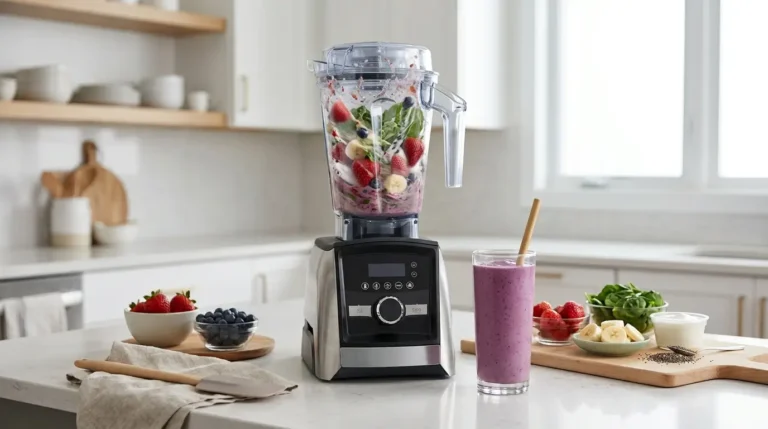
The motor is a 2.2 HP unit, slightly more powerful than the 5200’s 2 HP, and the Ascent X4 uses Vitamix’s self-detect technology that automatically recognizes which container is attached and adjusts blending parameters accordingly. The touchscreen interface is clean, intuitive, and genuinely easy to operate.
Five preset blending programs handle smoothies, frozen desserts, soups, hot soups, and dips and spreads, and each program runs automatically for its optimized time and speed profile before stopping on its own. A timer shows elapsed blend time, and you can add 15 seconds of additional blending time with a single tap when your nut butter or smoothie needs just a little more work.
The 48-ounce low-profile container fits under most standard kitchen cabinets, which addresses one of the 5200’s main practical limitations. The built-in tamper holder keeps the included tamper accessible without cluttering the counter. The self-cleaning program is as fast and effective as on the 5200.
The 10-year full warranty is the best coverage Vitamix offers and reflects both the quality of the machine and the company’s confidence in it.
Who this is for: Home cooks who want Vitamix-level performance with preset convenience and a modern interface. Also ideal for households where the 5200’s cabinet height is a problem, and for anyone who prefers to press a button and walk away rather than manage the blend manually.
Who should look elsewhere: If you primarily want manual control and do not need presets, the Vitamix 5200 or E310 deliver very similar blending performance at a significantly lower price. The 48-ounce container is smaller than the 5200’s 64 ounces, which matters for large-batch cooking.
- 2.2 HP motor provides slightly more power than the Vitamix 5200 in a more modern package.
- Self-detect technology recognizes the attached container and adjusts parameters automatically.
- Intuitive touchscreen interface with 10 variable speeds and 5 preset blending programs.
- Preset programs stop automatically at optimized times, no manual monitoring required.
- Built-in timer with 15-second extension button for fine-tuning texture.
- Low-profile 48-ounce container fits under most standard kitchen cabinets.
- Built-in tamper holder keeps the tamper accessible and tidy.
- Industry-leading 10-year full warranty.
- The most expensive blender in this guide at $600 to $700.
- 48-ounce capacity is smaller than the 5200's 64 ounces, limiting large-batch blending.
- Very loud at high speeds, like all high-performance blenders.
- Weight at 14.3 pounds makes it heavier and harder to move than some competitors.
- If you never use preset programs, you are paying for features you will not use.
3. Vitamix E310 Explorian — Best Vitamix for the Budget-Conscious

| Price | Around $270 to $320 |
| Motor | 2 HP (1,400 watts) |
| Capacity | 48 oz |
| Speeds | 10 variable |
| Warranty | 5 years |
The Vitamix E310 Explorian is one of the best-kept secrets in the blender category. It uses the same 2 HP motor hardware as the 5200 and produces blending results that are essentially indistinguishable from it in taste tests, but it costs $100 to $200 less depending on current pricing. What do you give up? Primarily the container size (48 oz rather than 64 oz) and two years of warranty coverage (five years instead of seven). That is a trade-off a lot of households will happily make.
RTINGS.com gave it a 9.2 out of 10 across their testing metrics. Users with a 4.8 average rating on Amazon consistently describe it as matching the performance of more expensive Vitamix models. The controls are identical to the 5200: a variable speed dial and a pulse toggle. The 48-ounce container creates the same vortex blending action. The self-cleaning cycle works the same way. The blades are the same aircraft-grade stainless steel.
For households of one to three people who do not need to blend 64-ounce batches at a time, this machine delivers everything the Vitamix reputation promises at a more accessible price point.
Who this is for: The person who wants genuine Vitamix performance and is not ready to spend $400 to $480 for the 5200. Also an excellent choice for smaller households where the 64-ounce capacity of the 5200 is more than you typically need.
Who should look elsewhere: Large families who regularly blend full 64-ounce batches will find the smaller container a limitation. If a seven-year warranty matters to you over a five-year one, the 5200 is worth the premium.
- Same 2 HP blending performance as the Vitamix 5200, confirmed by independent RTINGS.com testing.
- 4.8-star average across thousands of Amazon reviews reflects consistently strong real-world satisfaction.
- 48-ounce container fits under more kitchen cabinets than the taller 5200 container.
- Variable 10-speed dial allows precise manual texture control.
- Self-cleaning cycle works identically to the 5200: water plus soap and 30 to 60 seconds.
- Hardened stainless steel blades create the same vortex blending action as other Vitamix models.
- $100 to $200 less than the 5200 depending on current sale pricing.
- Five-year full warranty is excellent coverage for this price tier.
- 48-ounce capacity is limiting for large-batch blending compared to the 5200's 64 ounces.
- Five-year warranty is solid but shorter than the 5200's seven-year coverage.
- No preset programs; entirely manual like the 5200.
- Just as loud as other Vitamix models at high speed.
- Slightly less well-known than the 5200, so it can be harder to find on sale.
4. Blendtec Classic 575 — Best Alternative to Vitamix

| Price | Around $380 to $430 |
| Motor | 1,560 watts |
| Capacity | 32 oz (Twister jar) or 36 oz (WildSide+ jar) |
| Speeds | 5 button speeds plus 2 manual programs |
| Warranty | 2 years |
Blendtec and Vitamix are the two brands that professional blending facilities, high-end smoothie bars, and serious home cooks consistently reach for, and comparing them is a genuine debate worth having. The Classic 575 is Blendtec’s entry-level machine, and entry level for Blendtec still means a very capable, powerful blender.
The motor is a 1,560-watt unit with Blendtec’s patented Smart-Touch technology. Rather than a variable speed dial, it uses large, clearly labeled buttons for five speed levels plus two automatic programs (a smoothie cycle and a cleaning cycle) that run through their optimized speed profiles and stop automatically when finished.
If you like Vitamix’s manual control, this interface will feel different and slightly less granular. If you prefer press-and-walk-away blending, Blendtec’s approach may feel more natural.
The WildSide+ jar that typically ships with the 575 has a distinctive five-sided shape with a patented asymmetric design that creates multiple blending vortices simultaneously, preventing ingredients from spinning in a single circular pattern and producing more thorough contact with the blades.
The blades themselves are flat and wide rather than narrow and angled, spinning at extremely high speeds to achieve the same result through velocity that Vitamix achieves through angled geometry.
The Classic 575 was the blender of choice at Starbucks for years before the chain switched to Vitamix, which tells you something about its commercial-grade durability and performance. For most blending tasks, it is directly competitive with the Vitamix 5200.
Who this is for: Serious blender users who want Vitamix-level performance but prefer a push-button interface to manual dial control. Also a good alternative for anyone whose Vitamix loyalty is not brand-specific and who wants another premium option to compare.
Who should look elsewhere: The two-year warranty is significantly shorter than Vitamix’s coverage at comparable prices. If long-term warranty coverage is a priority, the Vitamix E310 or 5200 provide five and seven years respectively.
- 1,560-watt motor produces blending performance competitive with the Vitamix 5200 in independent taste tests.
- Patented five-sided WildSide+ jar creates multiple simultaneous blending vortices for thorough, even blending.
- Smart-Touch automatic programs stop at optimized times, no manual monitoring required.
- Self-cleaning program runs automatically at the push of a button.
- More compact footprint than many full-size blenders in this performance tier.
- Available in several colors.
- Historically proven in commercial Starbucks use, reflecting genuine durability at volume.
- Two-year warranty is short compared to Vitamix's coverage in the same price tier.
- Five button speeds offer less fine-grained texture control than Vitamix's 10-speed variable dial.
- The WildSide+ jar's wider base can result in slightly less thorough blending of small batches compared to narrower containers.
- Replacement jars are expensive and proprietary.
- Less intuitive for users who want analog, precise manual control.
5. Breville Fresh and Furious BBL620 — Best Mid-Range Blender

| Price | Around $150 to $200 |
| Motor | 1,100 watts |
| Capacity | 50 oz |
| Speeds | 5 plus auto-pulse and ice crush |
| Warranty | 1 year (with option to extend) |
The Breville Fresh and Furious sits in a sweet spot where price and performance intersect more comfortably than anywhere else in the blender market. At around $150 to $200, it produces smoothies, sauces, and soups that easily outperform what machines twice its price from lesser brands achieve, and it does this quietly enough that it stands out in a category where noise is one of the most common complaints.
America’s Test Kitchen names it their favorite midpriced blender. The Fresh and Furious blends “just a tad less finely” than the Vitamix 5200 in their testing, which is a remarkably small gap for roughly a third of the price. The 1,100-watt motor handles ice, frozen fruit, and leafy greens efficiently.
Five speed settings plus an auto-pulse mode and a dedicated ice crush function cover the full range of common blending tasks. The 60-second countdown timer on the display gives you a sense of progress during longer blending tasks and helps prevent over-blending.
The 50-ounce jar capacity sits between the personal blender and the full-size machine categories and works well for two to three person households making daily smoothies or small soup batches. The 60-second self-cleaning cycle works well, running warm soapy water through the jar at high speed. Noise levels are genuinely lower than most 1,000-watt-plus machines, which is a real practical advantage.
The primary limitation is that the blades are not removable from the jar, which means deep cleaning by hand requires some effort if the self-cleaning cycle does not reach every spot.
Who this is for: Households that want excellent blending quality without paying Vitamix prices. Also the best choice in this guide for anyone who blends while others are sleeping or living in shared spaces where the noise of a premium high-performance blender would be disruptive.
Who should look elsewhere: If you need to blend heavy, thick batches of nut butter or very fibrous vegetables daily, the 1,100-watt motor will work harder than the premium machines and may produce slightly less smooth results on the most demanding tasks. A Vitamix or Blendtec handles the ceiling better.
- Best midpriced blender pick at America's Test Kitchen, performing close to the Vitamix 5200 at roughly a third of the price.
- Operates noticeably more quietly than most high-performance blenders, a meaningful advantage for shared spaces.
- 60-second countdown timer helps monitor blend progress and prevent over-processing.
- Separate preset buttons for smoothies and green smoothies are optimized for each task specifically.
- 50-ounce capacity handles two to three servings comfortably.
- Self-cleaning cycle is effective and takes about 60 seconds.
- 1,100 watts is sufficient for ice, frozen fruit, leafy greens, and most soup and sauce tasks.
- Slimmer profile than many full-size blenders takes up less counter space.
- Blades are not removable from the jar, making thorough hand-cleaning harder than it should be.
- On maximum tasks like very thick nut butters or fibrous root vegetables, the 1,100-watt motor produces slightly less smooth results than premium machines.
- The one-year warranty is shorter than the coverage on Vitamix and Blendtec machines in this tier.
- Can occasionally struggle with extra-large pieces of frozen fruit or thick frozen smoothie mixes; cut fruit smaller for best results.
6. Hamilton Beach Power Elite Glass Blender — Best Budget Full-Size Blender

| Price | Around $40 to $50 |
| Motor | 700 watts |
| Capacity | 40 oz glass jar |
| Speeds | 12 |
| Warranty | 3 years |
At around $45, the Hamilton Beach Power Elite is the best-performing blender under $60 I have tested, and it earns that position honestly rather than by default. The glass jar is the feature that separates it from the sea of similarly priced plastic-jug blenders, and the difference in daily use is real.
Glass does not absorb food odors the way plastic does. It does not cloud or scratch over time from repeated blending of hard ingredients. The jar is dishwasher safe. For budget blending, these are meaningful advantages.
The 700-watt motor handles smoothies with soft and moderately frozen fruit well. It manages ice with reasonable effectiveness, though expect some texture variation compared to higher-powered machines.
Twelve distinct blend functions labeled on the front panel cover everything from ice crush and dice to liquefy and whole juice, though most of these are speed variations by another name rather than genuinely different blending programs.
The wave action technology pulls ingredients down toward the blades from the sides of the jar rather than relying purely on gravity, which helps reduce the pocket of unblended ingredients that can form at the top of lower-end blenders.
A pour spout integrated into the lid is a small but genuinely useful feature, letting you pour smoothies or sauces cleanly without removing the lid entirely and risking splatter.
A well-equipped kitchen goes beyond just blending—if you love baking and cooking, don’t miss our guide on Stand Mixers for Home Baking & Cooking to make mixing dough, batter, and desserts effortless.
Who this is for: Anyone who wants a reliable daily blender for smoothies, light soups, and sauces without spending more than $50. Ideal as a starter blender for students, small apartments, or households that blend infrequently and want something honest and functional rather than a machine with impressive-sounding specs.
Who should look elsewhere: For daily green smoothies with tough kale stems, frozen fruit, or any kind of nut blending, this machine will struggle. It is a capable light-duty blender, not a heavy-duty tool.
- Glass jar resists odor absorption, scratching, and clouding that affect plastic jars over time.
- Glass jar, lid, and blades are dishwasher safe for easy, thorough cleaning.
- Integrated pour spout in the lid reduces mess when serving.
- Wave action technology helps prevent the pocket of unblended material that forms at the top of many budget blenders.
- 12 functions provide reasonable variety for the price, including an ice crush setting.
- Three-year warranty is notably longer than most blenders in this price range.
- Compact and lightweight, easy to store in a cabinet.
- Genuinely effective for everyday smoothies with fresh and lightly frozen fruit.
- 700 watts is insufficient for tough kale stems, dense frozen fruit, or any nut processing.
- Brew time for a full smooth blend of fibrous ingredients is noticeably longer than on higher-powered machines.
- The lid can be difficult to remove after blending, particularly after thicker smoothies that create suction.
- Blending is loud relative to the motor size.
7. Ninja Professional Plus Kitchen System BN801 — Best for Large Families

| Price | Around $150 to $180 |
| Motor | 1,400 peak watts |
| Capacity | 72 oz |
| Speeds | Auto-iQ plus 5 preset programs |
| Warranty | 1 year |
If you are buying a blender primarily to serve a household of four or more people, the capacity discussion matters more than almost any other specification. The Ninja BN801’s 72-ounce pitcher is the largest in this guide, and it is a genuine practical advantage for households that make a full pitcher of smoothies in the morning, large soup batches, or party-ready frozen drinks.
The 1,400 peak-watt motor drives Ninja’s total crushing blades, a stacked multi-blade assembly that Ninja designed specifically to handle a full 72-ounce load without the motor straining or the results suffering from the sheer volume of ingredients.
Five Auto-iQ preset programs handle smoothies, ice crushing, smoothie bowl, extract, and drink blending with automatic speed cycling that adjusts intensity throughout each program before stopping when finished. You press a button and walk away, which is a genuinely useful feature when you are managing multiple parts of a morning routine.
The system also includes two 16-ounce single-serve cups with spout lids, giving you the option to blend individual portions directly in a to-go container on the same base. The blender jar and cups are all dishwasher safe.
The trade-off for the price and size is precision. The Ninja BN801 is not the machine for someone who wants fine control over blending texture or who makes demanding preparations like nut butter or raw seed blends. It excels at volume blending of standard smoothie and frozen drink ingredients.
Who this is for: Larger households where blending capacity is the top priority and daily use involves full-pitcher batches of smoothies, frozen drinks, or soups. Also great for hosting, meal prep, and office or communal kitchen settings.
Who should look elsewhere: Anyone who wants precise, artisan-level blending performance will find the Ninja’s ceiling lower than the Vitamix or Blendtec machines. If you primarily make single-serve drinks, you are paying for capacity you will not use.
- 72-ounce pitcher is the largest in this guide, ideal for large families and batch blending.
- 1,400 peak-watt total crushing blade system handles full-pitcher loads efficiently.
- Five Auto-iQ preset programs with automatic speed cycling stop on their own when the program completes.
- Includes two 16-ounce single-serve to-go cups on the same motor base for individual portions.
- All removable parts including the pitcher, blades, and cups are dishwasher safe.
- Competitive price for the capacity and feature set offered.
- Auto-iQ programs are well-designed and produce consistently good results for standard smoothies and frozen drinks.
- One-year warranty is short for a machine in this price and use category.
- Less effective than premium blenders for demanding tasks like nut butter, dry grain grinding, or very fibrous vegetables.
- Auto-iQ programs, while convenient, offer less precision than a fully variable speed control for texture-sensitive preparations.
- Loud, particularly at the highest crushing speeds.
- The 72-ounce pitcher is unwieldy to handle when full.
8. Ninja Foodi Power Blender Ultimate System — Best Blender and Food Processor Combo

| Price | Around $250 to $290 |
| Motor | 1,600 watts |
| Capacity | 72 oz blender pitcher |
| Speeds | 8 speeds plus 7 presets |
| Warranty | 1 year |
The premise of the Ninja Foodi Power Blender Ultimate System is simple: what if your blender could also do everything your food processor does, without you needing to own two separate appliances? In the case of the Foodi Power Blender Ultimate System, that premise is delivered on more convincingly than in any other combo machine I have tested.
The 1,600-watt motor powers a 72-ounce blender pitcher with smartTORQUE technology, which means the motor maintains consistent power output even as the load increases, preventing the bogging down that causes lower-powered combo machines to stall in the middle of a thick blend. The blending performance on smoothies and frozen drinks is genuinely excellent.
What sets this system apart from a standard blender is the food processing disc system. Two included discs (one for slicing and shredding, one for grating) work directly in the blending pitcher with no separate food processor bowl required. Shredding a full block of cheese, slicing a bowl of vegetables for stir-fry, or grating garlic takes seconds rather than the minutes of manual knife work it would otherwise require.
Real-world testers consistently highlight that time-consuming prep jobs like slicing potatoes, shredding carrots, and grating hard cheese are transformed by having this capability on the same base they use for their morning smoothie.
Seven preset programs cover an extensive range: smoothie, smoothie bowl, extract, ice, chop, dough, and spread. The system is Ninja’s most versatile kitchen machine in terms of sheer capability range.
Who this is for: Households that regularly do meal prep, cook frequently, and want to consolidate appliances. If you currently own both a blender and a food processor and resent how much counter and cabinet space they occupy together, this machine is designed precisely for that frustration.
Who should look elsewhere: If you primarily make smoothies and want maximum blending precision, a dedicated premium blender like the Vitamix 5200 produces better results for that single use case. Storage is more complicated with the disc accessories than with a standard blender, as there is no included storage case for the blades.
- Food processing disc system integrates slicing, shredding, and grating directly into the 72-ounce blending pitcher with no separate bowl required.
- Seven preset programs cover an extensive range from smoothies through dough making.
- 72-ounce pitcher handles large batches effectively.
- SmartTORQUE prevents the motor from bogging down in thick, heavy mixes.
- Excellent for households that currently own both a blender and a food processor and want to consolidate.
- All removable blending parts are dishwasher safe.
- TechRadar gave the system 4.5 out of 5 stars with particular praise for its multi-mode performance.
- One-year warranty is brief for a machine at this price point.
- No included storage case or bag for the disc blades, making drawer storage slightly hazardous.
- Suction cups on the base keep the machine stable during use but make lifting and moving it awkward.
- Blending quality for the most demanding tasks (nut butters, raw seed grinding) does not match dedicated Vitamix-tier machines.
- Large footprint requires meaningful counter or cabinet space.
9. KitchenAid K400 Variable Speed Blender — Best Blender for Design-Conscious Kitchens

| Price | Around $200 to $230 |
| Motor | 1,200 watts |
| Capacity | 56 oz |
| Speeds | 5 plus 3 presets |
| Warranty | 5 years |
If you care about what your kitchen looks like as much as how it functions, the KitchenAid K400 deserves serious consideration. It is available in more colors than any other blender in this guide, ranging from classic matte black and white through empire red, mineral water blue, and several other options, all in the soft-matte finish that KitchenAid has made a signature of their product line.
Beyond aesthetics, the K400 performs genuinely well. The 1,200-watt motor handles standard smoothies, soups, sauces, and ice with consistent results. A proprietary intelli-speed motor control monitors the contents of the pitcher during blending and adjusts the motor speed automatically to maintain the optimal rotation rate for what it detects, rather than running at a fixed speed that might be too fast or too slow for the current load.
In practical terms, this means the K400 adapts as your smoothie thickens toward the end of the blend, reducing the need to stop and adjust manually.
Three specific recipe programs: ice crush, icy drinks, and smoothie, run automatically and stop when done. A simple dial controls the five variable speeds and pulse function. The self-cleaning program fills and cycles the jar effectively. The 5-year warranty puts this machine in the same durability class as Vitamix’s Explorian range, which is reassuring at this price point.
Who this is for: Home cooks who want genuinely good blending performance in a machine that looks intentional and refined on the counter. Also an excellent choice for anyone who already owns KitchenAid stand mixer accessories and wants a cohesive aesthetic in their kitchen.
Who should look elsewhere: The blades on the K400 are not removable from the pitcher, which makes thorough hand-cleaning require some effort after sticky preparations. If you regularly make nut butters or heavily seeded smoothies that leave residue in the blade area, this matters.
- Available in the widest color range of any blender in this guide, including multiple matte and metallic finishes.
- Intelli-speed motor control adapts motor output to detected pitcher contents automatically.
- 1,200 watts handles smoothies, soups, sauces, and ice efficiently.
- Three automatic recipe programs stop on their own when the program cycle completes.
- 56-ounce capacity suits households of two to four people well.
- Self-cleaning program is effective and convenient.
- 5-year warranty provides excellent long-term coverage for the price.
- Optional single-serve and small-batch attachments available as add-ons if needed.
- Blades are not removable from the pitcher, making deep hand-cleaning awkward after thick or seeded preparations.
- The 5-speed range offers less granular texture control than Vitamix's 10-speed variable dial.
- Some long-term users report motor issues after several years of heavy use, despite the 5-year coverage.
- More expensive than the Breville Fresh and Furious for a similar power level and blending performance.
10. KitchenAid K150 3-Speed Ice Crushing Blender — Best for Frozen Drinks and Ice

| Price | Around $100 to $130 |
| Motor | 650 watts |
| Capacity | 48 oz |
| Speeds | 3 plus ice crush |
| Warranty | 1 year |
Not every blender needs to do everything. If your primary blending goal is crushing ice for frozen drinks, slushies, margaritas, and the occasional smoothie with heavily iced bases, the KitchenAid K150 is built specifically and cleverly for that task and outperforms machines with significantly higher wattage in this specific application.
The blade design is the key. KitchenAid engineered asymmetric blades for the K150, with each blade bent at multiple angles rather than sitting in a flat plane. When the motor runs, these angled blades create inward drag toward the center of the pitcher, pulling ice toward the blade continuously rather than letting it migrate to the edges where it avoids contact.
The brand claims it can process half a tray of ice in as little as 10 seconds, which in testing holds up as an accurate claim for finely crushed ice rather than chunked ice.
The Soft Start feature ramps the motor up gradually from a stopped position rather than hitting full speed immediately, which dramatically reduces the splatter and shock that causes lids to leak or jump on cheaper machines when blending ice.
Three speed settings plus the dedicated ice crush program handle the full range of this machine’s intended use cases. It is available in KitchenAid’s full color range, matching the K400 aesthetically.
Who this is for: Households that make frozen drinks regularly, anyone who hosts and wants a reliable machine for frozen cocktails and mocktails, and anyone whose kitchen does not need a full-power premium blender but does need something that reliably and quickly crushes ice.
Who should look elsewhere: At 650 watts, the K150 is not the right choice for daily green smoothies with tough fibrous greens, nut butter making, or hot soup blending. It is purpose-built for ice and frozen drink applications.
- Asymmetric multi-angle blade design engineered specifically to pull ice inward toward the blade for exceptionally efficient crushing.
- Soft Start feature ramps up gradually to reduce splatter and lid pressure when blending from stopped.
- Can process half a tray of ice in approximately 10 seconds at the ice crush setting.
- Very sturdy, heavy base that does not slide or vibrate during ice crushing cycles.
- Bottom rack dishwasher-safe jar makes cleanup straightforward.
- Available in KitchenAid's full color range for aesthetic kitchen coordination.
- Satisfying, intuitive controls with a dedicated ice crush function clearly labeled.
- 650 watts is genuinely insufficient for demanding blending tasks: fibrous greens, nuts, seeds, or hot soups.
- Lid can be difficult to remove after a full ice crush cycle due to suction.
- One-year warranty is brief.
- Not a versatile all-purpose blender; it does a specific job very well and a wider range of jobs less well.
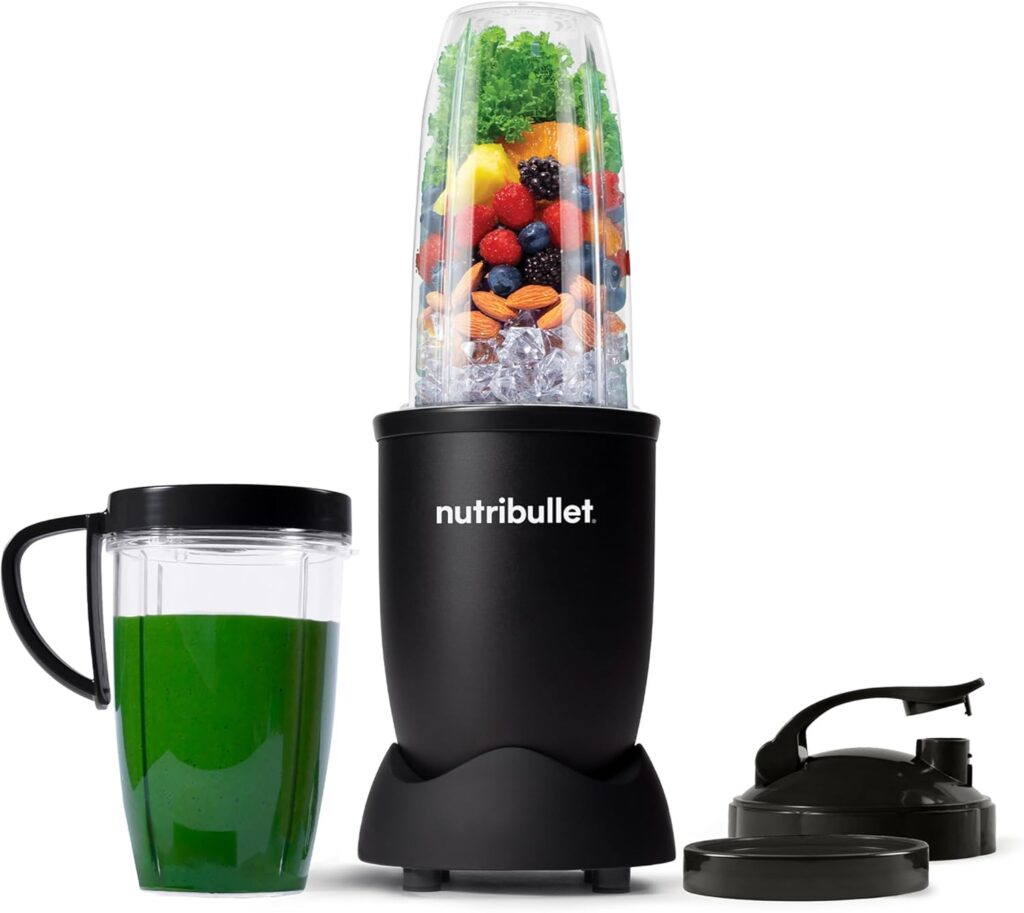
11. Nutribullet Pro 900 — Best Personal Blender
| Price | Around $85 to $100 |
| Motor | 900 watts |
| Capacity | 32 oz |
| Speeds | 1 |
| Warranty | 1-year limited |
The Nutribullet Pro 900 holds a rare position in the kitchen appliance world: it is a machine that senior editors at multiple major review publications own personally, use daily, and have used for years, rather than just testing briefly for a review. That kind of endorsement matters. Wirecutter’s testing team called it “small-but-mighty” and noted that it handled everything from smoothies to frozen desserts without complaint.
The 900-watt motor drives extractor blades (upward-angled blades specifically designed to break down and extract nutrients from seeds, stems, and skins rather than just chopping) at speeds that produce genuinely silky smoothies from whole fruits, fibrous greens, and frozen ingredients. Even kale stems and pineapple cores, which choke lesser personal blenders, blend smoothly within about 60 seconds.
Operation could not be simpler. Push the blending cup down onto the base and twist until it locks and the motor starts. Twist in the opposite direction to stop and unlock. There is no separate power button, no speed dial, no program to select. For a morning routine where you want to blend and go with minimum friction, this simplicity is a genuine advantage.
The machine comes with two 32-ounce blending cups, each with both a to-go handled ring and a flip-top sipping lid. The cups are dishwasher safe; the blade is hand-wash only. The whole setup stores in a drawer or small cabinet space rather than permanently occupying counter space.
Who this is for: Daily smoothie drinkers who make one portion at a time and want the fastest possible morning routine. Also ideal for small apartments, offices, dorm rooms, and anyone who values compact storage over full-batch capacity.
Who should look elsewhere: If you regularly make smoothies for two or more people at a time, the 32-ounce capacity will require multiple batches. If you want to make hot soups, nut butters in quantity, or other demanding preparations, you need a full-size blender.
- 900 watts produces genuinely silky smoothies from fibrous greens, seeds, and frozen fruit in about 60 seconds.
- Extractor blade design is specifically optimized for breaking down seeds, stems, and skins.
- Twist-lock operation is as simple as any blending experience gets, ideal for busy mornings.
- Comes with two 32-ounce cups with both handled rings and flip-top sipping lids.
- Cups are dishwasher safe for effortless daily cleaning.
- Compact enough to store in a drawer or cabinet without permanently occupying counter space.
- Available in multiple colors.
- Very strong long-term user satisfaction; multiple reviewers have used theirs daily for four or more years.
- Single 32-ounce cup capacity requires multiple batches for households of two or more.
- One speed only means no control over blending texture; everything blends at maximum intensity.
- Blade assembly is hand-wash only; not dishwasher safe.
- Loud for a personal-size machine.
- Cannot make hot soups, nut butters, or large batch preparations.
12. Cleanblend Commercial Blender — Best Professional-Grade Budget Option

| Price | Around $160 to $180 |
| Motor | 1,800 watts (3 HP) |
| Capacity | 64 oz |
| Speeds | Variable dial |
| Warranty | 5 years |
The Cleanblend Commercial Blender is one of the most interesting value propositions in the entire blender market. It runs a 1,800-watt, 3 HP motor: more raw power than a Vitamix 5200 (2 HP), more than a Vitamix Ascent X4 (2.2 HP), more than the Blendtec Classic 575 (1,560 watts), and it retails for a fraction of what any of those machines costs. Forbes named it to their best blender list. The brand’s five-year warranty puts it in the same durability class as mid-range Vitamix models.
In practice, the Cleanblend handles smoothies, soups, frozen drinks, and nut butters with impressive power. A variable speed dial gives you control over the full range from gentle stirring to maximum-speed crushing. The 64-ounce BPA-free container is large enough for full-family batches. The stainless steel blades are heavy gauge and designed for commercial-frequency use.
The main limitation is noise. The Cleanblend is one of the louder blenders in this guide, which is a function of the combination of high wattage and a simple enclosure with no noise-reduction engineering. The pitcher is not dishwasher safe and must be hand-washed, which adds a step to daily cleanup compared to machines with self-cleaning cycles.
Who this is for: Power users who want maximum motor output at a budget price and do not mind the noise or manual cleaning. Also an excellent choice for home smoothie shops, very frequent blending households, or anyone who wants commercial-grade power without a commercial-grade price.
Who should look elsewhere: If noise is a significant concern in your home or living situation, the Cleanblend is not the right choice. If you want a machine with preset programs and a self-cleaning cycle, the Vitamix models offer a better overall experience despite slightly lower wattage.
- 1,800-watt, 3 HP motor is the most powerful in this guide, exceeding even the top Vitamix models in raw wattage.
- Produces professional-quality blending results for smoothies, soups, frozen drinks, and nut butters.
- Variable speed dial provides full texture control from low through maximum speed.
- 64-ounce BPA-free container handles full-family batches.
- Five-year full warranty puts it in the same coverage class as mid-tier Vitamix models.
- Forbes named it to their best blender list.
- Significantly less expensive than Vitamix or Blendtec models with similar or lower wattage.
- Heavy gauge stainless steel blades designed for commercial-frequency daily use.
- One of the loudest blenders in this guide; noise level is a real consideration.
- The 64-ounce pitcher is not dishwasher safe and must be hand-washed.
- No self-cleaning cycle; cleaning requires manual water-and-soap handwashing.
- No preset programs; entirely manual operation.
- Less refined user interface than the Vitamix or KitchenAid machines.
- Brand is less established than Vitamix, Blendtec, or Ninja, which may matter for long-term parts and support.
13. Zwilling Enfinigy Countertop Power Blender — Best for Design and Smart Features Together

| Price | Around $250 to $300 |
| Motor | 1,400 watts |
| Capacity | 64 oz |
| Speeds | 12 plus 6 presets |
| Warranty | Limited manufacturer warranty |
The Zwilling Enfinigy is the blender I recommend to anyone who wants a machine that looks as considered as it performs. Zwilling is better known for German-made knives and cookware, and they applied the same attention to material quality and thoughtful design to this blender.
The LED display that turns off automatically when the machine is idle, the safety lock that prevents the motor from running unless the lid is properly seated, and the app connectivity for recipe-guided blending programs all reflect a product that was designed rather than simply assembled.
The 1,400-watt motor handles the full range of blending tasks confidently. Six preset programs cover smoothies, ice crushing, cleaning, and more. The 12-speed range is the widest in this guide, giving you fine-grained control over texture that even the KitchenAid K400 does not match in this price range.
The 64-ounce glass-option container (a BPA-free plastic version is also available) resists odors and staining. The lid doubles as a measuring cup, which is a small but frequently appreciated detail.
A unique safety locking mechanism physically prevents the machine from starting if the lid is not fully engaged, which is a feature that deserves more attention than it gets in this category given how many blending incidents involve lids coming off mid-blend.
Who this is for: Home cooks who want a premium-feeling, German-designed machine with smart features, wide speed range, and an aesthetic that genuinely belongs in a thoughtfully appointed kitchen. Also good for tech-enthusiastic users who would use the companion app for recipe integration.
Who should look elsewhere: The safety locking mechanism, while genuinely useful, has been noted by some users as making thorough cleaning of the handle area difficult because food can collect in the lock mechanism. If simplified daily cleaning is your priority, the Vitamix’s self-cleaning cycle is more convenient.
- 1,400-watt motor handles the full range of blending tasks from smoothies through soups and nut butters.
- 12-speed range is the widest in this guide for fine-grained texture control.
- LED display with auto-off keeps the machine looking clean and considered when not in use.
- Safety locking lid physically prevents motor from starting if the lid is not fully engaged.
- Free companion app provides recipe-guided blending programs.
- 64-ounce capacity serves large households and batch cooking needs.
- Lid doubles as a measuring cup, a small but frequently useful design detail.
- Available in both glass and BPA-free plastic container options.
- Some users report that food accumulates in the safety lock mechanism in the handle area, making thorough cleaning difficult.
- No self-cleaning cycle; cleaning requires manual or dishwasher washing.
- Limited manufacturer warranty; terms are less comprehensive and longer-duration than Vitamix's coverage.
- Companion app requires a smartphone and a working connection to access recipe programs, which adds a dependency some users find unnecessary.
- Expensive relative to the blending performance compared to Vitamix models in a similar price range.
14. Oster MyBlend Personal Blender — Best Ultra-Budget Personal Blender

| Price | Under $30 |
| Motor | 250 watts |
| Capacity | 20 oz |
| Speeds | 1 |
| Warranty | 1-year limited |
I know what you are thinking: 250 watts cannot possibly produce a decent smoothie. And you are right that the Oster MyBlend is not a machine I would recommend for daily green smoothies with whole kale leaves and frozen mango chunks. But for someone who makes occasional smoothies with fresh or very lightly frozen soft fruit, wants something that stores in a kitchen drawer, weighs almost nothing, and costs under $30, the MyBlend is genuinely the right choice.
The 20-ounce blending cup converts directly into a travel bottle with an included sip lid. You blend in the cup, swap the blending lid for the travel lid, and leave. There is no pitcher to wash, no separate container to rinse. For someone who commutes and wants a fresh smoothie they can finish on the way to work, the workflow is genuinely streamlined.
The blade is removable, which makes cleaning straightforward. The cup is dishwasher safe. The machine is so light and small that it fits in a cabinet alongside your pantry items rather than needing its own appliance shelf.
Who this is for: Students, commuters, occasional smoothie makers, office use, and anyone who needs a functional personal blender at the lowest possible price. Also a useful second machine for a vacation home or seasonal kitchen.
Who should look elsewhere: Anyone who makes daily smoothies with frozen fruit, leafy greens, ice, or anything moderately fibrous will find 250 watts insufficient. One notable annoyance reported frequently by users is that the cup can separate from the blade assembly when you flip the unit upright, requiring care when detaching after blending.
- Under $30 makes it accessible for virtually any budget.
- 20-ounce blending cup converts directly to a travel bottle with the included sip lid, requiring no separate container.
- Removable blade assembly makes handwashing straightforward.
- Dishwasher-safe blending cup simplifies cleanup further.
- Extremely compact and lightweight; stores in a drawer or shelf space.
- One-year limited warranty provides basic coverage.
- Works well for single-portion smoothies with fresh, soft fruit.
- 250 watts is insufficient for frozen fruit chunks, ice, leafy greens, nuts, or any moderately tough ingredient.
- No timed blending; you must hold the button down continuously throughout the blend.
- The cup tends to separate from the blade assembly when flipped upright after blending, requiring careful handling to avoid spills.
- Single speed only; no control over texture or intensity.
- Less durable long-term than any other machine in this guide given the lower-quality motor and construction.
15. Beast Blender Plus Hydration System — Best Compact Full-Performance Personal Blender

| Price | Around $130 to $150 |
| Motor | 1,000 watts |
| Capacity | 24 oz |
| Speeds | Variable |
| Warranty | 1 year |
The Beast Blender entered the personal blender market a few years ago with a compelling combination of compact form factor, strong motor output, and a built-in infuser compartment that no other personal blender in this guide offers.
It has earned a loyal following, particularly among fitness-focused users who want a single machine that blends a high-quality protein smoothie and has a compartment built into the lid for mixing in supplements, protein powder, or greens powder after blending rather than during it.
The 1,000-watt motor puts it meaningfully above the Nutribullet Pro 900 in raw power, and it produces similarly smooth results from frozen fruit and leafy greens. Variable speed control through the base dial gives you more texture options than the Nutribullet’s single-speed design. The 24-ounce container is slightly smaller than the Nutribullet Pro’s 32 ounces but still sufficient for a full serving with room for ice.
The hydration system (the infuser compartment in the lid) is genuinely useful for anyone whose supplementation routine involves powders they prefer to add post-blend rather than running through the blades, which can denature some heat-sensitive ingredients or cause them to coat the blades rather than fully distributing through the drink.
Who this is for: Fitness-focused users, athletes, and health-conscious drinkers who want a single machine that blends and also facilitates clean supplement mixing. Also a strong choice for anyone who finds the Nutribullet’s 32-ounce cup too large for daily portions and prefers a more compact form.
Who should look elsewhere: The 24-ounce capacity is the smallest among the full-power blenders in this guide. If you make smoothies for two or want extra volume, the Nutribullet Pro 900’s 32-ounce cup is a better fit. The built-in infuser is a feature you pay for; if you would never use it, you are paying for something with no personal benefit.
- 1,000-watt motor is more powerful than the Nutribullet Pro 900 and produces smooth, high-quality results from fibrous greens and frozen fruit.
- Variable speed dial provides texture control that single-speed personal blenders cannot offer.
- Built-in infuser compartment in the lid allows clean post-blend supplement or powder integration.
- Compact enough for daily countertop use without occupying significant space.
- Attractive, modern design that looks well-considered rather than purely functional.
- Stainless steel blade assembly is robust and produces consistently smooth blending results.
- Loyal and growing user base with strong repeat-purchase satisfaction.
- 24-ounce capacity is the smallest among full-power blenders in this guide, insufficient for two-serving blending.
- One-year warranty is brief for the price.
- The built-in infuser is a meaningful feature if you use it and an extra cost if you do not.
- Less widely available than Nutribullet and Ninja, which means fewer retail locations to see it in person before buying.
- At $130 to $150, it is priced similarly to the Nutribullet Pro 900 and the KitchenAid K150 without obviously outperforming both for users who do not need the infuser.
One Final Note on Beans, Grains, and Dry Blending
Several machines in this guide, particularly the Vitamix models and the Cleanblend, can grind dry grains, oats, and dried beans into flour using a dry grain container (sold separately for Vitamix). If you want to mill your own flour at home, this capability is remarkable and dramatically cheaper than buying specialty flours. It is worth mentioning because it represents a use case many buyers do not consider when shopping for a blender but discover and genuinely value after purchase.
A good kitchen setup goes beyond smoothies and sauces check out our guide on top-rated air fryers for quick, healthier meals with less oil. Visit the guide to upgrade your cooking routine.
Final Thoughts from Amelia
Buying a blender is one of those kitchen decisions where the gap between good enough and genuinely excellent is larger than you expect until you experience both. A great blender changes what you make and how often you cook from scratch. A mediocre one sits on the counter and accumulates resentment.
I hope this guide helps you find the machine that fits your actual cooking life rather than the one with the most impressive-sounding specification.
This article contains affiliate links. If you purchase through one of my links, I may receive a small commission at no additional cost to you. This arrangement does not influence my recommendations, which are always based on research, testing data, and genuine user feedback.
Amelia Harper is a kitchen and home appliance writer who has covered consumer products for nearly a decade. She focuses on cutting through marketing claims to give readers honest guidance they can use with confidence.
A good blender is great for smoothies and recipes, but don’t forget your morning routine check out our guide to the Best Coffee Makers to find the perfect machine for fresh, flavorful coffee at home.