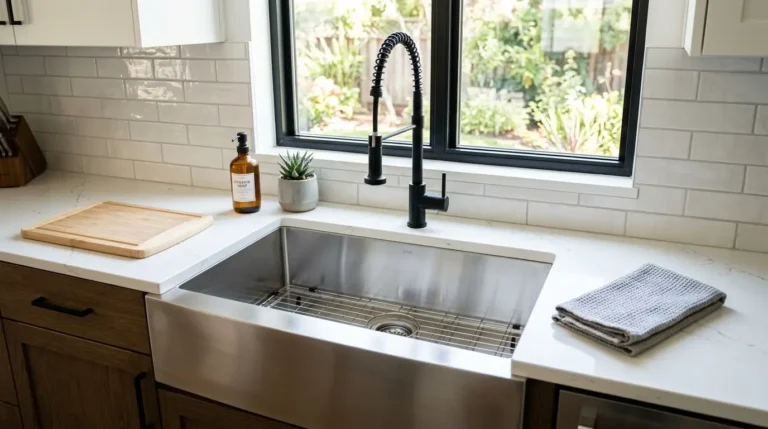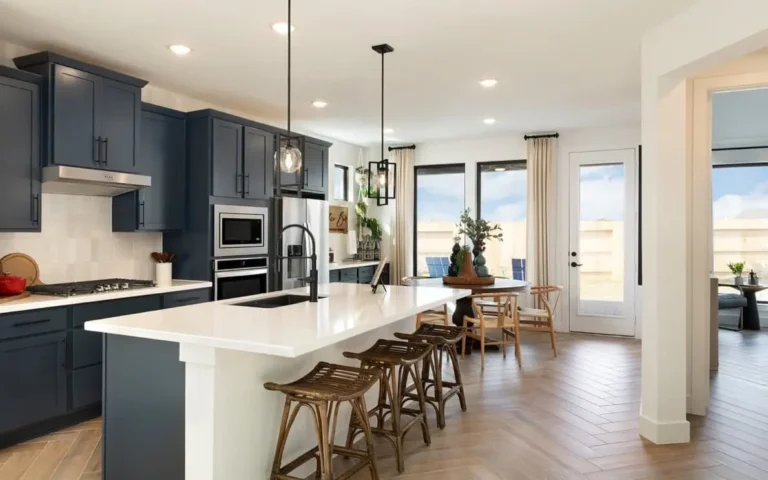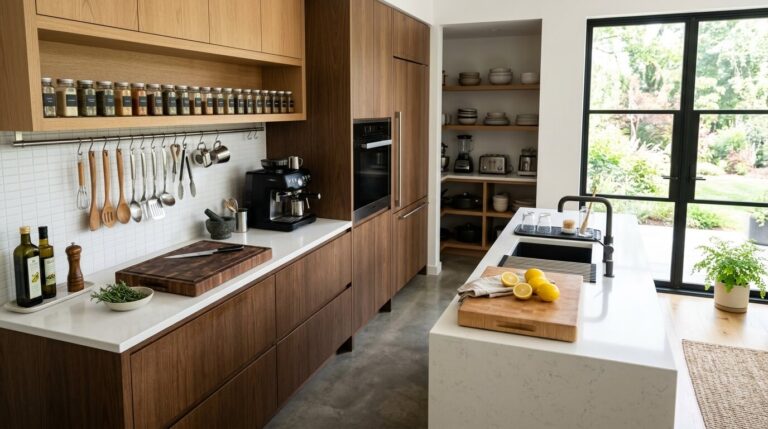

50 Kitchen Lighting Ideas That Transform How Your Kitchen Looks and Works
By Amelia Harper | Kitchen and Home Design Writer
Kitchen lighting is the element most likely to be designed last and thought about least, and this sequencing is the primary reason so many kitchens are simultaneously over-lit and under-lit. They have a ceiling fixture bright enough to operate a surgery but no light where a knife meets a cutting board. They have a beautiful pendant over the island but no illumination in the cabinet corners. The light is everywhere and nowhere at once.
A well-lit kitchen uses multiple sources at different heights and intensities, each serving a specific function within the overall composition. Task lighting illuminates the surfaces where work happens. Ambient lighting provides the overall brightness that makes the room navigable and welcoming. Accent lighting creates the visual interest and atmosphere that ambient lighting alone cannot provide. Decorative lighting makes the fixtures themselves a design element in the space.
I have been writing about kitchen design for nearly a decade, and lighting is the element I return to most consistently because its impact on how a kitchen looks and feels is larger than any other single design decision.
Here are fifty ideas that together cover every aspect of kitchen lighting from the practical to the atmospheric.
1. Layer Multiple Light Sources Rather Than Relying on One Overhead Fixture

The single most important kitchen lighting principle is layering, and it is the one most often ignored in residential kitchen design where a single central ceiling fixture or recessed grid is treated as sufficient.
A layered kitchen lighting scheme combines at least three types of sources: ambient light for overall visibility, task light for specific work surfaces, and accent or decorative light for atmosphere and visual interest. Each layer serves a function that the others cannot replace, and the presence of all three creates a kitchen that is genuinely pleasant to be in at different times of day rather than merely functional under one set of conditions.
The transition from a single-source to a layered lighting scheme is one of the most transformative improvements available in a kitchen without any structural change, because the layering can often be achieved by adding plug-in or battery-operated under-cabinet lights, pendant fixtures on existing circuits, and accent lighting to a kitchen that already has its primary ambient source.
2. Use Recessed Downlights as the Foundation of Ambient Light

Recessed downlights, also called pot lights or can lights, installed in a grid pattern across the kitchen ceiling provide even, shadow-free ambient illumination that forms the foundation of a well-lit kitchen without any fixture visibility that competes with other design elements.
The spacing of recessed downlights should follow a simple formula: the fixtures should be spaced from each other at a distance approximately equal to their mounting height. In a nine-foot ceiling kitchen, downlights should be approximately nine feet apart from centre to centre for even coverage without hotspots or dark zones between fixtures.
The colour temperature of recessed downlights in a kitchen should be warm white, in the 2700 to 3000 Kelvin range, to produce light that is bright enough for work while maintaining the warm, welcoming quality that makes a kitchen feel habitable rather than clinical.
3. Install a Statement Ceiling Fixture in the Kitchen Centre

A central ceiling fixture in the kitchen, whether a chandelier, a cluster of pendant lights on a single canopy, a flush-mount globe, or a semi-flush industrial fixture, provides ambient light while simultaneously functioning as a design element that establishes the kitchen’s aesthetic register.
The scale of the central fixture matters enormously for both function and proportion. A fixture that is too small for the room delivers insufficient light and looks visually tentative. A fixture that is too large overwhelms the space. The classic sizing guideline for a central fixture in a room is to add the room’s length and width in feet, and the result in inches represents an appropriate fixture diameter for most room proportions.
A central fixture on a dimmer provides the flexibility to shift from full task-brightness during cooking to a softer ambient setting during dining or relaxed kitchen time, which extends the fixture’s usefulness beyond any single lighting function.
4. Consider a Flush-Mount Fixture for Low-Ceiling Kitchens

In kitchens with ceilings below eight feet, pendant and chandelier fixtures that drop significantly below ceiling level reduce the remaining headroom to an uncomfortable degree and can create genuine hazards in kitchens where tall occupants move around the room.
A flush-mount or close-to-ceiling fixture provides the central ambient light function without the drop dimension that creates headroom problems. Contemporary flush-mount fixtures have advanced significantly from the basic dome-and-diffuser form associated with older residential lighting, and current options include flush-mount fixtures with sophisticated design details in brass, bronze, and matte black that contribute to the kitchen’s aesthetic rather than simply being inoffensive functional hardware.
The light output of a flush-mount fixture for adequate kitchen ambient illumination should be in the range of 3000 to 5000 lumens for a standard kitchen, which requires either a high-lumen single source or multiple LED elements within the fixture to achieve.
5. Use Flush-Mount LED Panels for Modern Kitchens

A flat LED panel fixture installed flush with the ceiling provides a smooth, shadowless, even ambient light that suits contemporary and minimalist kitchen aesthetics better than any other single-source ambient option.
LED panels in rectangular or square formats can be sized to the kitchen’s dimensions, providing customised coverage without the grid installation that individual recessed lights require. A single large LED panel can cover the same area as six to eight individual recessed downlights with a single electrical connection and a single fixture installation.
The dimming compatibility of LED panels varies by product, and specifying a panel with smooth, flicker-free dimming from the full 100 percent brightness to a genuinely low five percent or below provides the full range of ambient light levels a kitchen uses across different activities and times of day.
6. Install Skylights for Natural Ambient Light

A skylight above the kitchen brings natural daylight into the heart of the room from an angle that no window can replicate, and the quality of overhead natural light in a kitchen dramatically changes how the space looks and feels during daylight hours.
Kitchen skylights are particularly valuable in open-plan kitchens where the kitchen area is separated from exterior windows by the depth of the living and dining areas. A single skylight over a kitchen island or the cooking zone provides the direct overhead natural light that makes ingredient colours accurate, produces natural shadow depth that reveals the texture of food, and creates the connection to the outdoor world that no artificial light source can replicate.
Velux-style opening skylights that also provide ventilation are particularly appropriate for the kitchen where cooking generates steam and odour, because the skylight ventilates the kitchen naturally when open and lights it when closed.
7. Add a Sun Tunnel or Light Tube for Internal Kitchens

A sun tunnel, also called a light tube or solar tube, channels natural light from a small rooftop dome through a highly reflective cylindrical tube into a kitchen room that has no direct exterior access for a conventional window or skylight.
The light delivered by a well-sized sun tunnel in a small to medium kitchen can be equivalent to the natural light from a standard window on a clear day, providing genuine daylight quality illumination that benefits the kitchen’s function and atmosphere without requiring the structural work that a conventional skylight installation demands.
Sun tunnels are particularly appropriate for apartment kitchens on top floors, galley kitchens without windows in one of their long walls, and internal kitchens that receive no natural light through any existing window.
8. Install Under-Cabinet Lighting for Every Counter Surface

Under-cabinet lighting is the most consistently impactful task lighting addition available in a kitchen, and its absence is the primary reason most kitchen counters are poorly lit despite the presence of ceiling lighting directly above the upper cabinets.
The upper cabinets themselves cast a shadow on the counter surface below them when the only light source is above the cabinet level, which means the work surface where cutting, chopping, mixing, and preparation happens is in shadow from the very cabinets that define its position. Under-cabinet lights installed on the underside of the upper cabinets shine directly onto the counter surface where the work happens, eliminating this shadow entirely.
LED strip lights are the most popular current format for under-cabinet lighting because they are slim, energy-efficient, available in a range of colour temperatures, and produce the even, linear light distribution that illuminates the full counter surface rather than creating bright spots and dark zones.
9. Position Under-Cabinet Lights at the Front of the Cabinet Base

The position of under-cabinet lights on the underside of the cabinet determines how effectively they illuminate the counter and how visible the fixture itself is from normal standing positions in the kitchen.
Lights positioned at the front edge of the cabinet base shine downward and toward the back of the counter, illuminating the full counter depth including the area at the wall where preparation often happens. Lights positioned at the back of the cabinet base shine downward and forward, illuminating the front of the counter and the area immediately in front of it including the cooktop controls.
A slight forward position, approximately one inch from the front face of the cabinet, is the most effective single position for under-cabinet lights that need to serve the full counter depth. A lens or diffuser that spreads the light across a wider angle increases the effective coverage of each light source.
10. Use Hardwired Under-Cabinet Lights for a Clean Look

Hardwired under-cabinet lighting, connected to the mains through the cabinet interior and controlled by a dedicated switch or dimmer, produces a cleaner installation than plug-in or battery-operated alternatives because there are no visible cords trailing from the cabinet to an outlet.
The installation of hardwired under-cabinet lighting typically requires an electrician to run the supply wiring through the cabinet interior and to install the switch, but the result is a permanent, maintenance-free installation that operates as simply as any other light switch in the kitchen and that does not require periodic battery replacement or visible cord management.
A dimmer on the under-cabinet circuit allows the counter brightness to be adjusted independently of the ceiling lighting, which is useful for transitioning from full-brightness cooking mode to a dimmer ambient-only setting for kitchen dining or relaxed evening use.
11. Consider Motion-Activated Under-Cabinet Lighting

Motion-activated under-cabinet lighting that turns on automatically when someone approaches the counter provides both convenience, in not requiring a dedicated switch action to activate task lighting, and energy efficiency, in not remaining on when the counter is not in use.
These systems use passive infrared sensors to detect movement within the counter zone and activate the lights immediately, with a user-adjustable delay before they turn off when no movement is detected. For households where the kitchen is used at night without full ceiling lighting, motion-activated under-cabinet lights provide the counter illumination needed for quiet tasks like making a late-night drink without waking the household with full kitchen brightness.
12. Add a Pendant Light Directly Over the Sink

The kitchen sink is one of the most used work surfaces in the room and one of the most poorly lit in kitchens that rely solely on ceiling fixtures, because the upper cabinets that typically flank the sink position create the same shadow problem that they create over counters without under-cabinet lighting.
A pendant light hung directly over the sink, at a height that provides task illumination without obstructing the view out of a window above the sink, addresses this shadow problem and simultaneously creates a focal point above the sink that breaks the visual monotony of an uninterrupted cabinet run.
The pendant for this position should be selected for its light output as well as its appearance. A pendant with an upward and downward component, such as a semi-transparent diffuser or a fixture with a reflective interior, provides the best balance of task illumination downward and ambient contribution upward.
13. Install a Range Hood with Integrated Lighting

A range hood with integrated downward-facing lights provides the task illumination directly above the cooking surface that is essential for safe and effective stovetop cooking, and this illumination is not provided effectively by any ceiling fixture because the cook’s own body casts a shadow onto the stove when the light source is above and behind them.
Range hood lights, positioned directly above the cooking surface and facing downward, eliminate this self-shadow problem by placing the light source within the range hood’s overhang rather than behind the cook. The result is a cooking surface that is fully illuminated regardless of the cook’s body position.
The colour temperature of range hood lights should match or be slightly cooler than the kitchen’s general warm white lighting, in the 3000 to 4000 Kelvin range, to provide accurate colour rendering for the visual assessment of cooking progress.
14. Use a Lighted Mirror or Reflective Surface to Amplify Task Light

A mirrored or highly reflective surface, such as a mirror-finish tile backsplash, a polished stainless steel appliance, or a large format glass splashback, reflects light from existing task and ambient sources back into the kitchen, effectively amplifying the illumination at the counter level without any additional electrical installation.
This amplification effect is most significant in kitchens with limited window access, where the total light available is determined by the electrical sources rather than supplemented by daylight. A reflective backsplash that reflects the under-cabinet lighting back toward the cook provides a secondary source of counter illumination that reduces the depth of shadow on the cooking ingredients and the work surface.
15. Install Toe-Kick Lighting for Subtle Base Illumination

Toe-kick lighting, LED strip lights installed in the recessed toe-kick space at the base of lower cabinets, provides a low-level illumination at floor height that serves both functional and atmospheric purposes in a kitchen.
Functionally, toe-kick lighting illuminates the floor surface near the cabinets, which is useful for safe navigation in a darkened kitchen at night without requiring the full ambient lighting to be activated. The floor-level light source also reveals the full profile of the cabinetry from its base to the ceiling, creating a visual grounding effect that makes the cabinets appear to float slightly above the floor.
Warm white toe-kick lighting in a dimmed state is one of the most effective ways to maintain a low-light, functional atmosphere in the kitchen during evening hours when bright ceiling lighting would be intrusive.
16. Light the Inside of Glass-Fronted Cabinets

Glass-fronted upper cabinets with internal lighting display their contents as a gallery rather than simply as stored items, and the warm internal light creates focal points within the kitchen that add visual depth and interest to the wall of cabinetry.
Battery-operated LED puck lights or hardwired low-voltage strip lights installed on the interior top rail of a glass-fronted cabinet provide even internal illumination that reveals the cabinet’s contents clearly while the warm light creates a glow through the glass that contributes to the kitchen’s overall ambient light level.
The items displayed in illuminated glass cabinets should be chosen for their visual quality since the lighting makes them a prominent feature. Fine glassware, well-chosen ceramics, and consistently coloured dishware all benefit from internal cabinet lighting that displays them to their best advantage.
17. Hang Pendants Over the Kitchen Island

Pendant lights over the kitchen island are the most design-visible lighting choice in most kitchens and the one that most immediately establishes the kitchen’s aesthetic character through the specific style, material, and finish of the fixture selected.
The functional specification for island pendants begins with quantity and spacing. For a standard six-foot island, two pendants spaced approximately thirty inches from each other and from the island ends provide even coverage without either leaving dark zones or creating visual clutter. For a longer island, three pendants with similar spacing maintain the proportional relationship.
The hanging height for island pendants is typically thirty to thirty-six inches above the island surface, which provides adequate task illumination while leaving enough clearance for comfortable eye contact across the island during conversation and food preparation.
18. Choose Pendants Proportional to the Island Size

The visual relationship between pendant size and island size determines whether the pendants read as considered design choices or as fixtures that were selected without reference to the scale of the surface below them.
Small pendants over a large island look tentative and insufficient. Large pendants over a short island look domineering and reduce the visual openness above the workspace. The appropriate pendant diameter for a standard island is between eight and fifteen inches, with the smaller end of this range suited to narrower islands and the larger end to wider, more substantial island forms.
A pendant cluster, where multiple smaller pendants are grouped on a single canopy above the island, is an effective solution when a single large pendant would be too visually heavy but individual small pendants would be too visually slight.
19. Use Industrial Pendants for a Contemporary Farmhouse Look

Industrial pendant fixtures, characterised by their exposed hardware, Edison-style bulbs, steel cage shades, and mechanical quality, are one of the most versatile kitchen pendant styles because they bridge the farmhouse aesthetic and the contemporary industrial aesthetic simultaneously.
A simple cage pendant with an Edison filament bulb in amber glass provides warm, directional light that is as appropriate over a butcher block island in a farmhouse kitchen as it is over a concrete countertop in a loft kitchen. The fixture reads differently in each context because the surrounding design elements provide the aesthetic context.
The light output of industrial cage pendants with exposed Edison bulbs tends to be lower than functionally ideal for task lighting, because the amber glass and filament elements reduce the delivered lumen output relative to the wattage. Supplementary task lighting from another source should be provided when these pendants are the primary island lighting.
20. Hang a Single Large Pendant for a Statement

A single large pendant, hung over the centre of a dining table adjacent to the kitchen or over the kitchen island in a smaller kitchen where one substantial fixture is more appropriate than a row of smaller ones, creates the most direct visual statement available in kitchen pendant lighting.
The scale required for a single pendant to read as a statement rather than as an undersized fixture is typically eighteen inches in diameter or larger, and the visual impact scales with the fixture’s diameter, material quality, and distinctiveness relative to the rest of the kitchen’s design elements.
A large rattan globe pendant in a farmhouse kitchen, a blown glass sphere in a contemporary kitchen, or an oversized ceramic pendant in an earthy Mediterranean kitchen each make different statements through the same principle of scale and material quality.
21. Install Adjustable-Height Pendants for Versatility

Pendant lights with adjustable cord or rod lengths, either through a canopy mechanism that allows the hanging length to be set at installation or through a plug-in cord that can be re-tied at different lengths, provide versatility in a rental or frequently reconfigured kitchen where the island height or the hanging point position may change.
Adjustable pendants are also useful where the ceiling height varies across the kitchen, as in a kitchen that opens to a vaulted dining area, because the pendant can be hung at the correct height relative to the surface below regardless of the ceiling height above.
22. Use Drum Pendants for a Clean, Contemporary Profile

A drum pendant, with a cylindrical fabric or metal shade that is wider than it is tall, provides a wide, diffused light pool below the fixture that is particularly well suited to illuminating a counter or table surface with even light rather than directional spot illumination.
The fabric drum shade in linen or cotton produces a warm, soft-edged light that is comfortable at close range during dining, because the fabric diffuser eliminates glare from the bulb. A metal drum shade with a painted interior produces a slightly more directional, crisper light that is more appropriate for task-focused areas.
23. Try Bell-Shaped or Dome Pendants Over a Dining Area

Bell-shaped and dome pendants direct light downward in a focused pool that illuminates the table surface directly below while providing a warm reflected glow upward into the room, creating the ideal dining atmosphere of good table illumination and a warm overhead presence.
An enamel dome pendant in white or pastel, hung over a kitchen dining table at approximately twenty-four to thirty inches above the table surface, recreates the classic schoolhouse and diner aesthetic that has been one of the most enduring pendant styles in residential dining spaces for over a century.
24. Cluster Pendants of Different Heights for Visual Interest

A cluster of pendants hung at different heights from a single ceiling canopy creates visual interest in the kitchen’s overhead zone that a row of matching pendants at identical heights cannot achieve, because the height variation produces a sculptural quality above the counter or dining area.
The most effective pendant clusters use fixtures with the same material or finish across the group but allow variation in the hanging length of each fixture, which creates the visual rhythm of a composition rather than the repetition of a pattern.
25. Consider Linear Pendant Fixtures for Long Islands

A linear pendant fixture, a single elongated fixture rather than a row of individual pendants, provides the even illumination of multiple fixtures over a long island or dining table in a single elegant element that reads as a deliberate design choice rather than the more utilitarian appearance of a multi-fixture row.
Linear fixtures in lengths from thirty to sixty inches span the middle section of most standard islands effectively, and can be combined in pairs for very long islands. The linear format is particularly appropriate for contemporary and minimalist kitchens where the geometric clarity of a single elongated fixture suits the overall aesthetic more than the rhythm of multiple individual pendants.
26. Use LED Strip Lights to Accent Open Shelving

LED strip lights installed on the underside of each open shelf, or behind a small lip at the front edge of each shelf, illuminate the shelf contents with a warm, close-range light that makes displayed ceramics, glassware, and ingredients look curated rather than stored.
This shelf-edge lighting also creates a visual stacking of horizontal light bands across an open shelving wall, which reads as a designed element that gives the shelving area a considered, gallery-like quality. The effect is most pronounced when the LED strips are installed on a dimmer that allows the intensity to be adjusted for different times of day and different atmospheres.
27. Install LED Strip Lights Above Kitchen Cabinets

LED strip lights installed on the top of upper cabinets, facing the ceiling above, create an indirect cove lighting effect that bounces warm light off the ceiling and back into the room without any visible fixture.
This technique works best in kitchens where there is at least twelve inches of space between the top of the upper cabinets and the ceiling, providing enough ceiling area for the light to spread before it returns into the room. The reflected ceiling light adds a warm ambient layer to the kitchen’s overall light scheme without any direct visible source.
28. Add Spotlights to Highlight Artwork or Architectural Features

A kitchen that includes artwork, a decorative tile arrangement, a collected display of objects, or an architectural feature such as a stone chimney breast benefits from a dedicated spotlight that draws the eye to the featured element and establishes it as an intentional focal point.
Low-voltage spotlights on a track section, adjustable recessed ceiling spotlights, or picture lights mounted above the featured element all provide the directional, focused light that accent lighting requires. The accent light should be two to three times brighter than the ambient light level to create the contrast that draws the eye effectively.
29. Use Lantern-Style Fixtures for a Classic Kitchen Aesthetic

Lantern-style fixtures, which enclose the light source within a frame of glass and metal that references the oil lanterns and gas lanterns of historical domestic lighting, provide warm, directional light with a decorative quality that suits traditional, farmhouse, and classically influenced kitchen aesthetics.
A pair of lantern pendants over a kitchen island or a single lantern pendant over a kitchen dining table provides the same function as any other pendant while adding the historical reference and craft quality of the lantern form. Lanterns in black, aged brass, and verdigris finishes each produce different aesthetic associations within the classic lighting tradition.
30. Consider Chandeliers for Kitchen Dining Areas

A chandelier over the kitchen dining area is the lighting fixture most directly associated with formal dining that is appropriate in an informal domestic context, and the contrast between its elaborate form and the everyday function of a kitchen dining space is what gives it its distinctive character in this setting.
A small chandelier, two to two and a half feet in diameter, over a four-seat kitchen table provides the intimate, gathering-focused light that a dining area requires while creating a visual moment that makes the kitchen dining zone feel distinct and considered rather than simply a table added to a cooking space.
31. Understand the Colour Temperature Scale for Kitchen Lighting

The colour temperature of a light source, measured in Kelvin, determines whether the light produced appears warm and amber, neutral and white, or cool and blue, and this quality affects both how the kitchen looks under artificial light and how accurately food colours are rendered during cooking and presentation.
Kitchen lighting in the warm white range of 2700 to 3000 Kelvin produces light with the amber quality associated with incandescent bulbs, which makes the kitchen feel warm and welcoming and makes food colours appear rich and appetising. This range is appropriate for ambient and accent lighting throughout the kitchen.
Task lighting over work surfaces benefits slightly from a cooler temperature in the 3000 to 4000 Kelvin range, which provides better colour accuracy for assessing the doneness of cooked food, the ripeness of produce, and the colour of preparations in progress. The practical difference is small enough that a uniform 3000 Kelvin throughout the kitchen is a comfortable compromise for most households.
32. Use Warm White Bulbs Throughout the Kitchen

A consistent warm white colour temperature, around 2700 to 3000 Kelvin, used throughout all of the kitchen’s light sources creates a visually unified light environment without the jarring contrast of different colour temperatures in different fixtures within the same room.
Mixed colour temperatures in a single room, such as a warm white ceiling fixture combined with a cool white under-cabinet light, create a visual discord that is immediately noticeable and that makes the room look as though the lighting was not designed as a system but assembled from unrelated components.
33. Install Dimmers on Every Kitchen Circuit

Dimmers on every kitchen lighting circuit provide the most fundamental functionality improvement available in kitchen lighting, because they allow the same fixtures to serve the full range of the kitchen’s functional and atmospheric requirements from full brightness during active cooking to a low, intimate setting during evening dining.
A kitchen with all circuits on dimmers can be adjusted from the blazing brightness needed for close food preparation work to the soft, warm, ambient glow that makes evening kitchen time pleasant rather than clinical, using the same fixtures and the same light sources throughout the day.
Single pole dimmers for incandescent and halogen circuits are straightforward to install. LED dimmers require a dimmer specifically rated for LED loads to prevent flickering, buzzing, and premature LED driver failure.
34. Use Smart Lighting for Programmable Kitchen Scenes

Smart lighting systems allow kitchen lighting scenes to be programmed and recalled with a single switch press or voice command, making the transition between different lighting configurations, from cooking to dining to evening relaxation, effortless rather than requiring manual adjustment of multiple individual dimmers.
A cooking scene might activate all task lighting at full brightness with ceiling lights at seventy-five percent. A dining scene might reduce ceiling lights to forty percent, switch off task lighting, and dim island pendants to a warm fifty percent. A relaxed evening scene might activate only toe-kick lights and accent lighting at low levels.
These scenes take a few minutes to program initially and then serve the household indefinitely, making the full capability of the layered lighting scheme accessible without requiring any expertise in lighting or any conscious thought about which specific adjustments are needed for any given activity.
35. Choose High CRI Bulbs for Accurate Food Colour Rendering

The Colour Rendering Index, or CRI, of a light source measures how accurately it renders the colours of objects compared to natural daylight on a scale of 0 to 100. A bulb with a CRI above 90 renders food colours very accurately. A bulb with a CRI below 80 shifts the colour of food in ways that affect the visual assessment of cooking progress.
For kitchen lighting, a CRI of 90 or above is the appropriate minimum for task lighting and for any area where food preparation and presentation assessment happens. High CRI LED bulbs are widely available and typically cost only marginally more than standard CRI alternatives, making the CRI specification one of the lowest-cost improvements available in kitchen lighting.
36. Light the Inside of Kitchen Drawers

Drawer lighting, using thin LED strips or battery-operated motion-activated lights installed in kitchen drawers, illuminates the contents of the drawer when it is opened, making identification and retrieval of specific items faster and more pleasant than reaching into a darkened drawer.
This detail is most valuable in deep drawers that hold layered contents and in drawers used at night when the kitchen ambient lighting is at a low level. The motion-activated format that turns on when the drawer opens and off when it closes is the most practical and most energy-efficient approach.
37. Use Architectural Cove Lighting for Indirect Ambient Light

Architectural cove lighting, where LED strip lights are concealed within a recessed shelf or architectural detail at ceiling level that faces the ceiling rather than the room, produces indirect ambient light that arrives in the kitchen space bounced off the ceiling surface without any visible source.
This indirect quality of cove lighting is the most relaxing of all ambient light types because the eye is not confronted with any direct light source, only with the uniformly lit ceiling surface that diffuses the light evenly across the room below it. Cove lighting as the sole ambient source creates the most atmosphere, and cove lighting in combination with other sources provides both atmosphere and adequate functional illumination.
38. Add a Decorative Neon Sign for Personality

A decorative LED neon sign, mounted on a kitchen wall or on the backsplash, adds a personalised, playful element that is entirely distinct from the functional lighting vocabulary of the kitchen and that establishes the kitchen’s personality with a directness that no other design element achieves.
A neon sign in the kitchen should be chosen for its content and its colour rather than for its light output, since its contribution to the kitchen’s illumination is negligible. The sign’s role is atmospheric and expressive rather than functional, and it works best in kitchens where the surrounding design has a confidence and irreverence that the neon complement rather than conflict with.
39. Install Puck Lights Inside Deep Cabinets

Puck lights, small circular LED fixtures that can be battery-operated or hardwired, installed on the interior wall or ceiling of a deep cabinet, illuminate the full depth of the cabinet without requiring any electrical work on the cabinet itself.
Battery-operated puck lights with motion activation that turns on when the cabinet door opens are the most practically convenient format for illuminating cabinets that were not originally designed with internal lighting provision. The light reveals items stored at the back of deep shelves that would otherwise remain in shadow and require excavation to locate.
40. Consider Vintage Edison Bulb Filament Lights

Edison-style filament bulbs, with their visible glowing spiral or horizontal filament elements in amber glass, produce light with a warm, golden quality and a decorative quality in the visible filament that standard LED and incandescent bulbs do not offer.
Contemporary LED filament versions of the Edison bulb provide the same warm amber light and visible filament aesthetic at a fraction of the energy consumption of original filament bulbs, and with a lifespan ten to twenty times longer. The LED filament bulb is now the practical standard for applications where the Edison aesthetic is desired.
41. Match Fixture Finishes to Cabinet Hardware

The finish of kitchen light fixtures, whether the pendant shades, the recessed downlight trim rings, or the under-cabinet fixtures, should be selected in reference to the hardware finish used on cabinets and faucets throughout the kitchen for visual consistency.
A kitchen with brushed brass cabinet hardware and a brass faucet benefits from pendant fixtures with a similar brass or warm gold element. A kitchen with matte black hardware creates a design system where black or dark bronze fixture finishes feel like parts of the same coherent scheme.
42. Use Track Lighting for Flexible Kitchen Illumination

A ceiling-mounted track lighting system, with adjustable spotlights that can be aimed in any direction along the track’s length, provides the most flexible task and accent lighting available in a kitchen where the specific illumination requirements change as the kitchen’s use evolves.
Track lights can be aimed at counter areas for task illumination, redirected toward an artwork or display, or pointed toward the ceiling for indirect ambient contribution, all from the same installation and the same electrical circuit. The flexibility is particularly valuable in kitchen spaces that are multi-functional or that are likely to be rearranged.
43. Consider Plug-In Pendant Lights for Renters

Plug-in pendant lights, which draw power from a standard outlet through a cord rather than from a hardwired ceiling installation, allow renters to add pendant lighting to a kitchen without any electrical work or modification to the rental property.
A plug-in pendant installed over a kitchen island, with its cord managed along the ceiling surface with adhesive cable holders or routed through a cord cover, provides the visual and functional benefits of pendant lighting without requiring landlord permission or permanent modification.
44. Place Night Lights at Floor Level for Safe Navigation

A small LED night light at floor level near the kitchen entrance or under the lower cabinet toe-kick provides enough orientation light for safe kitchen navigation in the dark without activating any overhead lighting that would disrupt sleep or disturb other household members.
The most effective kitchen night lights are motion-activated LED units that activate only when someone enters the kitchen and that automatically return to standby when the kitchen is empty, providing on-demand orientation light with minimal energy consumption and no manual operation required.
45. Use Window Light Strategically During the Day

Natural light from kitchen windows provides the highest quality task and ambient illumination available and should be maximised through thoughtful window treatment choices that allow maximum daylight entry during cooking hours.
Sheer or translucent window treatments that diffuse direct sunlight without blocking it entirely maintain privacy while allowing the full ambient benefit of the available daylight. Solid or opaque treatments that are kept partially drawn reduce the natural light available during the hours when kitchen activity is highest and when natural light is most beneficial.
46. Light the Backsplash for Material Depth

Task lighting aimed at the kitchen backsplash, rather than primarily downward toward the counter, reveals the texture and material depth of stone, tile, and handmade ceramic backsplash materials in a way that flat overhead light cannot achieve.
A slightly grazing light angle across a textured stone or tile backsplash creates shadows in the surface irregularities that reveal the material’s three-dimensional quality, making a natural stone backsplash appear to have depth and movement that flat lighting would eliminate. This technique is borrowed from gallery lighting, where artworks with texture are specifically lit at grazing angles to reveal their surface quality.
47. Ensure Adequate Light at the Cooktop Without Shadows

The cooktop is the kitchen work surface where lighting failure has the most immediate practical consequence, because cooking at a poorly lit stove creates both quality and safety issues that inadequate lighting elsewhere does not.
The range hood’s integrated lighting addresses this directly, as described earlier, but in kitchens without a range hood with integrated lights, a dedicated recessed downlight or a track spotlight aimed directly at the cooktop surface from the side or the front provides the direct cooktop illumination that a cook requires to see into pots and assess cooking progress accurately.
48. Add Lighting to the Kitchen Island Shelf or Base

The storage shelf or structural base of a kitchen island, if the island includes a lower shelf for open storage, benefits from its own lighting that makes the shelf contents visible and accessible without crouching and looking into a dark lower zone.
LED strip lights on the underside of the island countertop, positioned to illuminate the shelf below, or battery-operated puck lights mounted on the interior of the island structure facing the shelf, provide this lower-zone illumination without requiring any connection to the kitchen’s main electrical system.
49. Consider Colour-Changing LED Lighting for Mood

Colour-changing LED strip lights in the kitchen, controlled by a smart home system or a simple remote, allow the kitchen’s accent and ambient light to shift from the warm white of functional cooking time to a coloured accent for parties, holidays, or a distinctive evening atmosphere.
Colour-changing LEDs are most appropriate for the accent zones of the kitchen rather than for the primary task and ambient circuits. Under-cabinet lights and cove lights in a colour-changing format can shift the kitchen’s atmosphere dramatically while the fixed-colour ambient and task lighting maintains functional adequacy.
50. Review the Kitchen’s Lighting as a Complete System Annually

Kitchen lighting evolves as the household’s needs change, as new fixtures become available, and as the kitchen’s design evolves through updates to cabinets, countertops, and appliances, and an annual review of the kitchen’s lighting as a complete system identifies improvements that individual fixture assessments miss.
A complete system review asks whether every task surface has adequate illumination, whether the ambient light level is appropriate across the kitchen’s full activity range, whether the fixtures contribute to the kitchen’s design aesthetic in a way that is still current, and whether any new technology, particularly in LED efficiency and smart lighting control, would meaningfully improve the system’s performance or flexibility.
Kitchen lighting is one of the areas where incremental improvement is most rewarding because each addition or change is immediately visible in the quality of daily kitchen experience, and the annual review habit ensures that the lighting keeps pace with the household’s evolving relationship with the space.
The Kitchen That Light Makes Beautiful
Every kitchen has a potential that its current lighting may not be realising. The fifty ideas in this article collectively describe a kitchen where every surface has adequate light for its function, where the atmosphere shifts appropriately from the bright efficiency of a cooking session to the warm intimacy of a family dinner, and where the fixtures themselves contribute to the kitchen’s design character rather than being inoffensive necessities.
This potential is not available only in renovated or newly built kitchens. It is available in every kitchen through the layered, considered addition of light sources that serve each of the specific functions described here, applied in whatever combination matches the specific opportunities and constraints of the kitchen at hand.
FAQs About Kitchen Lighting
A kitchen typically needs between 3000 and 5000 lumens of total ambient light for comfortable general use, with additional task lighting at counter and cooking surfaces.
Warm white at 2700 to 3000 Kelvin suits most kitchens, providing warm, welcoming ambient light while rendering food colours accurately enough for everyday cooking.
Yes. Pendants on a dimmer serve both task lighting during cooking and atmospheric dining light in the evening, which requires very different intensity levels from the same fixture.
Space recessed downlights apart at a distance approximately equal to their mounting height for even, shadow-free coverage. In a nine-foot ceiling kitchen, approximately eight to nine feet between fixtures is appropriate.
Yes. Battery-operated and plug-in LED strip lights and puck lights install without any electrical work and provide genuine task lighting improvement even though the installation is less permanent than hardwired alternatives.
Pendants should hang approximately thirty to thirty-six inches above the island surface for the best combination of task illumination and visual clearance for conversation across the island.
Warm white is better for ambient and accent lighting, creating a welcoming atmosphere. Slightly cooler temperatures are useful for task areas. A uniform warm white throughout the kitchen is the most practical approach for most households.