Why Some Lawn Edges Always Look Cleaner (And What You’re Probably Missing)
By Amelia Harper | Lawn Care & Outdoor Living Writer | Updated May 2026
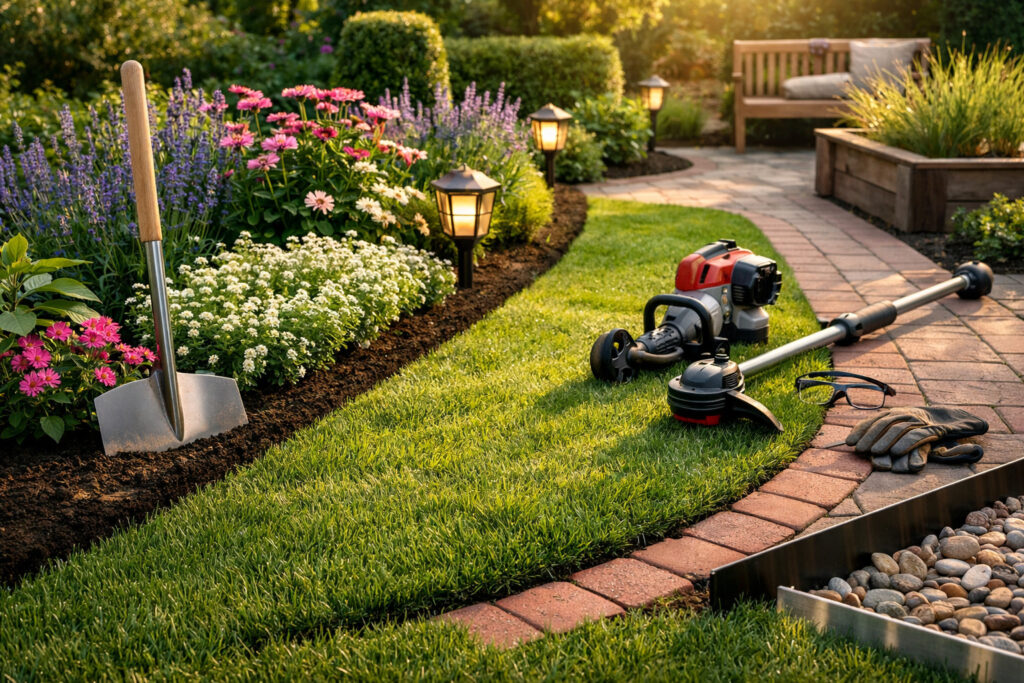
You know that feeling when you drive past a neighbor’s yard and their lawn looks like it belongs on the cover of a gardening magazine? The grass is lush, sure, but what really catches your eye is the edge. That razor-sharp line between the lawn and the sidewalk, the crisp boundary where the grass ends and the mulch bed begins. It looks almost too good to be accidental.
I spent years wondering what those homeowners were doing differently. I tried manual edging, I fussed with old electric trimmers, I even borrowed a gas-powered edger from a friend once. Nothing gave me that same clean result until I finally understood the real reason some lawn edges always look better. It is not just luck, and it is not some secret technique. It comes down to a combination of consistent habits, the right understanding of grass behavior, and, honestly, the right tool.
Let me break down everything I have learned.
The Psychology of a Clean Lawn Edge
Before we get into the how, let us talk about the why. Why do clean edges matter so much to how a lawn looks overall?
There is something called the “frame effect” in visual perception. When the border of something is sharp and defined, our brain reads the entire composition as intentional and well-maintained, even if the interior is slightly imperfect. Think of a painting. A clean frame makes even a simple piece feel finished and polished.
The same principle applies to your lawn. A clean edge tells every person who looks at it that someone is paying attention here. It elevates the whole picture. A lawn with shaggy, wandering edges can be mowed perfectly but still look neglected. Meanwhile, a lawn with crisp, defined edges can have a few weeds in the middle and still read as cared-for.
This is why professional landscapers almost always edge first before mowing. They understand that the perimeter sets the tone for everything inside it.

Why Grass Creeps Over Edges in the First Place
To fix a problem permanently, you have to understand what causes it. Lawn grass does not stay where you plant it by accident. Most turf species are designed by nature to spread aggressively. Bermuda grass, St. Augustine, zoysia, and Kentucky bluegrass all send out either stolons (above-ground runners) or rhizomes (underground runners) that push outward constantly.
Every time it rains, every time you water, every time the soil heats up in summer, the grass is doing what it evolved to do: conquering new ground. That means sidewalk cracks, mulch beds, garden borders, and driveway edges are all fair game in the grass’s mind.
A few specific reasons this happens faster in some yards include:
Warm-season grasses spread more aggressively. Bermuda grass, in particular, is almost unstoppable. If you live in the South or Southwest and grow Bermuda, your edges need attention more frequently than someone in the Pacific Northwest growing fescue.
Soil type plays a role. Loose, sandy soils allow rhizomes to travel further underground without resistance. Clay-heavy soils sometimes slow the spread but create their own problems with compaction at the edge line.
Watering habits matter. If your irrigation system waters right up to and over the sidewalk edge, you are essentially encouraging the grass to keep growing in that direction. The moisture gradient points outward.
Mowing height affects spreading. Grass mowed very short tends to send more energy into lateral spread. Slightly higher mowing encourages upward growth instead, which means less aggressive horizontal creep.

The Difference Between Trimming and Edging
This is probably the single biggest misconception I see among people who are frustrated with their lawn edges. Trimming and edging are not the same thing, and using one when you need the other is why so many edges look okay but never quite right.
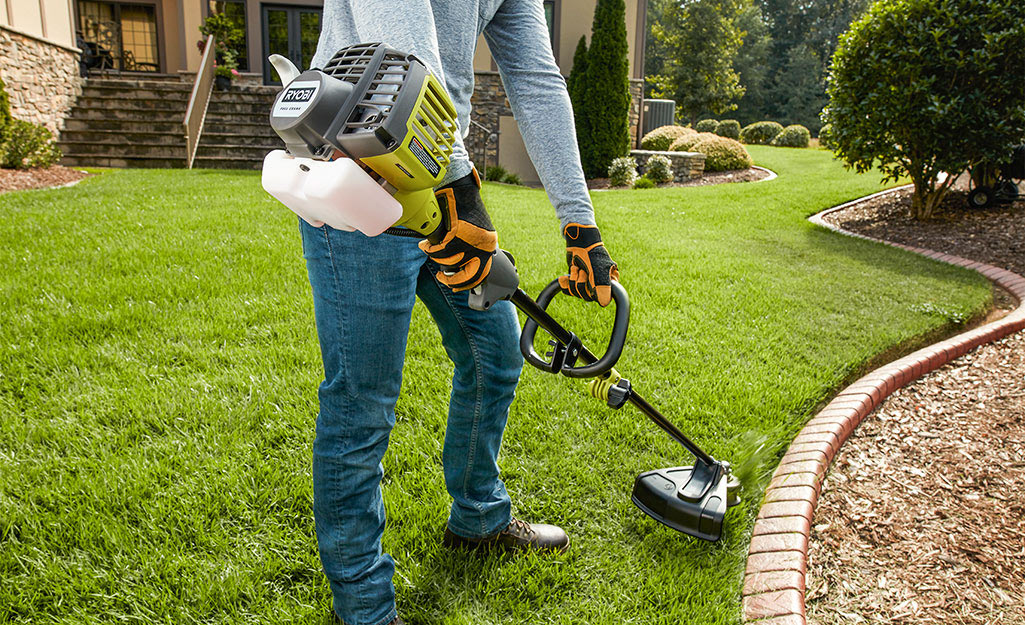
Trimming (or string trimming) is about cutting grass height along edges where the mower cannot reach. You are cutting the tops of the grass blades along a wall, around a tree, beside a fence. The string spins horizontally.
Edging is about reestablishing a vertical cut line between the lawn and a hard surface. You are slicing down into the soil to create a clean separation. The blade or string works vertically, cutting downward along the edge of the sidewalk or bed.
When people use a string trimmer held sideways to edge along a sidewalk, they often get a passable result, but it is almost impossible to maintain a consistent vertical depth. The line wanders, the cut is uneven, and within a week or two, the grass has already blurred the boundary again.
A dedicated edger, particularly one with a blade that runs vertically along the edge, creates a truly defined wall between lawn and hardscape. That wall takes much longer for grass to reclaim, and when it does reclaim it, the line is still visible underneath.

How Often Clean Edges Actually Require Attention
People who maintain the best-looking lawn edges are not spending hours every weekend on them. What they have done is build a rhythm.
Once you establish a clean edge for the first time, which admittedly takes more work if the edge has been neglected for a season or more, maintaining it becomes relatively quick. Most established edges in moderate climates need re-edging every one to two weeks during the growing season. In hotter climates with aggressive turf like Bermuda, once a week is often necessary during peak growth months.
The mistake most people make is letting it go three or four weeks, then spending a lot of time and effort reestablishing the edge, then letting it go again. Consistent, light maintenance is always easier and looks better than sporadic heavy correction.
Think of it like laundry. Staying on top of it in small batches is manageable. Letting it pile up for three weeks and then tackling it all at once is exhausting, and it still somehow never feels fully done.
What the Pros Know About Edging Technique
Even with a great tool, technique matters. Here are the principles I have picked up from watching professional landscapers work and from a lot of trial and error in my own yard.
Walk at a steady, slow pace. Rushing along an edge produces a wavy line. A slow, consistent walking speed lets the edger do its job properly and results in a straighter cut.
Let the tool lead. This sounds obvious, but it is easy to muscle the edger around corners or fight it when it hits a root or hard patch. Applying side pressure throws the angle off. Guide it, do not force it.
Edge before you mow, not after. When you edge first, the debris falls onto the lawn and gets cleaned up by the mower pass. When you edge after mowing, you are leaving clippings on your freshly cut lawn or having to blow them off manually.
Use your existing edge as a guide. Once there is a defined channel along your sidewalk or bed, subsequent edging passes follow that line naturally. You are maintaining a track, not creating one from scratch each time.
Finish by blowing or sweeping. A leaf blower run along the sidewalk after edging removes the loose clippings and soil crumbles and makes the edge look instantly sharper. This one small step makes a noticeable difference.
The Role of the Right Equipment
Here is where I need to be honest with you, because I avoided buying a dedicated edger for years, and it cost me a lot of frustration.
I told myself my string trimmer was good enough. I told myself the extra tool was not worth the storage space. I told myself I would figure out the technique. But there is simply no substitute for a purpose-built edging tool when it comes to consistently clean results.
And within the category of lawn edgers, brushless electric models have changed the game significantly over the past several years. I made the switch two seasons ago, and the difference is hard to overstate.
Why Brushless Electric Edgers Stand Apart
Traditional gas-powered edgers are powerful, but they are heavy, loud, require fuel mixing in some cases, need regular carburetor maintenance, and are genuinely unpleasant to start on cold mornings. Corded electric edgers are limited by the cord length and cable management around a yard. Older brushed electric motors wear down faster and lose torque over time.
Brushless motors work differently. Instead of carbon brushes physically making contact with the motor’s commutator (which creates friction, heat, and wear), brushless motors use electronic controllers to manage the magnetic field. The result is a motor that runs cooler, lasts significantly longer, maintains consistent power output throughout the battery charge, and operates more quietly.
For lawn edging specifically, consistent torque matters a lot. When the blade hits a tough root or a packed soil section along an old sidewalk edge, a brushless motor maintains its cutting speed instead of bogging down. That consistency is what produces a clean, uniform edge rather than a stuttering, uneven one.
Key Features to Look for in a Brushless Lawn Edger
If you are shopping for a brushless edger, here are the specifications that actually translate to real-world performance:
Battery voltage and capacity. Most quality cordless brushless edgers run on 20V to 80V battery platforms. Higher voltage generally means more torque available for difficult edging situations. Battery capacity (measured in amp hours, or Ah) determines how long you can run on a single charge. For an average residential yard, a 2.5Ah to 4Ah battery typically handles the full perimeter without needing a swap.
Blade depth adjustment. The best brushless edgers offer multiple depth settings, typically ranging from about half an inch to over an inch of cutting depth. Being able to set a shallower depth for maintenance edging and a deeper setting for reclaiming overgrown edges gives you real versatility.
Adjustable guide wheel. A well-designed guide wheel that rides along the sidewalk edge keeps the blade at a consistent distance from the concrete. This is what produces that perfectly straight line even when you are not watching the blade directly.
Weight. Cordless brushless edgers are already much lighter than gas models. The lightest quality options come in under ten pounds, including the battery, which makes a real difference when you are walking the entire perimeter of a larger property.
Blade angle options. Some brushless edgers allow you to angle the blade head for different tasks, effectively converting between a standard vertical edge and a more angled cut for certain bed borders or decorative edging work.
Top Brushless Edgers Worth Considering
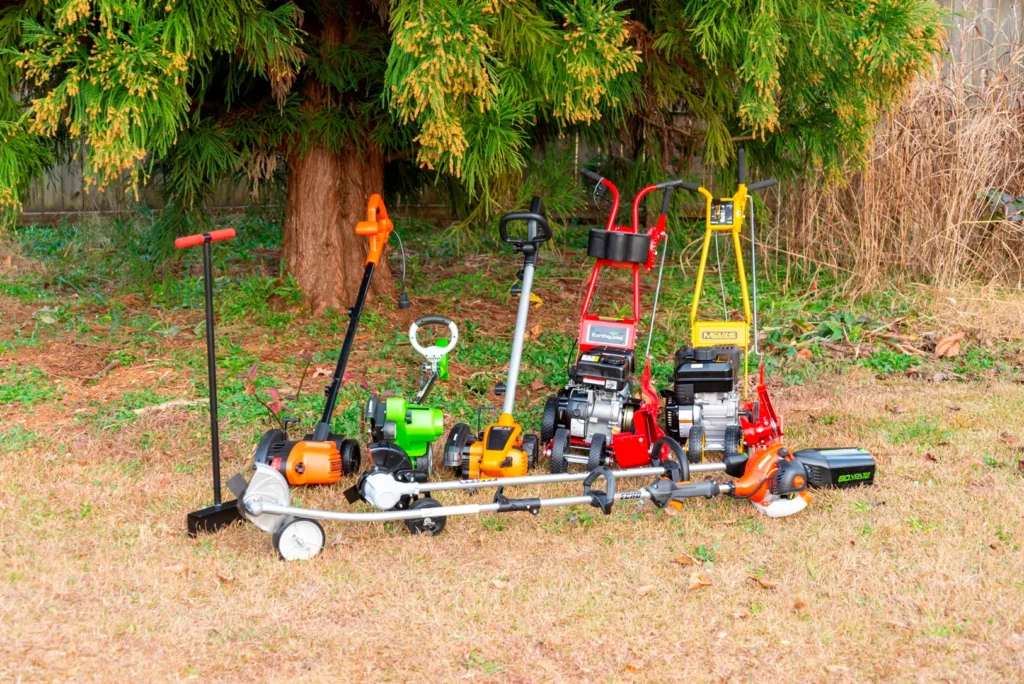
After researching and using several models, a few consistently stand out in online reviews and professional landscaper recommendations.
The DEWALT DCST972X1 60V MAX XR Brushless Edger (See details) is one of the most popular entry points into brushless edging. It is compatible with the widely available DEWALT 60V battery platform if you already own DEWALT tools, which lowers the effective cost of entry. Users consistently praise its consistent torque and the accuracy of its guide wheel.
The EGO Power+ ME0800 56V Brushless Edger (See details) steps up in power significantly with its 56V platform. The larger voltage translates to noticeably more torque for heavy-duty edging along neglected borders. EGO’s battery platform is also excellent, and the brand has a strong reputation for reliability in the battery-powered outdoor power equipment space.
The Greenworks Pro 80V Brushless Edger (See details) is a premium option for homeowners with larger properties or very established, dense turf. The 80V platform provides gas-comparable power while still maintaining all the advantages of brushless electric operation. Battery charge time on the 80V platform is longer than lower voltage options, so having a second battery for larger properties is worth considering.
For a mid-range option with excellent user reviews, the Milwaukee M18 FUEL Edger (See details) is popular among users already invested in the M18 battery ecosystem. The FUEL designation in Milwaukee’s lineup specifically indicates brushless motor technology, and the M18 FUEL tools consistently perform at the top of their class.
You can read my dedicated guide about choosing the best lawn edger for you.
Maintaining Your Lawn Edger for Consistent Results
Even the best brushless edger performs poorly if it is not properly maintained. Here is what actually matters.
Clean the blade channel after each use. Soil and grass debris pack into the blade housing over time and can affect cutting performance. A few seconds with a stiff brush or compressed air after each session keeps things running cleanly.
Check the blade for wear regularly. Metal edger blades dull over time, and a dull blade tears rather than cuts. Most blades are inexpensive to replace, and a fresh blade makes an immediate, noticeable difference in edge quality. If you are edging frequently during the growing season, expect to replace or sharpen the blade once or twice per season.
Store batteries properly. Lithium-ion batteries in brushless tools should be stored at around 50 to 80 percent charge in a climate-controlled space when not in use for extended periods. Storing a fully depleted or fully charged battery for months in a hot garage degrades its capacity over time.
Keep the guide wheel clean and rolling freely. If the guide wheel gets clogged with debris and stops rolling smoothly, it drags instead of gliding, which affects the consistency of your edge line.

Seasonal Edge Care: A Month-by-Month Approach
The cleanest lawns are maintained with a seasonal mindset, not just a reactive one.
Early spring (March to April in most climates): This is reclamation season. Even in well-maintained yards, winter brings some edge creep. Plan to spend extra time on the first edging pass of the year to reestablish your lines. This is when a powerful brushless edger really earns its keep, cutting through the packed, settled soil from winter.
Late spring through summer (May to August): This is maintenance season. Short, regular passes every one to two weeks keep the established edge crisp. Sessions should be quick if you have kept up consistently.
Early fall (September to October): Growth slows, which means your edging sessions become less frequent. This is also a good time to address any spots where the edge line has drifted over the season and reestablish them before the lawn goes dormant.
Late fall and winter (November to February in cold climates): Edging is generally not needed during dormancy. Use this time to clean and inspect your edger, check the blade, and make sure the battery is properly stored.
Edge Definition Beyond the Sidewalk
Most discussions of lawn edging focus on the sidewalk and driveway, but the same principles apply to every boundary in your yard.
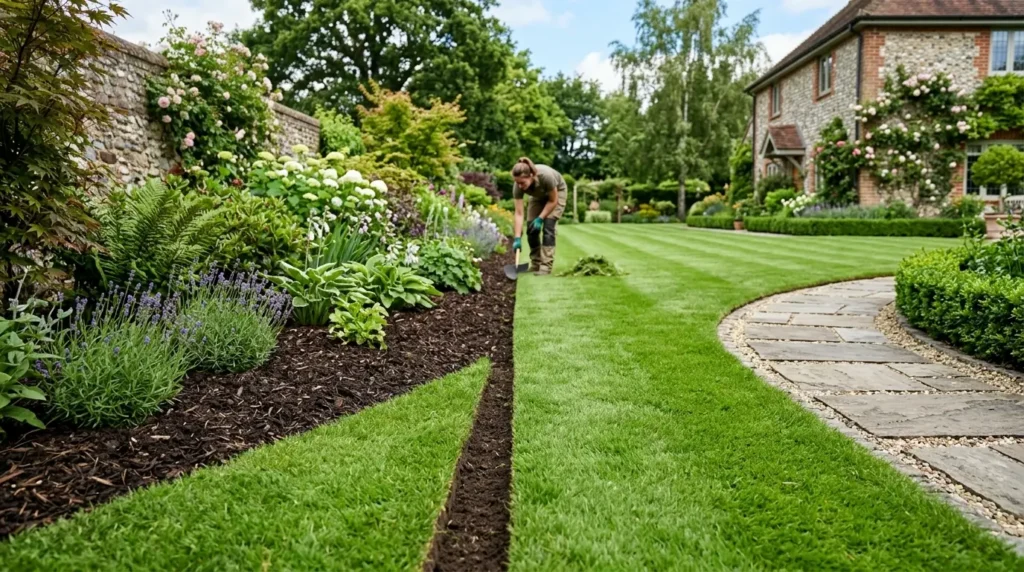
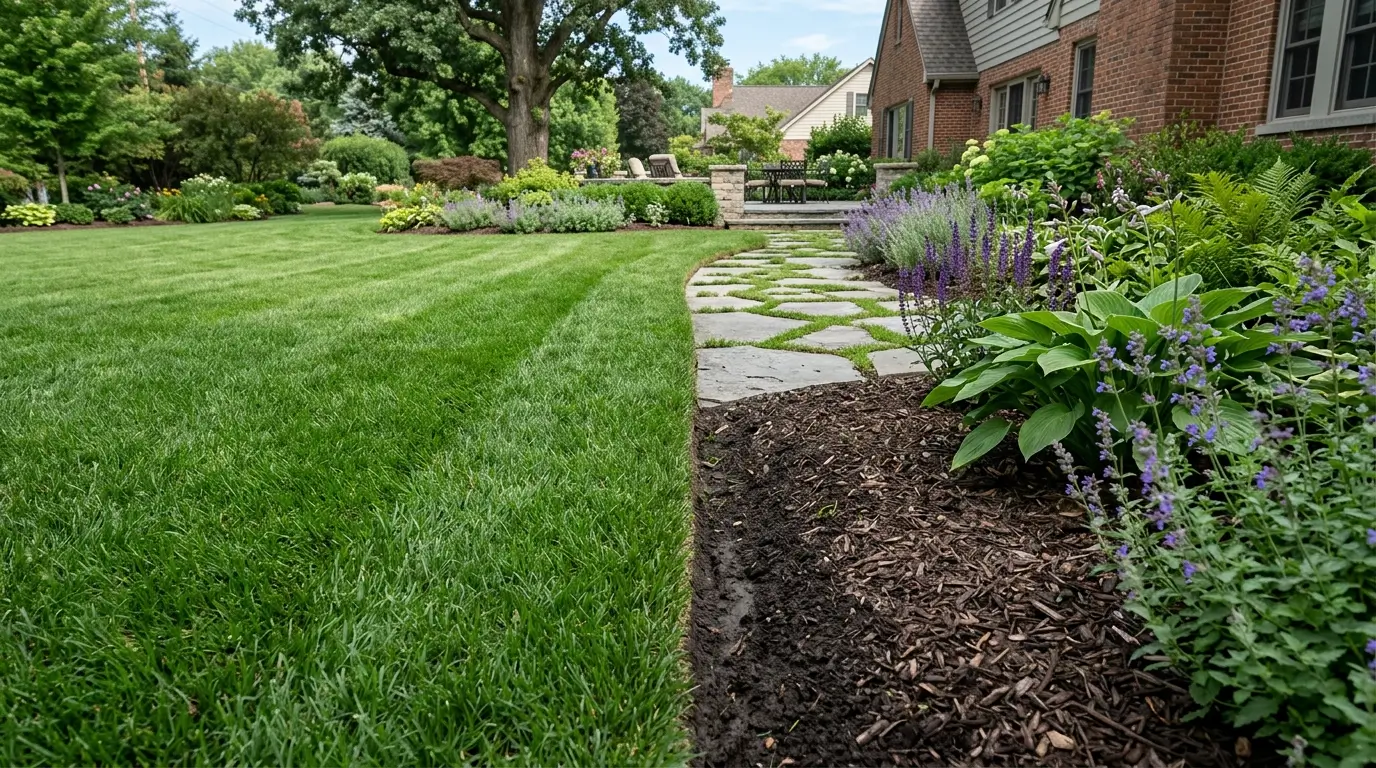
Garden bed edges are often the most visible from inside the house and from close up. A clean, slightly beveled edge where lawn meets mulch bed makes the beds look more intentional and also helps reduce mulch migrating onto the lawn.
Tree ring edges around the base of established trees benefit enormously from clean definition. A clear, well-edged ring looks deliberate. An irregular, wandering ring looks like the tree just happened to be there.
Patio and path borders where grass meets stepping stones or pavers require the same vertical edging treatment as sidewalks. Grass growing over the top of pavers looks neglected almost immediately, but a clean edge along the paver face makes the whole hardscape look more refined.
Common Edging Mistakes and How to Avoid Them
I have made most of these myself at some point, so no judgment here.
Edging too deeply. Going deeper than about an inch creates an unsightly trench rather than a clean line. It also can damage the grass crowns and roots at the border, thinning the edge of the lawn over time.
Edging at the wrong angle. The blade should be perfectly vertical to create a clean wall between lawn and hardscape. Tilting even slightly creates an angled cut that wears down faster and looks sloppier.
Skipping the cleanup. Edging without blowing or sweeping the debris leaves grass clippings and soil crumbles scattered across your sidewalk and driveway. It undermines the entire visual effect.
Inconsistent frequency. As I mentioned earlier, letting the edge get badly overgrown between sessions makes each session harder and the results less satisfying. The rhythm matters.
Not addressing underlying slope issues. If your lawn slopes toward the sidewalk or the soil at the edge is higher than the concrete, grass will always grow over faster. In these situations, slightly deeper initial edging to create a pronounced vertical wall helps, and occasionally raking back the soil mound at the edge makes a lasting difference.
The Real Reason Your Neighbor’s Lawn Looks Better
If you have read this far, you already know the answer. It is not that they have a magic touch or spend their entire weekend on lawn care. The homeowners with the best-looking edges have three things working for them: they edge consistently on a regular schedule, they use a proper edger rather than trying to fake it with a trimmer, and they take the extra few minutes to clean up after edging.
The investment in a quality brushless edger pays back in time saved, frustration avoided, and genuine pride in how your yard looks. When you have the right tool, and you use it consistently, that clean edge everyone notices becomes easy to maintain.
Your lawn is one of the most visible expressions of your home’s care and character. The edge is its signature.
Final Thoughts from Amelia
I want to be upfront with you: this article contains affiliate recommendations for brushless edgers. If you click through and purchase one of the products I mentioned, I may earn a small commission at no extra cost to you. I only recommend tools I have researched thoroughly and that have strong, consistent track records among real users. My goal is always to give you genuinely useful information first, and the product recommendations are there because they are the answer to the question you probably came here with, which is what tool actually produces the results we are talking about.
A clean lawn edge is one of those small things that quietly make everyday life more pleasant. You come home, you pull into the driveway, and your yard looks like you meant for it to look that way. That is worth something.
Happy edging.
Amelia Harper is a lawn care writer and outdoor living enthusiast based in the Southeast. She has been writing about practical home and garden topics for over eight years, with a focus on helping everyday homeowners get professional results without professional budgets.