
Simple Food Processor Habits That Save Time in the Kitchen
By Amelia Harper | Kitchen and Home Appliance Writer | Updated August 2026
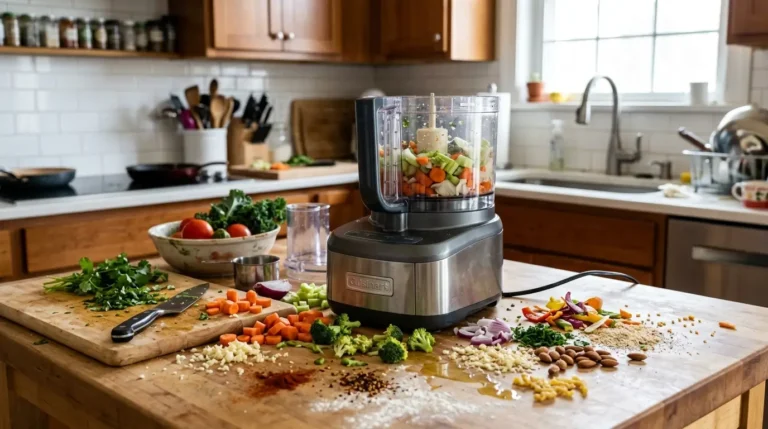
The food processor is one of those appliances that most people underuse in one very specific way. They pull it out for the big tasks, the large batches of hummus, the pie dough for a dinner party, the shredded cabbage for a crowd. Then they wash it, put it away, and go back to spending twenty minutes hand chopping onions, garlic, and herbs for Tuesday night dinner when the machine sitting in the cabinet could have done it in thirty seconds.
The gap between what a food processor can do for your daily cooking time and what most people actually use it for is one of the largest unrealised time savings in the average kitchen. The machine is not limited to impressive or elaborate preparations. It is most valuable as a daily tool for the small, repetitive prep tasks that collectively account for a significant portion of time spent in the kitchen every week.
I have been writing about kitchen appliances for nearly a decade, and the time-saving potential of the food processor is a subject I return to consistently because it is so genuinely underappreciated. Here are the habits that actually save time in the kitchen, explained with enough detail to make each one immediately useful.
Good habits also include knowing when your appliance needs attention. Learn how to spot the warning signs that your food processor needs cleaning to keep it running smoothly and avoid unnecessary performance issues.
1. Keep the Processor on the Counter, Not in the Cabinet

This habit sounds too simple to matter, but the physical location of the food processor determines how often it gets used more than any other single factor.
An appliance stored in a cabinet requires you to retrieve it, set it up, use it, wash it, and put it back. The total overhead of this process, even for a small food processor and a simple task, is four to six minutes beyond the task itself.
For a task that the processor handles in thirty seconds, a four-minute retrieval and storage overhead means the hand tool is genuinely faster for that specific task. The processor gets used for big batches where the savings are obvious enough to justify the overhead, but not for small daily tasks where it would provide the most cumulative time saving.
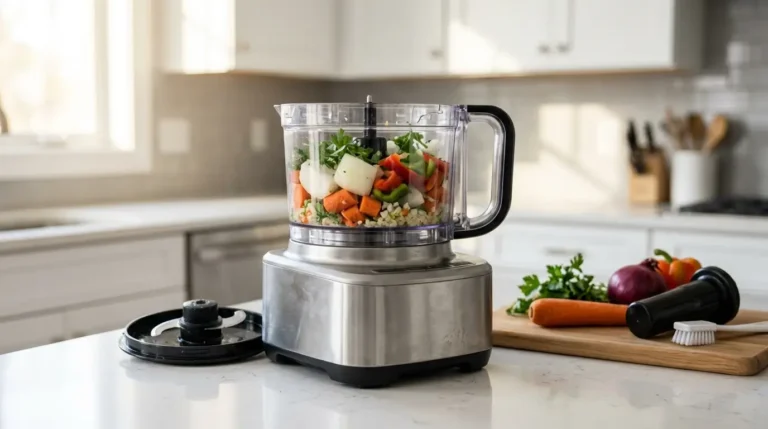
A processor kept on the counter has zero retrieval overhead. You open the bowl, add the ingredient, press pulse three times, and clean it in thirty seconds. The machine earns its counter space by being used daily rather than weekly. If counter space is genuinely too limited for permanent placement, keeping it on an accessible shelf immediately above or below the counter, requiring only a single lift rather than a full cabinet retrieval, provides most of the benefit.
The location habit is the foundation that makes every other habit in this article practical. A processor in a cabinet tends to be used for special occasions. A processor on the counter tends to be used every day.
2. Batch Process Aromatics Once a Week

Onions, garlic, ginger, and shallots are the ingredients that appear in the greatest number of recipes across the most diverse range of cuisines, and they are also among the most time-consuming to prepare by hand. Chopping a single onion takes three to five minutes of knife work and produces watery eyes. Mincing a head of garlic takes a similar amount of time. Peeling and mincing fresh ginger adds another two to three minutes.
A food processor handles all three of these tasks in under two minutes combined, and crucially, it handles them in quantities far beyond what a single recipe requires. Processing two to three onions at once, a full head of garlic, and a large piece of ginger in a single session produces enough prepared aromatics for an entire week of cooking, stored in small containers in the refrigerator.
The time saving from this single habit is substantial across a week of regular cooking. If aromatics appear in four dinners per week and each previously required five minutes of hand preparation, the weekly time cost of hand-prepared aromatics is twenty minutes. A single ten-minute processor session at the beginning of the week reduces that to zero for the rest of the week.
Prepared chopped onion keeps refrigerated for three to five days. Minced garlic in a small amount of olive oil keeps refrigerated for up to a week. Minced ginger wrapped tightly keeps refrigerated for a week or frozen in small portions for months.
3. Use the Shredding Disc for Cheese Every Time

Pre-shredded cheese from supermarket packaging contains anti-caking agents, typically cellulose, that prevent the cheese from melting smoothly. These agents keep the shreds separated in the bag but also coat each shred and slow the melting rate, which is why pre-shredded cheese often produces a stringy or greasy result in sauces, gratins, and baked preparations where block cheese shredded just before use melts cleanly.
Shredding a block of cheese in the food processor using the shredding disc takes thirty to forty-five seconds per block and produces cheese with no anti-caking agent that melts more smoothly than pre-shredded alternatives. The processor handles the task faster and more consistently than hand grating, which also saves significant knuckle-grazing risk compared to a box grater.
For households that use cheese regularly, setting up the food processor and shredding a full block at the beginning of the week produces a refrigerated supply that is faster to access than pre-shredded bags and produces noticeably better cooking results.
The shredding disc also handles vegetables like zucchini, carrots, and beets for quick salads, fritters, and baked goods without any knife work. A recipe calling for two cups of shredded zucchini that would take three to four minutes by hand takes forty-five seconds with the disc.
4. Make Breadcrumbs in Batches

Fresh breadcrumbs from day-old bread take approximately twenty seconds in a food processor and are significantly more flavourful and better textured than commercial dried breadcrumbs for most cooking applications. Yet most home cooks buy commercial breadcrumbs because making them seems like an extra step.
The habit of turning bread that is becoming stale into fresh breadcrumbs and storing them in the freezer converts what would otherwise become food waste into one of the most useful and frequently needed kitchen ingredients. Fresh breadcrumbs freeze perfectly without losing quality and can be used directly from frozen in most applications.
The process requires no preparation beyond breaking the bread into rough chunks. A few pulses in the processor bowl with the S-blade produces coarse breadcrumbs in ten seconds and fine breadcrumbs in another five seconds of additional pulsing. A half loaf of stale bread produces enough fresh breadcrumbs to fill a quart container in the freezer, lasting through weeks of pasta toppings, meatballs, coatings, and gratins.
For seasoned breadcrumbs, adding herbs and a small amount of olive oil before the final few pulses incorporates the seasoning evenly during processing, saving the additional step of mixing by hand after.
5. Use the Pulse Function for Salad Prep

Salads that involve multiple chopped vegetables, the kind that take fifteen to twenty minutes of knife work to produce, can be prepped almost entirely in the food processor using a specific technique that produces an acceptable chop texture for most salad applications.
The technique is to process each vegetable separately, using three to five short pulses per vegetable, checking the texture between each pulse, rather than processing all vegetables together. Each vegetable goes through the processor in fifteen to twenty seconds and produces a coarsely chopped result suitable for a mixed salad.
This habit does not produce the perfectly uniform knife cuts of careful hand work. For dressed salads, coleslaw, grain bowls, and chopped salads, the processor-produced texture is entirely appropriate and indistinguishable in the finished dish. For presentations where uniform cutting is important, knife work is still the better approach.
A salad that requires chopped cucumber, red onion, tomato, and pepper, which would take twelve to fifteen minutes of knife work to prepare, takes approximately three minutes of processor work with brief pauses to clear the bowl between each vegetable. This is the kind of daily time saving that accumulates into a meaningful reduction in total kitchen time over a week of cooking.
Even small changes in how you use your food processor can improve its performance. If you’re still getting uneven results, explore our guide to solving uneven chopping problems in your food processor for practical fixes.
6. Process Nuts and Seeds in Advance

Recipes calling for chopped nuts or ground seeds are often abandoned or simplified by home cooks specifically because the pre-processing step feels disproportionate to the rest of the recipe. Chopping walnuts by hand is tedious. Finding a seed grinder for flaxseed adds a step. The food processor handles both tasks in seconds.
The time-saving habit is to process larger quantities of frequently used nuts and seeds in a single session and store them in small labelled containers. Chopped walnuts, pecans, and almonds keep at room temperature for a week and in the refrigerator for a month. Ground flaxseed keeps refrigerated for two weeks. Toasted and chopped nuts stay fresh in an airtight container for up to two weeks at room temperature.
Having pre-processed nuts available removes a friction point from recipes that would otherwise require stopping to chop. A granola that lists half a cup of roughly chopped almonds becomes a five-minute task when chopped almonds are already in the container, and an oatmeal topping becomes an immediate decision rather than a five-minute preparation.
Pulse rather than continuous process for nuts to avoid crossing the line from chopped to nut flour or nut butter, which happens quickly. Three to five short pulses produce a coarse chop. Seven to ten produce a fine chop. Beyond this, the oils begin releasing and the texture moves toward paste.
7. Make Sauces and Dressings Directly in the Processor Bowl

Vinaigrettes, pestos, herb sauces, tahini dressings, and similar preparations that involve combining multiple ingredients into a uniform sauce are made more quickly and more consistently in the food processor than by hand or by shaking in a jar.
The processor emulsifies oil-based dressings more completely than a whisk or a jar because the blade creates the fine droplet dispersion that produces a stable, creamy emulsion rather than a temporary combination that separates quickly. A vinaigrette made in the processor stays emulsified for hours to days compared to the minutes of a hand-whisked version.
Pesto specifically benefits from the processor habit because the alternative, traditional mortar and pestle preparation, is genuinely time-consuming. A processor-made pesto is ready in forty-five seconds and produces a texture that is slightly different from mortar-made but equally valid for most applications.
Making a double or triple batch of a dressing or sauce when you are already set up adds thirty seconds to the processing time and produces two to three weeks of refrigerated supply. The processor is already on the counter, the bowl is already in use, and doubling the ingredient quantities costs almost nothing in additional time while saving the full setup and cleanup time for every subsequent batch.
8. Prep Herbs Before They Deteriorate

Fresh herbs have a short useful life once purchased, and one of the most common sources of kitchen waste is a bunch of parsley, cilantro, or basil that deteriorates before it can be fully used. The food processor provides a specific solution to this problem that saves both time and money.
When fresh herbs arrive from the market, process the full bunch in the processor with a small amount of olive oil, enough to form a coarse paste rather than a dry powder, and portion the herb paste into an ice cube tray. Once frozen, transfer the herb cubes to a labelled bag. Each cube represents approximately two tablespoons of fresh herb paste and can be dropped directly into a sauce, soup, or stew from frozen.
The initial processing and portioning takes five to eight minutes and preserves the full flavour and aromatic value of the herbs for three to six months rather than the three to five days they would last fresh in the refrigerator. The time saving comes from having herbs immediately available in pre-measured portions rather than chopping fresh herbs for every recipe.
This habit works particularly well with parsley, cilantro, basil in oil, chives, and dill. Woody herbs like rosemary and thyme are better preserved dried and can be added directly to preparations without processing.
Many time-saving habits are simply good practices that help you avoid common mistakes. Check out our guide to food processor mistakes every beginner should avoid to get better results and protect your appliance.
9. Use the Mini Bowl for Small Tasks

Many food processors include a small inner bowl, typically two to three cups in capacity, that fits inside the main bowl and uses the same blade assembly. This inner bowl is specifically designed for small-quantity tasks that would be impractical in the full-size bowl.
Small-quantity tasks are where most people reach for a knife instead of the processor, because the setup and cleanup time for the full bowl feels disproportionate to the task. Chopping one shallot, mincing two cloves of garlic, grinding a tablespoon of spices, or making a small amount of salsa are tasks that the mini bowl handles in seconds with the same cleanup as the full bowl.
Getting into the habit of using the mini bowl for every small chopping and mincing task rather than reaching for the knife removes the main friction point in daily processor use: the feeling that the machine is too much machine for a small job. The mini bowl collapses this distinction by making the machine appropriately sized for small tasks.
If your processor does not include a mini bowl, a separate small food chopper on the counter alongside the full processor serves the same function. The key principle is having a small-scale processor option that removes the overhead justification problem that prevents daily use.
10. Clean the Processor Immediately After Every Use

This is a maintenance habit rather than a cooking habit, but it belongs in a time-saving list because the cleaning approach directly determines how long the processor takes to use in total and whether it feels like a time-saving tool or a time-consuming one.
The difference between cleaning a processor immediately after use and cleaning it after the residue has dried is the difference between thirty seconds of rinsing and two minutes of soaking and scrubbing. Immediately after use, the bowl and blade have fresh residue that is water-soluble, liquid, and easily rinsed. After thirty minutes, that same residue has begun to dry and adhere, requiring effort and time to remove that the immediate rinse would have avoided entirely.
The specific habit is to rinse the bowl and blade under warm running water immediately after emptying the processor, before setting them down or moving to the next task. This thirty-second step prevents the dried residue problem from occurring and keeps the processor in a state where using it again requires no preparation beyond adding the next ingredient.
A processor that is always clean and always on the counter is one that gets used daily without friction. A processor that requires a cleaning and setup session before it can be used gets used when the task is large enough to justify that overhead, which means it sits unused for all the small daily tasks where it would save the most time collectively.
11. Batch Cook Vegetable Purees for the Week

Roasted or steamed vegetable purees, including sweet potato, butternut squash, cauliflower, and carrot, are the building blocks of a genuinely wide range of quick weeknight meals: soups that take five minutes to finish, pasta sauces that combine in one pot, additions to baked goods that increase nutritional density, and bases for baby food.
The processor handles vegetable pureeing far faster than a blender for cooked vegetables because cooked vegetables process to a smooth puree in seconds without requiring liquid to create the vortex that blenders need. A full butternut squash roasted and processed takes four minutes total. The puree stores refrigerated for five days and frozen for three months.
Having vegetable purees available changes weeknight cooking from a preparation-heavy exercise to a mostly assembly-based one. A butternut squash soup that would require forty minutes of roasting, cooling, and processing on the night can be made in ten minutes if the puree is already prepared. The processor time was spent earlier in the week when there was less time pressure, and the cooking session on the night benefits from that earlier investment.
12. Process Pastry Dough in Batches

Pastry dough for pie crusts, tarts, and shortcrust preparations is one of the food processor’s most genuine advantages over hand preparation, because the processor produces better-textured pastry more reliably than most home bakers achieve by hand.
The mechanism is temperature control. Proper pastry requires fat, typically butter, to be kept cold enough that it does not fully integrate into the flour but instead remains in small pieces that create the flaky layers in the finished pastry.
Hand mixing warms the butter through contact with hands, increasing the risk of over-mixing and producing a dense, tough pastry. The processor blends cold butter into cold flour in ten to fifteen pulses without any hand contact, keeping the butter temperature consistent throughout.
The time-saving habit is to make double or triple batches of pastry dough at once and freeze the extra portions as individual flattened discs. Each disc thaws in the refrigerator overnight and is ready to roll the following day. Making one batch of pastry takes ten minutes.
Making three batches simultaneously takes twelve minutes. The second and third batches cost two minutes of additional work and provide ready-made pastry for future meals that would otherwise require a full pastry-making session each time.
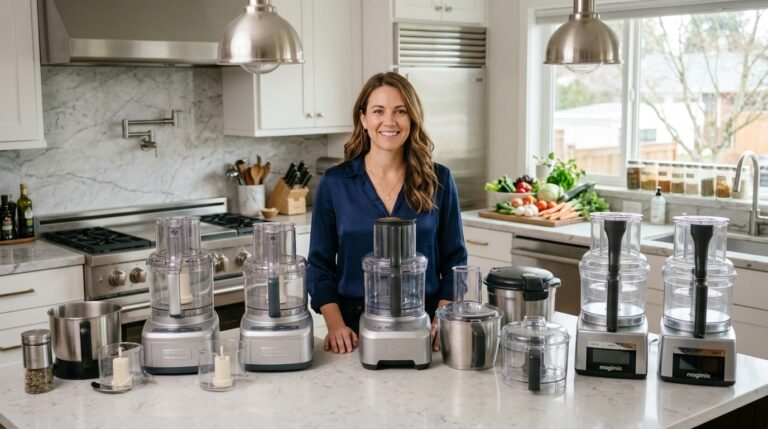
The right techniques make a difference, but so does the machine you use. Explore our guide to the best food processors for fast and easy meal prep and compare models that save time while delivering consistent results.
13. Use the Slicing Disc for Meal Prep Vegetables

Weekly meal prep cooking, which involves preparing large quantities of vegetables for use across multiple meals, is dramatically faster with a food processor slicing disc than with knife work. The disc produces uniform slices at a consistent thickness in a fraction of the time knife work requires.
A cucumber that takes two minutes to slice by hand takes fifteen seconds with the slicing disc. A full zucchini that takes three minutes to slice takes twenty seconds. A large red onion that takes four minutes to slice thinly takes twenty-five seconds. Across a full meal prep session involving six to eight different vegetables, the processor disc saves fifteen to twenty minutes compared to knife work.
The slices produced by the disc are more consistent than hand slicing for most home cooks, which also matters for even cooking in roasted vegetable preparations and for the visual uniformity of raw vegetable salads and grain bowls.
Setting up the processor with the slicing disc and processing each vegetable in sequence, with only a brief rinse of the bowl between different vegetables if needed, converts a lengthy knife-heavy meal prep session into a fast, efficient assembly-line process. The consistent thickness also means vegetables roasted together finish cooking at the same time.
The Habit That Multiplies All the Others
Every habit in this article works individually to save time on specific tasks. But there is one meta-habit that multiplies the time-saving value of all the others: deciding to use the processor first rather than as a last resort for big tasks.
The default for most home cooks when facing a preparation task is to reach for a knife. The processor only enters consideration when the task is large enough to clearly justify the retrieval and setup time. Reversing this default, making the processor the first consideration for any chopping, slicing, shredding, or pureeing task rather than the last, is the shift that converts the food processor from an occasional convenience into a genuinely transformative daily kitchen tool.
The time savings are real, they are consistent, and they compound across every meal of every week. The investment required to realise them is simply the habit of reaching for the machine that is already on the counter.
FAQs About Food Processor Time-Saving Habits
For a household that cooks four to five dinners per week with regular vegetable prep, the habits in this article collectively save fifteen to twenty-five minutes per week in direct preparation time. This accumulates to twelve to twenty hours per year, which is a meaningful return on the investment in building these habits.
For genuinely small tasks like mincing one clove of garlic, a knife is faster when the processor is stored in a cabinet. When the processor is on the counter and cleaned immediately after use, the processor is faster for everything beyond the smallest single-ingredient tasks because the cleanup time is thirty seconds rather than a deterrent.
Chopped onion stored in an airtight container keeps in the refrigerator for three to five days without significant quality loss. Beyond this, it develops a stronger, slightly fermented odour. Processing in quantities that will be used within five days prevents waste while providing the convenience of pre-prepared aromatics.
Yes. Minced raw garlic covered with a small amount of olive oil keeps in a small airtight container in the refrigerator for up to a week. The oil prevents oxidation and preserves the fresh garlic flavour more effectively than storing minced garlic in water or uncovered. Use one teaspoon of the stored mixture per clove the recipe requires.
Freezing in olive oil preserves the flavour of soft herbs like parsley, cilantro, basil, and chives very effectively for up to three months. The texture of the herbs becomes softer after freezing, which is appropriate for cooked applications but means frozen herb paste is not suitable as a fresh herb garnish. For cooking applications, the flavour is preserved well.
For preparations where raw garlic will be cooked in oil, such as pasta or stir-fries, minced processor garlic works well. For preparations where raw garlic is used uncooked, as in some dressings and dips, hand-minced or pressed garlic releases different compounds than processor-minced garlic due to the cutting action difference, and many cooks prefer the flavour profile of hand-prepared garlic for these raw applications.
A quick rinse under running water between different vegetables is sufficient when processing multiple vegetables in the same session. Handle the disc by its central hub rather than the blade edge, and rinse both sides under warm running water while rotating the disc. This takes ten seconds and removes enough residue to prevent cross-flavour contamination between vegetables