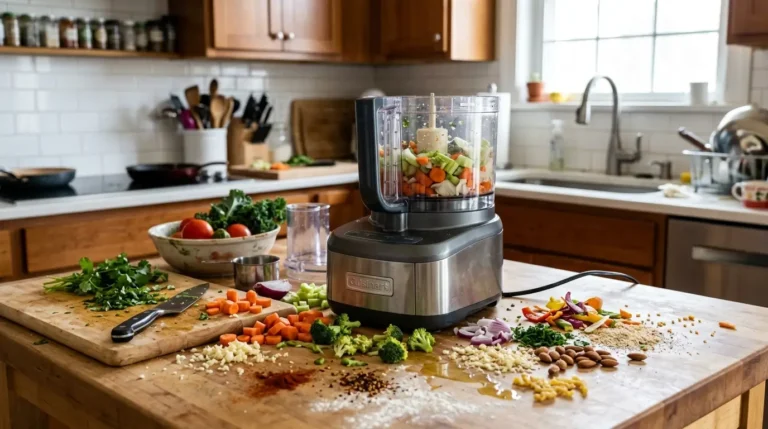
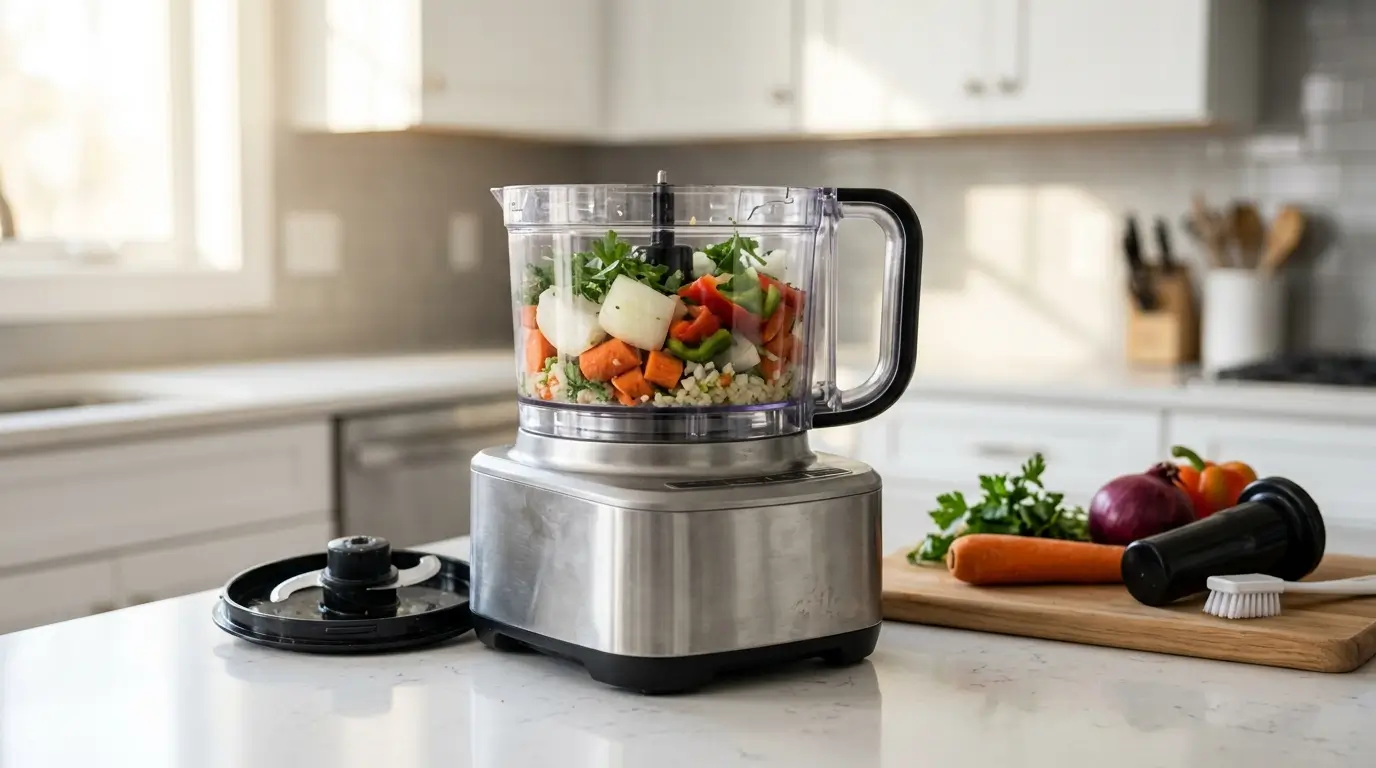
Why Your Food Processor Is Not Chopping Evenly (Every Cause Identified and Fixed)
By Amelia Harper | Kitchen and Home Appliance Writer | Updated August 2026
Uneven chopping from a food processor is one of those kitchen frustrations that is easy to blame on the machine but that almost always has a specific, correctable cause in how the machine is being used. You press pulse, watch everything spin, and end up with a mix of finely processed pieces and large unprocessed chunks in the same bowl.
Or one side of the bowl is perfectly chopped while the other side is barely touched. Or the top of the bowl is untouched while the bottom is over-processed.
The food processor is a precision tool when used correctly. Its blade moves at high speed and creates a specific pattern of motion inside the bowl that processes ingredients efficiently when the conditions are right. When any of those conditions are off, the result is the uneven chopping that makes the machine feel unreliable.
I have been writing about kitchen appliances for nearly a decade, and uneven food processor chopping is one of the most common performance complaints I encounter. The causes are consistent across brands and models, and nearly all of them are correctable without any new equipment. Here is every reason a food processor fails to chop evenly, with the specific fix for each one.
Uneven chopping isn’t always caused by dull blades or overloading. Sometimes a dirty bowl or blade assembly is the real problem. Learn how to tell when your food processor needs a thorough cleaning to restore smoother, more consistent performance.
1. The Bowl Is Overfilled
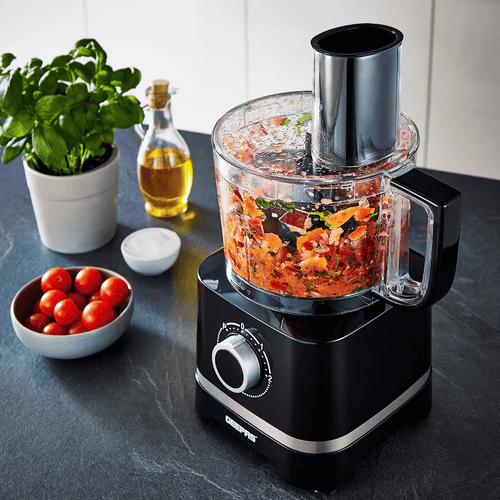
Overfilling is the single most common cause of uneven food processor chopping, and it is the cause that most directly undermines the physical mechanism by which the processor works.
The food processor blade creates a vortex inside the bowl that draws ingredients from the sides and top toward the blade zone at the bottom. For this vortex to function properly and reach all ingredients in the bowl, there needs to be enough empty space above the ingredients for them to move.
When the bowl is packed to or above its fill line, the ingredients cannot circulate through the vortex. The material directly at the blade gets processed while the material above it stays largely stationary.
The visible result is exactly the uneven chopping that most people experience: finely processed material at the bottom of the bowl and large, barely touched pieces at the top. No amount of extended processing time resolves this because the vortex mechanics are fundamentally blocked by the overfill.
The practical fix is to process in smaller batches. Fill the bowl to no more than two-thirds of its total capacity for most chopping tasks. For leafy ingredients that start large and compress quickly, filling closer to half capacity produces more even results. Two correctly filled batches processed separately and combined take less total time than one overfilled batch that requires repeated stopping and redistribution.
2. The Ingredients Are Not Cut Into Consistent Pieces Before Processing

The food processor blade encounters every piece of ingredient at the same speed and for the same duration during each pulse or processing cycle. When pieces vary dramatically in size before loading, smaller pieces are processed to a fine texture before larger pieces have been significantly reduced, producing the mixed fine and coarse texture that reads as uneven chopping.
A large chunk of onion and a small sliver of onion placed in the same bowl will not reach the same processed size at the same time. The small sliver is processed to a fine mince in the first two pulses while the large chunk is still being reduced in size. By the time the large chunk reaches the target size, the small pieces have been processed far beyond it.
Cutting all ingredients into roughly uniform pieces before loading the processor eliminates this source of unevenness. The target pre-processing size depends on the end texture required. For a medium chop, cutting ingredients into pieces approximately one to two inches across produces even results. For a fine chop, cutting pieces down to roughly half an inch before processing allows the processor to finish the job uniformly.
This pre-cutting step takes one to two minutes and produces dramatically more consistent results than loading ingredients in their whole or irregularly sized form and relying on extended processing time to even out the texture.
3. You Are Using Continuous Processing Instead of Pulse
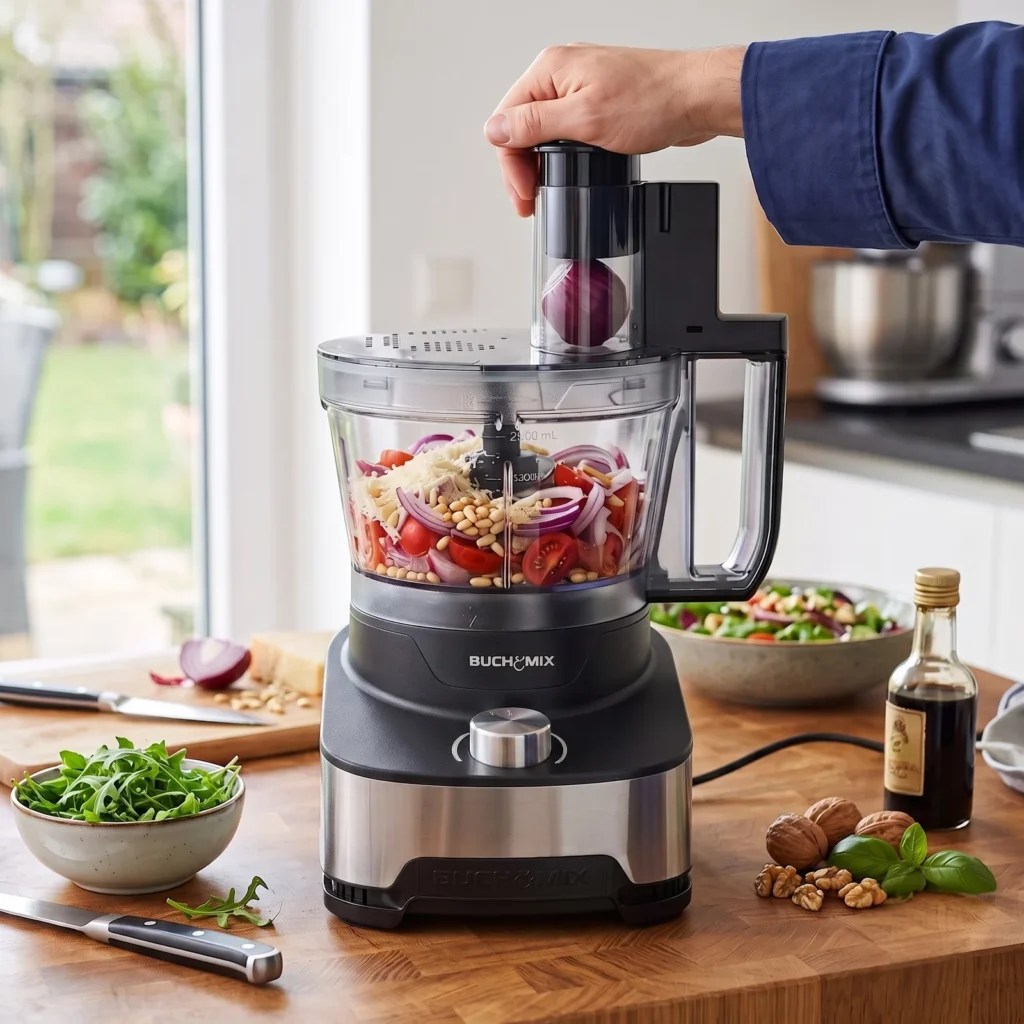
This is the technique mistake that produces the most inconsistently textured results, and it is the one that most beginners make because the continuous processing mode seems like the faster and more thorough option.
Continuous processing runs the blade at full speed without interruption. During continuous processing, the ingredients that are closest to the blade and most exposed to the vortex are processed rapidly and repeatedly, while ingredients on the periphery of the bowl get less blade contact per unit time. The result is a bowl where the most accessible ingredients have been over-processed while less accessible ones are under-processed.
The pulse function delivers short bursts of blade rotation with stops between them. During each stop, gravity redistributes the ingredients in the bowl, moving processed material toward the sides and allowing unprocessed material to fall toward the blade zone. The next pulse then processes this newly repositioned material. The alternating motion between pulse bursts creates the redistribution that produces even chopping across the full bowl content.
For virtually all chopping tasks, pulsing produces more even results than continuous processing. The correct technique is five to ten short pulses, a check of the texture, scraping down the sides if needed, and then another round of pulses. This approach gives you control over the outcome rather than committing to continuous processing and checking only at the end.
4. You Are Not Scraping Down the Sides
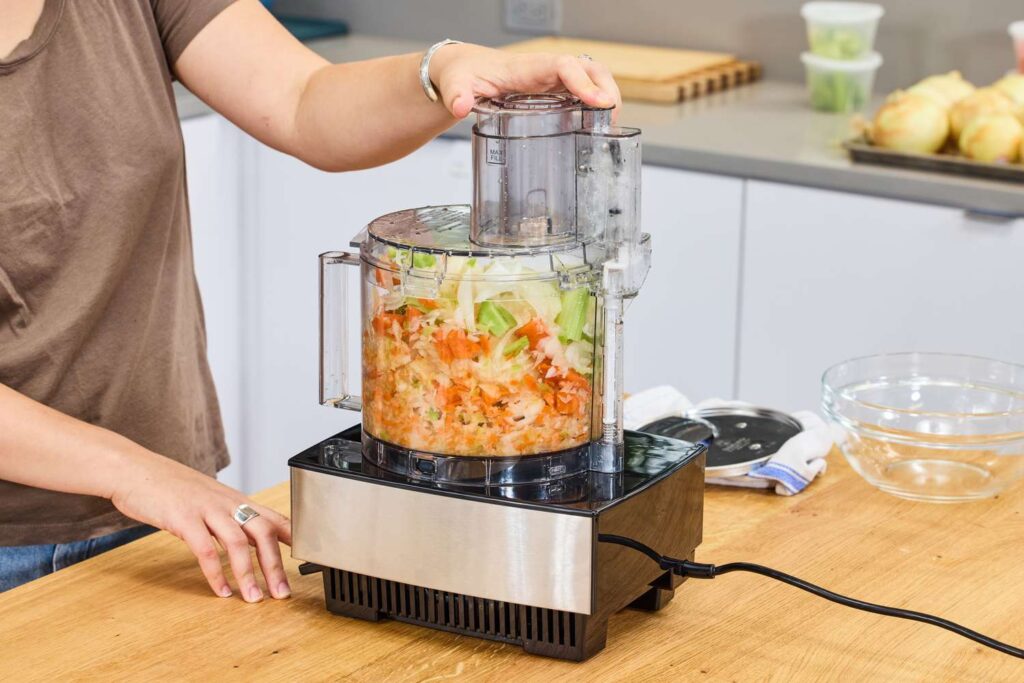
Material that sticks to the sides of the processor bowl above the blade zone is not being processed during the cycle. It clings to the wall, stays in place during pulsing, and ends up as large unprocessed pieces in an otherwise finely chopped batch.
The centrifugal force of the spinning blade pushes material outward against the bowl walls during processing. Some of this material slides back down toward the blade after each pulse, but sticky, moist, or larger pieces adhere to the wall and remain there across multiple pulse cycles.
Stopping the processor every five to ten pulses and scraping the bowl sides down with a flexible spatula redistributes this wall-clinging material back into the active processing zone. After scraping, the next round of pulses processes the redistributed material to the same degree as the rest of the batch.
The scraping step takes ten seconds and should be treated as a standard part of the chopping process rather than an optional step for when the results look bad. Recipes that call for food processor chopping implicitly assume this scraping will occur at intervals during processing. Skipping it is the fastest way to end up with uneven texture regardless of how many total pulses were applied.
5. The Blade Is Dull or Damaged
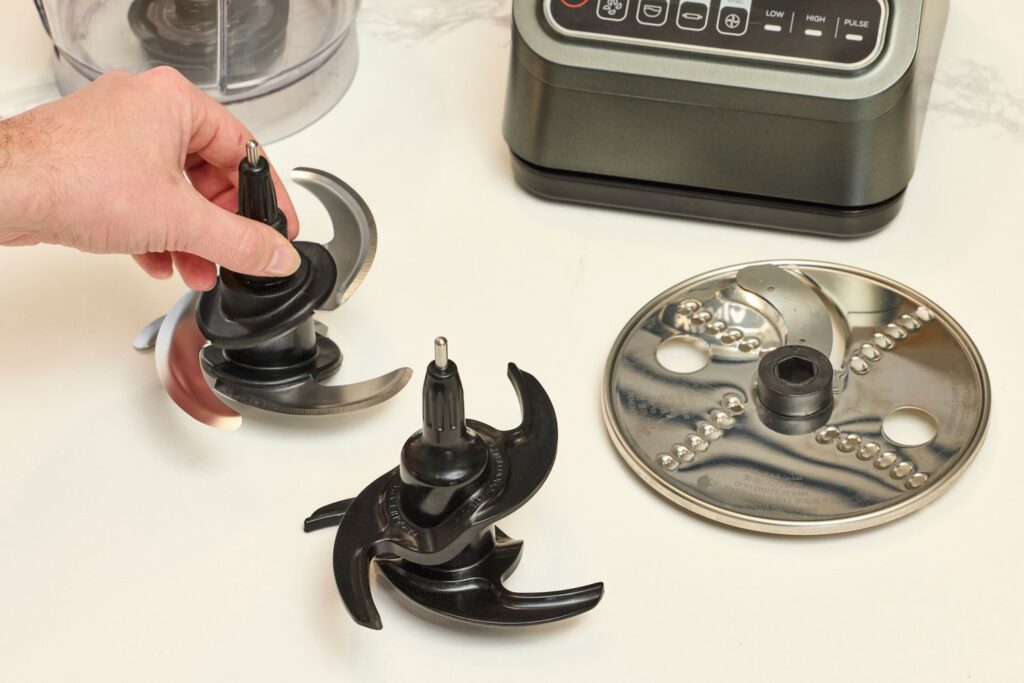
A sharp blade cuts through ingredients cleanly and efficiently, creating the clean slice that produces uniform particle size. A dull blade pushes through ingredients rather than cutting them, creating a tearing action that produces uneven particle sizes and requires more processing time to achieve any given level of fineness.
Blade dulling happens gradually through normal use and is accelerated by processing hard ingredients like raw root vegetables, nuts, and hard cheeses. The blade edge, which starts razor-sharp, develops micro-deformations at the cutting edge over time that prevent clean slicing. These deformations cause the blade to drag through soft ingredients rather than cutting through them.
Diagnosing blade dullness requires inspection of the blade edge. On a clean, removed blade, run a fingernail carefully along the edge. A sharp blade catches the fingernail slightly. A dull blade feels flat or rounded at the edge without catching. Visible chips or bends in the blade indicate damage rather than just dulling.
Replacement blade assemblies are available from most food processor manufacturers and many third-party suppliers. Replacing a dull or damaged blade is more economical than replacing the entire machine and produces an immediate and dramatic improvement in chopping consistency.
Small adjustments to your routine can make meal prep much faster. Explore our guide to everyday food processor habits that save time and discover practical tips for getting more done with less effort.
6. The Ingredients Are Too Wet

Water and similar liquids in the bowl change the dynamics of the food processor’s cutting mechanism in ways that directly cause uneven chopping, and this is a cause that is easy to overlook because the connection between moisture and uneven texture is not intuitive.
When wet ingredients are processed, the liquid in the bowl lubricates the blade and allows it to spin freely without engaging the ingredients as effectively as it does in a dry or lightly moist environment. Wet ingredients also tend to be pushed to the periphery of the bowl by centrifugal force and to create a liquid vortex that circulates separately from the solid ingredients.
The solid pieces ride on top of or at the edges of the liquid vortex rather than being drawn through the blade zone consistently.
The result is inconsistent processing where some pieces receive many blade contacts and others receive few, producing a range of textures in the same batch. Garlic cloves that have been just washed, wet tomatoes loaded directly from a rinse, and heavily marinated proteins all exhibit this problem.
Patting ingredients dry with a paper towel before loading, or allowing rinsed ingredients to drain and air dry for a few minutes, reduces the free moisture in the bowl enough to restore the blade’s effective contact with the solid ingredients.
For preparations where some liquid is required, adding it in small amounts toward the end of processing rather than at the beginning allows the processor to first achieve even chopping of the solid ingredients before liquid is introduced.
7. The Wrong Blade Is Being Used for the Task
Most food processors include multiple blade and disc options because different cutting tasks require fundamentally different mechanical approaches. Using the wrong blade for a task produces results that no technique adjustment can fully compensate for.
The S-shaped multipurpose blade, sometimes called the chopping blade or steel blade, is the correct choice for chopping, mincing, pureeing, and making dough. It is not the correct choice for producing uniform slices or consistent shreds. Using the S-blade to produce sliced vegetables produces irregular, randomly sized pieces because the S-blade chops through ingredients in a rotary motion rather than slicing them along a fixed plane.
The slicing disc produces uniform slices because it moves across the full diameter of the feed tube in a single plane, cutting each piece to the same thickness as the one before it, defined by the disc’s geometry. The shredding disc works on the same principle for shredded textures. These discs produce uniform results specifically because they slice rather than chop.
For recipes that specify sliced or shredded vegetables and that are intended to be made in the food processor, using the appropriate disc rather than defaulting to the S-blade produces the uniform texture the recipe requires. Identifying which blade or disc is appropriate for the specific texture goal is the first step in every food processor task.
8. You Are Processing Items With Very Different Textures Together

Different ingredients have different densities, moisture contents, and structural properties that cause them to process at different rates under the same blade at the same speed. When ingredients with very different textures are processed together, the result is necessarily uneven because the processor cannot simultaneously produce the correct texture for each ingredient type.
Soft tomatoes and hard carrots loaded together in the same bowl are the clearest example. The soft tomatoes are processed to a fine or liquid consistency in two to three pulses. The hard carrots require ten to fifteen pulses to reach even a coarse chop. By the time the carrots are adequately processed, the tomatoes have been reduced to sauce.
Processing ingredients with similar textures together and adding the more delicate ingredients after the harder ones have been partially processed is the solution. In the carrot and tomato example, process the carrots alone for the majority of the required pulses, then add the tomatoes for the final two or three pulses needed to bring everything to the finished texture together.
This sequencing approach requires a little more planning than loading everything at once but produces a uniform final texture that the simultaneous approach cannot achieve with ingredient combinations that have significantly different processing speeds.
9. The Processor Bowl Is Not Properly Assembled
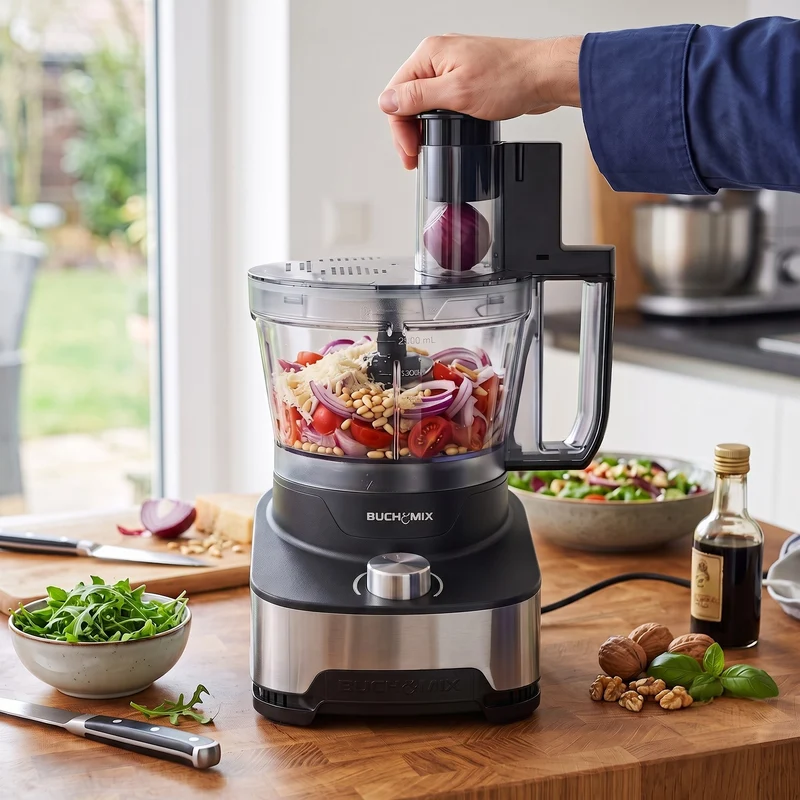
A processor bowl that is not fully locked and seated on the base does not maintain the correct relationship between the blade and the bowl during processing. Any movement or wobble in this relationship changes the blade’s cutting geometry and produces inconsistent results.
The blade assembly in a food processor is designed to operate at a specific clearance from the bowl base. This clearance is set by the geometry of the blade hub and the bowl base mating surface. When the bowl is not fully seated, this clearance may be larger or less consistent than designed, causing the blade to ride higher than its intended position or to wobble during high-speed rotation.
A blade that wobbles or operates at inconsistent clearance from the bowl base processes the material directly beneath it effectively while allowing material at different heights in the bowl to be processed less consistently. This creates the layered texture variation where the bottom of the batch is over-processed and the top is under-processed even in a properly filled bowl.
Always confirm that the bowl is fully locked onto the base before starting the processor. Most bowls have a locking mechanism that clicks audibly when correctly seated. If the bowl can be rotated slightly after locking, it is not fully engaged. Pressing down firmly on the bowl while rotating it to lock ensures full engagement with the base coupling.
Uneven chopping is often the result of simple mistakes that are easy to fix. Read our guide to common food processor mistakes beginners should avoid and learn how to get more consistent results every time.
10. The Motor Is Overloading on Dense Ingredients
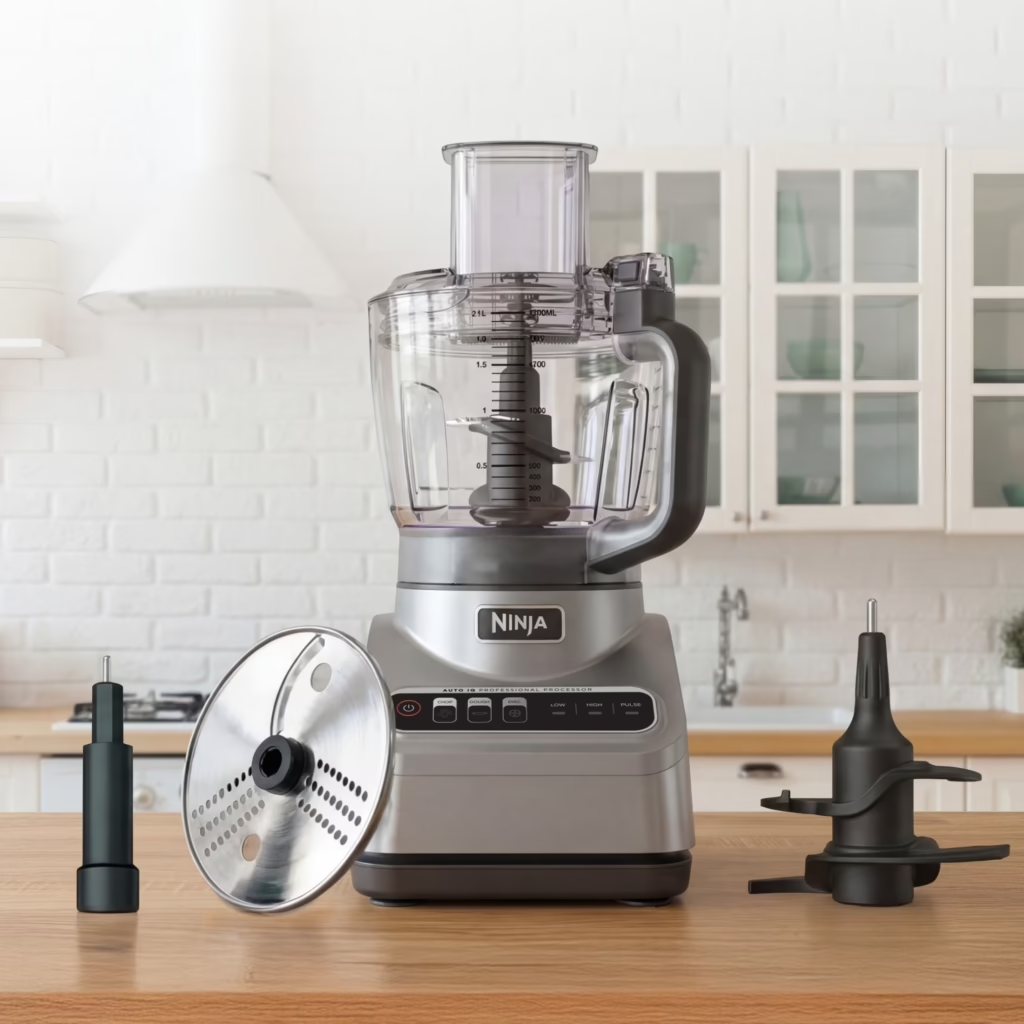
Dense ingredients like raw root vegetables, hard cheeses, nuts, and frozen items require more motor torque to process than soft ingredients. When the motor encounters a load that approaches its power limit, it slows down during processing. A slower blade speed changes the vortex dynamics inside the bowl and produces less even chopping than the motor achieves at full speed.
Motor slowdown during processing is not always obvious. It sometimes manifests only as slightly longer processing time per pulse or as a slightly different sound during demanding loads. The visible outcome is that the material in the most demanding zone, directly at the blade, is processed adequately while the less concentrated material at the periphery receives a less effective blade contact due to the reduced blade speed.
Cutting dense ingredients into smaller pieces before loading reduces the per-pulse load on the motor and allows it to maintain full speed throughout the processing cycle. Smaller pieces present less resistance to the blade per unit of material, which keeps the motor in its optimal operating range and produces the consistent blade speed that uniform chopping requires.
For very hard ingredients like frozen vegetables or very hard block cheese, allowing them to temper at room temperature for five to ten minutes before processing softens the outer surface enough to reduce the initial processing resistance significantly.
11. The Processing Time Per Pulse Is Too Long

Pulse duration, the length of each individual pulse, has a direct effect on chopping consistency that most food processor users do not consider because the pulse button seems like a binary on and off control rather than a variable with significant effect on results.
A long pulse, where the button is held down for two to three seconds, functions as a brief period of continuous processing rather than as a true pulse. During these longer pulses, the centrifugal force of sustained rotation pushes ingredients strongly against the bowl walls where they cling and do not return to the blade zone immediately when the pulse ends.
The redistribution that makes pulsing effective depends on short bursts followed by pauses long enough for gravity to move the material back toward the blade.
Short pulses of half a second to one second, with a pause of similar duration between each one, produce the alternating motion that creates even redistribution and consistent chopping. The pause after each short pulse is the moment when the redistributing gravity works, and it is the pause as much as the pulse that makes the technique effective.
Consciously shortening each individual pulse and maintaining adequate pause between pulses is a technique adjustment that costs no additional time overall and produces noticeably more even results from the same number of total processing cycles.
12. The Processor Needs Cleaning
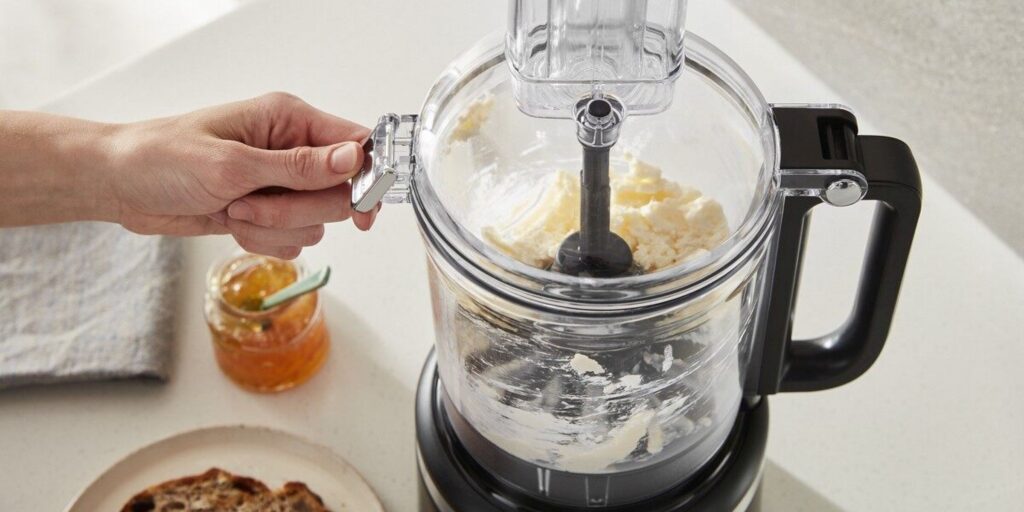
A food processor bowl and blade assembly with accumulated residue from previous sessions processes food differently than clean equipment, because residue on the blade edges reduces cutting sharpness and residue on the bowl interior affects how ingredients circulate during processing.
A thin film of dried residue on the blade edges dulls the cutting action in the same way that blade wear does, requiring more force per cut and producing the tearing action that creates uneven particle sizes. Residue on the bowl interior creates a surface texture that some ingredients adhere to during processing rather than sliding freely, which prevents even redistribution between pulses.
The blade and bowl should be cleaned thoroughly after every use, with particular attention to the blade hub area where residue concentrates and the area around the blade mounting point. A soft brush designed for this purpose reaches the crevices around the blade assembly that a standard sponge cannot access.
For bowls that have developed a surface film from accumulated residue despite regular cleaning, soaking in hot soapy water for fifteen to twenty minutes followed by thorough scrubbing with a soft brush restores the smooth interior surface that allows free ingredient circulation during processing.
If you’ve ruled out user error and cleaning issues but still get uneven results, your appliance may be the limiting factor. Explore our guide to the top food processors for consistent chopping and compare models designed for reliable everyday performance.
The Consistent Result That Is Always Possible
Looking across all twelve causes in this article, the pattern is clear. Uneven food processor chopping comes from the blade not making consistent contact with all of the ingredients in the bowl across all pulses of the processing cycle. Every cause is a specific way that this consistent contact breaks down, and every fix restores it.
Correct batch size, pre-cut ingredient size, pulse technique, regular scraping, appropriate blade selection, and a clean, sharp blade together produce consistent chopping results across any food processor. None of these adjustments require new equipment, significant effort, or additional time. They require understanding why each one matters and applying that understanding to every processing session.
The food processor that produces inconsistent results with current technique will produce consistent results with corrected technique. The machine is capable. The technique is what determines the outcome.
FAQs About Uneven Food Processor Chopping
Material against the bowl wall receives less blade contact than material in the centre because the blade rotates in a circular path with its most effective cutting zone in the middle of the bowl’s radius. Scraping the walls down every few pulses and using short pulses with adequate pauses allows wall-adjacent material to fall back into the active processing zone.
Onions have a layered structure with varying moisture content and density at different depths. The outer dry layers and the moist inner layers process differently under the blade. Cutting onions into quarter or eighth sections and loading only enough to fill the bowl two-thirds full, then using short pulses with regular scraping, produces more even results than loading whole or halved onions.
Yes. High speed produces faster blade rotation that pushes ingredients more strongly against the bowl walls, reducing even redistribution between pulses. Starting at lower speed or using shorter pulses achieves more even redistribution and more consistent chopping, particularly for soft or moist ingredients.
The top layer is the furthest from the blade zone and receives the least blade contact during each pulse. This is a sign that the bowl is overfilled and the vortex cannot reach the top layer effectively. Reducing the batch size so the bowl is no more than two-thirds full and scraping down the sides regularly addresses this layering effect.
Extended processing does not fix uneven chopping when the cause is a mechanical or technique issue. It usually makes the result worse by over-processing the already-chopped portions while under-processing portions that have escaped the blade zone. Identifying the specific cause from this article and addressing it produces better results than simply adding more processing time.
Higher-powered processors handle dense ingredients more consistently because the stronger motor maintains full blade speed under load. However, all of the technique-related causes of uneven chopping described in this article apply equally to budget and premium machines. Correct technique in a mid-range machine produces better results than poor technique in a premium one.
Fresh herbs are light and float above the blade zone during processing rather than being drawn into it consistently. Processing herbs with a small amount of oil, which weighs them down and helps them stay in contact with the blade, produces more even results. Using very short pulses of half a second each and scraping frequently also improves herb chopping consistency significantly.