Why Food Sticks to Your Air Fryer (And How to Stop It from Happening)
By Amelia Harper | Kitchen and Home Writer | Updated July 2026
There is a particular frustration that comes with air fryer cooking that nobody talks about enough. You follow the recipe, the timer goes off, you reach in to flip the food, and half of it stays welded to the basket.
You peel it away and the beautiful crust you were after goes with it, leaving a torn, mangled piece of food where a perfectly crisped one should have been. Or worse, you cannot flip it at all without it falling apart, and you just have to hope the underside is cooking without being able to check.
Food sticking to the air fryer basket is one of the most common complaints from both new and experienced air fryer users, and it is almost universally blamed on the machine or the coating. In reality, the cause is almost always something the user is doing or not doing, and understanding what that is makes the difference between air fryer results that consistently disappoint and ones that consistently impress.
I have been writing about kitchen appliances for nearly a decade, and I have seen this topic come up more consistently than almost any other in the air fryer category. This article covers every reason food sticks to an air fryer basket, in detail, with practical explanations of the mechanics behind each cause so you understand not just what to do but why it works.
If food keeps sticking despite proper cleaning and cooking techniques, it may be time to upgrade your appliance. Explore our guide to the top-rated air fryers for home cooking and find a model with a high-quality nonstick basket.
The Basket Has Not Been Preheated
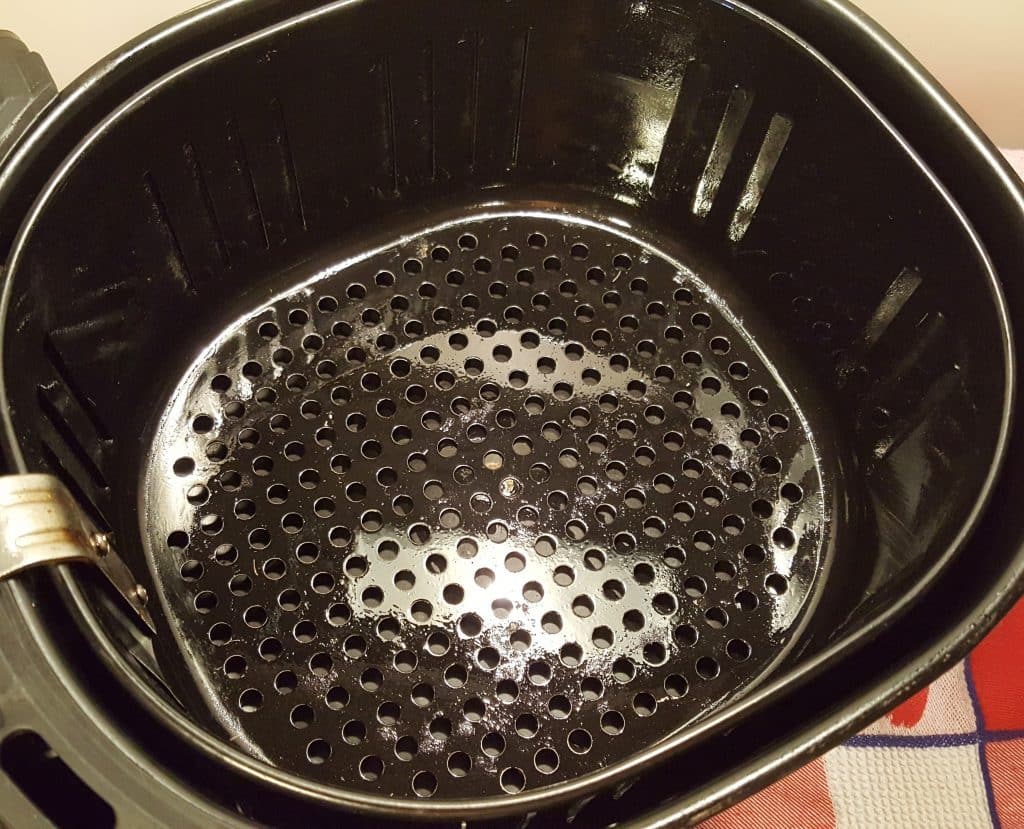
Preheating is the single most effective practice for preventing food from sticking in an air fryer, and it is the one most commonly skipped because it feels like an extra step that should not be necessary. Understanding why it works makes it much easier to treat as non-negotiable rather than optional.
When food is placed in a cold or insufficiently warm air fryer basket, there is a window of time at the beginning of the cooking cycle during which the basket surface and the food surface are both cold and wet.
During this window, the proteins and sugars in the food bind chemically to the basket surface before they have had a chance to sear and form the crust that would separate them from the surface. This is called cold adhesion, and it happens rapidly in the first minute or two of cooking before the surface reaches a temperature high enough to prevent it.
When the basket is preheated before food is added, the basket surface is already at or near cooking temperature when the food contacts it. The food surface begins searing almost immediately, forming a Maillard reaction crust within seconds of contact.
That crust acts as a physical barrier between the food and the basket surface, preventing the cold adhesion that causes sticking. The food literally releases from the basket once that crust forms, which is why a preheated surface produces dramatically better release than a cold one.
The standard recommendation for most air fryers is to preheat at the cooking temperature for three to five minutes before adding food. This is enough time for the basket surface, not just the air inside the cavity, to reach and stabilise at the target temperature. The basket itself must be hot, not just the surrounding air, which is why a longer preheat produces better release than a very brief one.
You Are Not Using Enough Oil
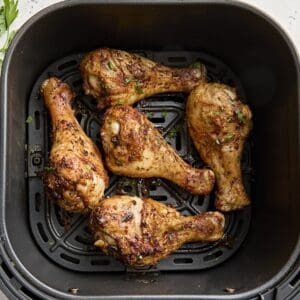
Air fryers reduce the amount of oil needed compared to deep frying by a dramatic margin, and that reduction is one of their most compelling practical advantages. But reducing oil does not mean eliminating it, and the interpretation of air frying as oil-free cooking is one of the primary reasons food sticks to baskets in homes across the world.
Oil serves two distinct functions in air fryer cooking. The first is flavour, which is obvious and discussed extensively. The second is release, which is less discussed but equally important. Oil creates a thin physical layer between the food surface and the basket surface that prevents direct contact between them.
Without this layer, the food’s proteins and starches are in direct contact with the basket coating, and under heat, they bond with it. A light coating of oil on the food, the basket, or both prevents this direct contact and allows the food to release cleanly.
The minimum effective amount of oil for preventing sticking is much less than traditional cooking requires. In most cases, a light coating of oil on the food surface, or a light spray of oil on the basket before adding the food, is entirely sufficient. The important word is coating. A few drops of oil concentrated in one spot do not coat the food surface. A light brush or mist that produces a thin, even film over the full food surface does.
The type of oil also matters for sticking prevention. Oils with higher smoke points, such as avocado oil, refined coconut oil, grapeseed oil, and light olive oil, handle air fryer temperatures better than oils with lower smoke points.
Oils that reach their smoke point during cooking break down and become sticky themselves rather than preventing sticking. Extra-virgin olive oil has a relatively low smoke point and can produce sticking at higher air fryer temperatures, while the lighter refined olive oil handles higher temperatures more reliably.
The Food Has Too Much Surface Moisture
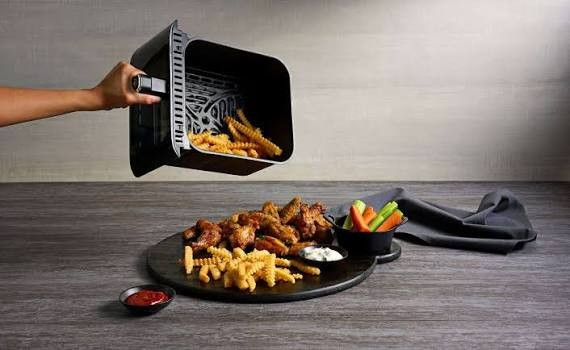
Moisture is one of the primary enemies of non-stick performance in any cooking environment, and the air fryer is no exception. When food with wet or damp surfaces is placed in the air fryer, that surface moisture must evaporate before any crust can form.
During the evaporation phase, the food’s surface is essentially steaming rather than searing, and during this steaming phase the food surface remains soft and tacky. In this soft, tacky state, it bonds readily with the basket surface and sticks.
This is why fresh vegetables and proteins taken directly from the refrigerator or rinsed before cooking often stick more than properly dried ingredients. The refrigerator condenses moisture on food surfaces. Rinsing or washing food obviously adds moisture. Even marinated proteins often have more surface moisture than uncoated ones, which is why marinated food requires particular attention to pre-cooking preparation.
Patting food thoroughly dry with a paper towel or clean cloth immediately before adding seasoning and oil removes the excess surface moisture that causes steaming and sticking. For proteins in particular, this step is worth the extra thirty seconds it takes. A dry surface seasons and oils more evenly, forms a crust more quickly in the air fryer, and releases from the basket more cleanly than a wet surface that has been oiled over the moisture.
For vegetables, which release moisture as they cook due to their high water content, thorough drying before cooking and ensuring adequate spacing in the basket, discussed in more detail below, helps manage the moisture issue even when initial drying has been done correctly.
The Basket Is Overcrowded
The air fryer’s mechanism of action depends on hot air circulating rapidly and consistently around every surface of the food being cooked. When the basket is overcrowded with food, the air cannot circulate properly. Instead, it flows around the outer edges of the food pile while the interior remains poorly ventilated. In this poorly ventilated interior, food steams in its own moisture rather than crisping in hot dry air.
Steaming food sticks significantly more than crisping food. The mechanism is the same as the surface moisture problem described above, amplified and sustained throughout the cooking cycle rather than just at the beginning. Food steaming in accumulated moisture never forms the crust that releases it from the basket. It stays soft and wet against the basket surface for the entire cooking cycle, and it sticks.
The practical rule for basket loading is that food pieces should be arranged in a single layer with small gaps between them rather than piled on top of each other. For most foods, the gap between pieces does not need to be large, a few millimetres to a centimetre is enough to allow air to flow between them. What matters is that no food is resting on top of another piece in a way that creates a covered, unventilated zone underneath.
If you have more food to cook than fits in a single layer, cooking in batches produces dramatically better results than crowding. The first batch cooks perfectly and is done in the stated time. The second batch is the same. A single overcrowded batch takes longer, produces inconsistent results, and sticks more than either separate batch would.
You Are Flipping Too Early
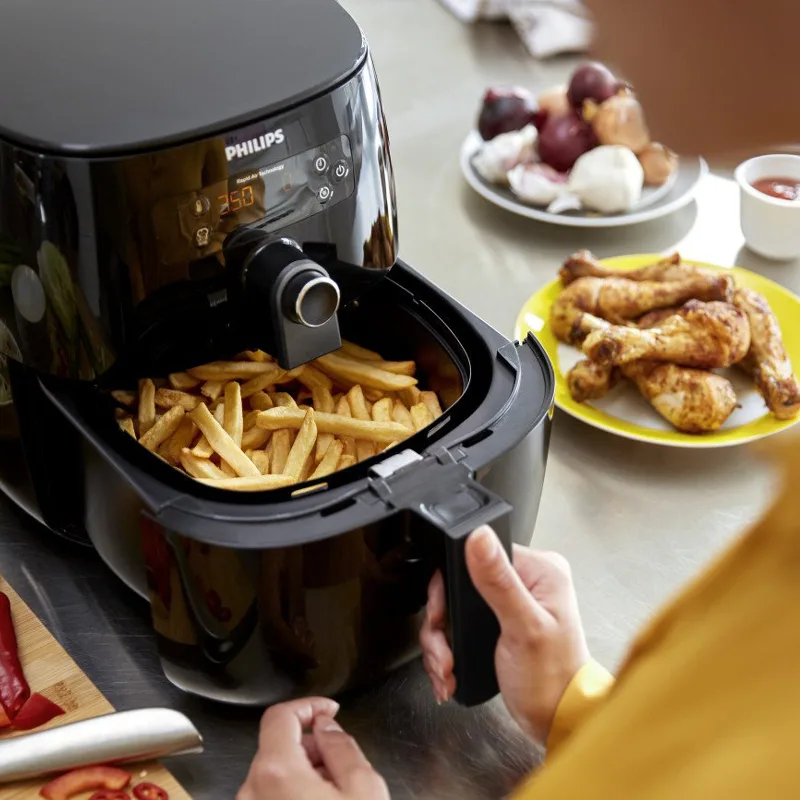
Timing the flip is one of the more nuanced aspects of air fryer cooking, and getting it wrong in one particular direction, flipping too early, is a direct cause of sticking.
When food is first placed in the air fryer, it goes through several stages before it is ready to flip. The surface moisture must evaporate. The surface temperature must rise to the point where the Maillard reaction begins. The crust must form and develop enough structural integrity to support the food’s weight when turned. Only after this crust has formed adequately does the food release naturally from the basket surface.
If you attempt to flip the food before the crust has formed, you are essentially trying to peel a raw or partially cooked protein or vegetable away from the surface it is resting on. Without the crust to structurally separate the food from the basket, it sticks, and forcing it results in tearing the food rather than cleanly releasing it.
The correct time to flip food in an air fryer is when it releases naturally with minimal resistance. If you attempt to slide a spatula under a piece of food and it resists, it is not ready to flip. Wait another minute and try again.
A piece of food that has formed an adequate crust will slide easily when you apply gentle pressure with a spatula, because the crust itself is what separates the food from the basket. Forcing a flip before this point causes the damage and sticking that gives air fryer cooking a reputation for messiness.
The Coating on the Basket Is Degraded
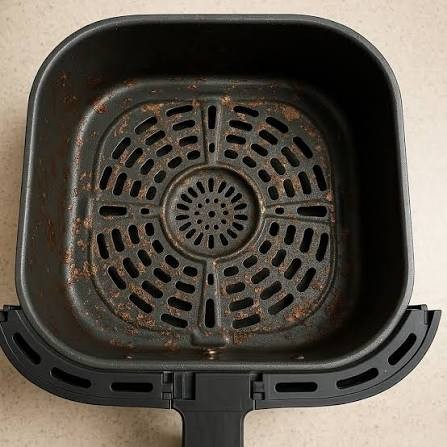
Air fryer baskets come coated with a nonstick material that prevents food from bonding directly to the metal surface underneath. This coating works well when new but degrades over time through a combination of heat cycling, abrasion from metal utensils, exposure to acidic ingredients, and cleaning with abrasive tools.
When the nonstick coating begins to degrade, small areas of the underlying metal are exposed. These bare metal areas have none of the nonstick properties of the coating and will cause food to stick directly to them. As the coating degrades further and more bare metal is exposed, sticking becomes progressively worse and more widespread.
The primary cause of premature coating degradation is the use of metal utensils inside the basket during cooking. Metal spatulas, tongs with metal tips, and metal skewers all scratch the coating with each use.
Even small scratches from a single use with a metal utensil create micro-abrasions that the heat of subsequent cooking sessions enlarges into visible coating damage over time. Silicone and nylon utensils specifically designed for use with nonstick surfaces do not scratch the coating and should be the only tools used inside the air fryer basket.
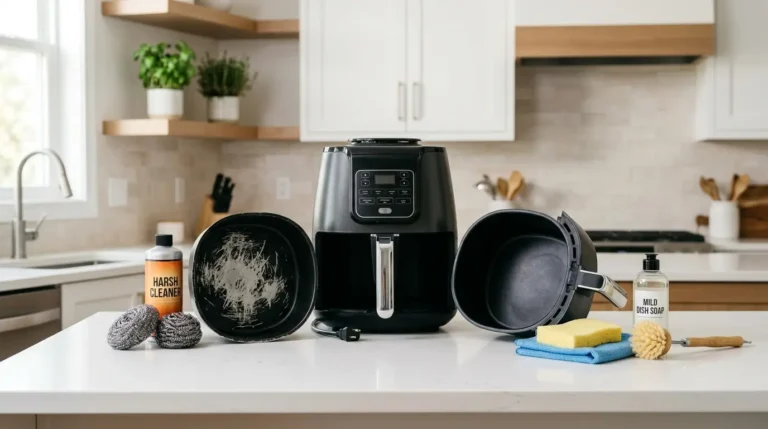
The second common cause of coating damage is washing with abrasive materials. Steel wool, abrasive scrubbing pads, and even the rough side of a standard dual-sided sponge all abrade the coating surface and accelerate degradation. Washing the basket with the soft side of a sponge, a cloth, or a soft brush with warm soapy water preserves the coating significantly longer than abrasive washing.
Acidic ingredients, including tomatoes, citrus juice, vinegar-based marinades, and certain fruit preparations, can degrade the coating faster than neutral ingredients through chemical rather than mechanical action. Limiting the dwell time of acidic ingredients in the basket, rinsing promptly after cooking acidic foods, and not leaving acidic preparations sitting in the basket between cooking and cleaning all help to preserve the coating.
Once coating damage is severe enough that sticking is occurring in large patches, the basket may need to be replaced. Using a basket with significant coating damage is not just a performance issue. Degraded nonstick coatings, depending on their type, can also present potential health concerns that make replacement rather than continued use the appropriate response.
You Are Using Cooking Spray Directly on the Basket
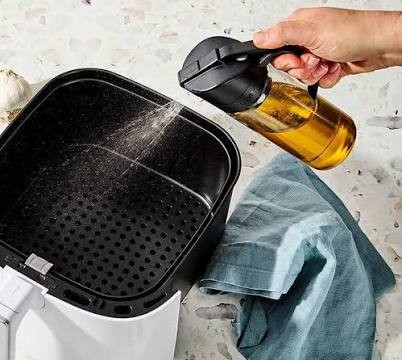
This one surprises most people because cooking spray seems like the obvious tool for coating a nonstick surface before cooking. For air fryer baskets specifically, aerosol cooking sprays are actually a significant cause of the coating degradation that leads to sticking.
Commercial aerosol cooking sprays typically contain propellants and additives beyond just the oil component. These additives, particularly lecithin which is commonly used as an emulsifier in aerosol sprays, bond to the nonstick surface at high temperature and build up into a residue layer that is difficult to remove and that progressively interferes with the nonstick properties of the coating.
Many air fryer manufacturers explicitly state in their care instructions that aerosol cooking sprays should not be used on the basket for exactly this reason.
The alternative is applying oil directly to the food using a brush, a dedicated refillable oil mister filled with pure oil rather than an aerosol spray, or tossing the food in a bowl with a small amount of oil before adding it to the basket. These methods apply pure oil without the additives that cause residue buildup, and they provide equivalent or better sticking prevention than the aerosol spray while protecting the basket coating.
If you prefer the convenience of a spray format, a refillable pump oil sprayer or mister filled with your preferred cooking oil provides the same fine-mist spray pattern as an aerosol spray without the additives. These are widely available and inexpensive, and they allow you to choose the specific oil you want to use rather than using whatever is in the commercial spray can.
The Food Has a High Sugar Content
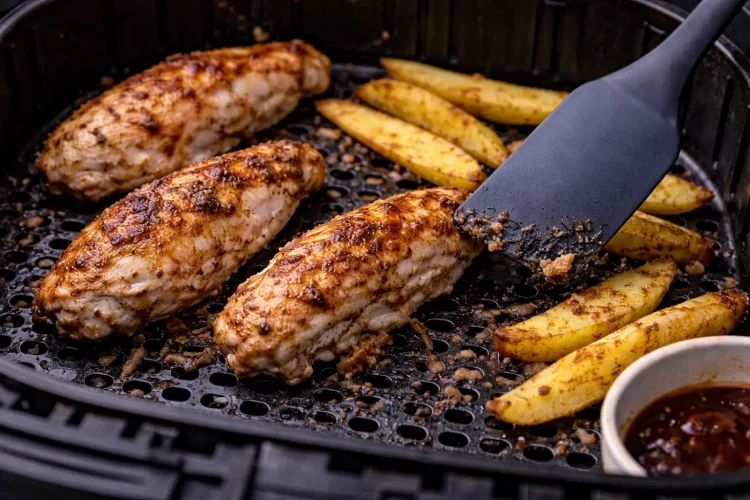
Sugar caramelises at relatively low temperatures, around 320 degrees Fahrenheit for sucrose, which is below the typical air fryer cooking temperature for most proteins and vegetables.
When food with significant sugar content, whether naturally occurring sugar in fruit and certain vegetables or added sugar in marinades and sauces, is cooked in the air fryer, that sugar melts, caramelises, and then hardens as it cools, bonding the food to the basket surface in a way that is much more aggressive than the protein adhesion that causes ordinary sticking.
This is why glazed or sauced proteins, teriyaki chicken, honey-glazed salmon, barbecue-sauced ribs, and sweet fruit preparations stick dramatically more than unseasoned equivalents. The glaze or sauce reaches the caramelisation point quickly under the air fryer’s intense heat, becomes extremely sticky in its melted state, and then sets hard as the temperature fluctuates, essentially gluing the food to the basket.
There are several strategies for cooking high-sugar foods in the air fryer without the sticking that caramelised sugar causes. The first is applying glazes and sauces only in the final portion of the cooking time rather than at the beginning.
If a piece of chicken takes twenty minutes to cook through, add the glaze in the final three to five minutes rather than cooking with it from the start. This limits the amount of time the sugar spends at caramelising temperature and reduces how much it bonds to the basket.
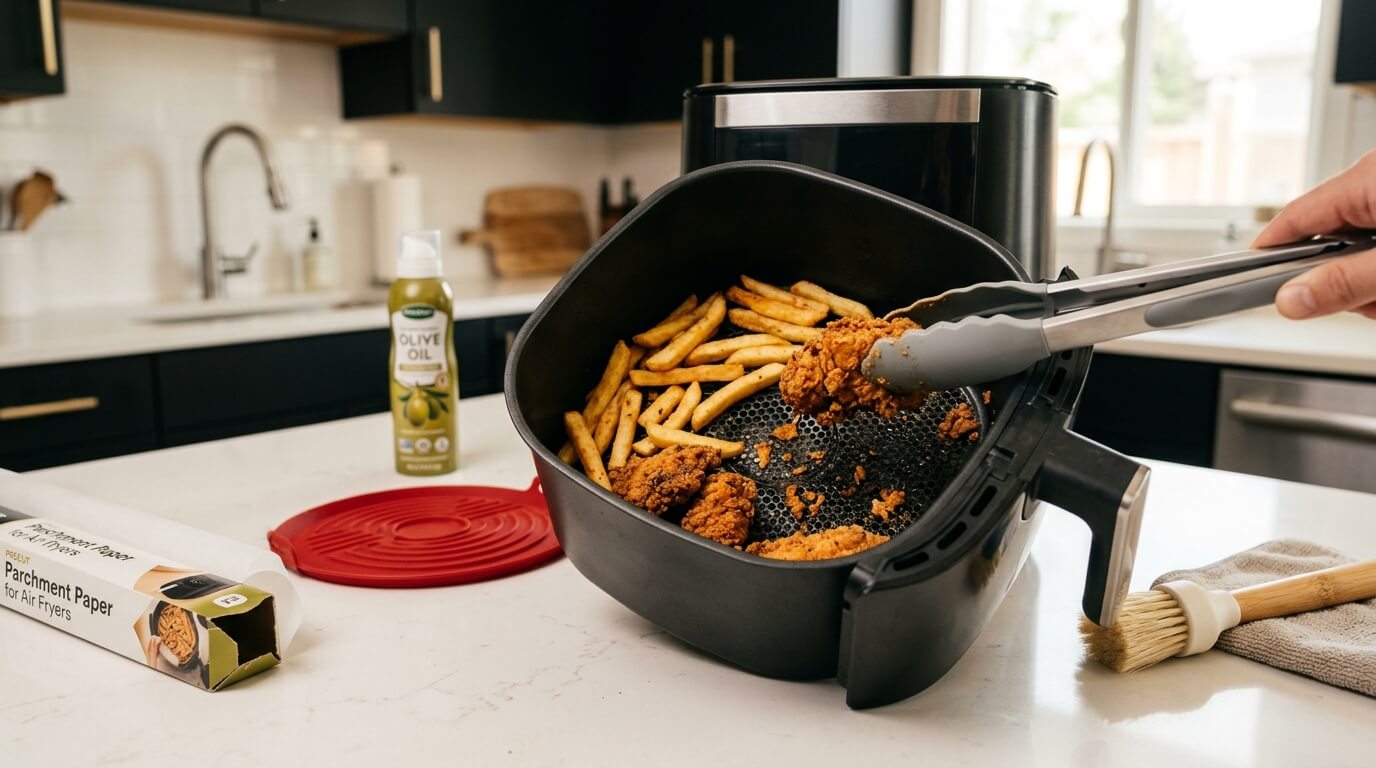
The second strategy is using parchment paper or silicone liners specifically designed for air fryer use. These create a non-stick barrier between the food’s sticky surface and the basket, allowing even high-sugar preparations to be removed cleanly. The liners themselves may have caramelised sugar bonded to them, but they go in the bin rather than requiring scrubbing from the basket.
You Are Not Using Parchment or Silicone Liners When Appropriate
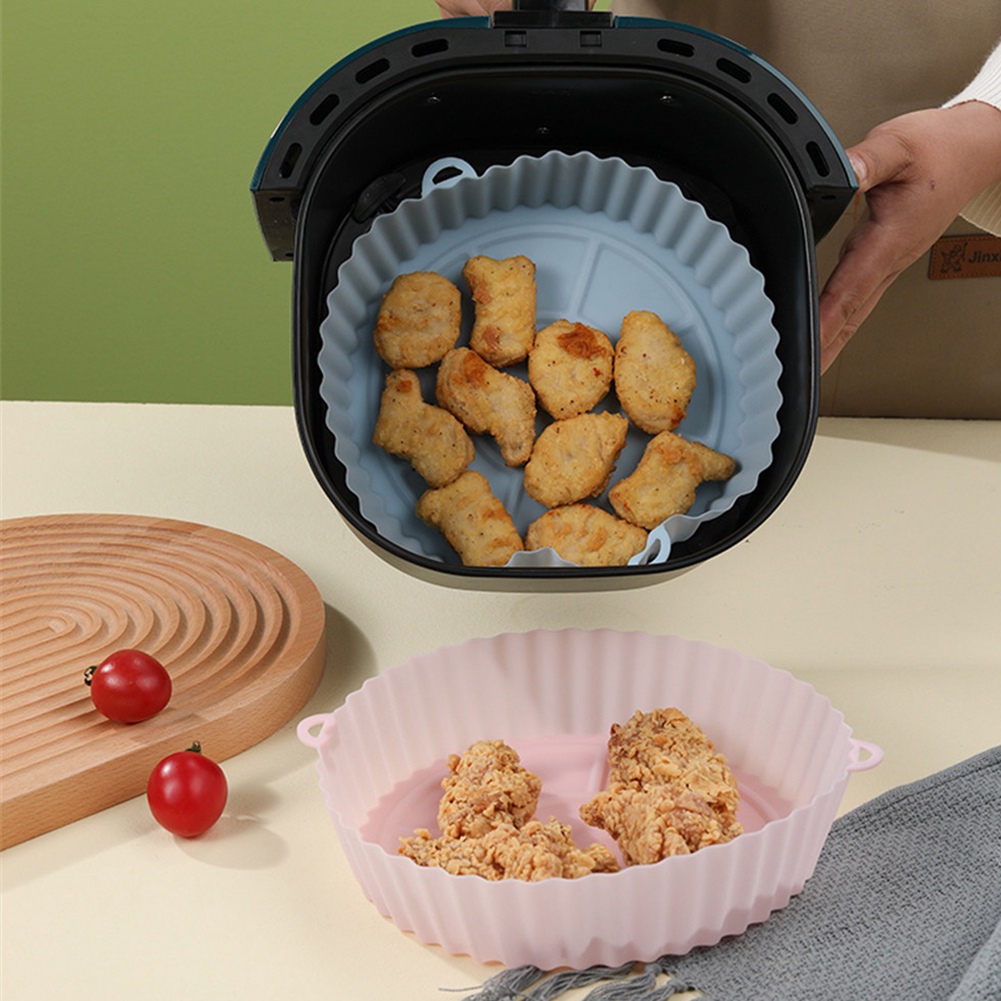
Parchment paper liners and silicone mats designed specifically for air fryer use are the most reliable solution for foods that are particularly prone to sticking and for situations where maximum convenience in cleanup is the priority.
The appropriate type of parchment for an air fryer is specifically cut to fit the basket size with perforations that allow air to circulate around and under the food. Standard baking parchment cut to fit the basket without perforations significantly restricts airflow and undermines the air fryer’s crisping mechanism, producing results closer to steaming than air frying.
Perforated parchment liners allow the air to flow through while providing a non-stick barrier that prevents food from contacting the basket surface directly.
Silicone liners are reusable alternatives to parchment that provide the same non-stick barrier and can be washed and used indefinitely. They are particularly practical for foods that are regularly cooked in the air fryer since the per-use cost becomes negligible after the initial purchase.
One important note about using parchment in the air fryer: always add parchment to the basket after preheating, never before. Placing parchment in the basket during preheating when there is no food to weigh it down allows the high-velocity air to blow it against the heating element, which can cause it to scorch or ignite. Preheat the empty basket, then add the parchment and immediately add the food before starting the cooking cycle.
The Food Is Particularly High in Protein
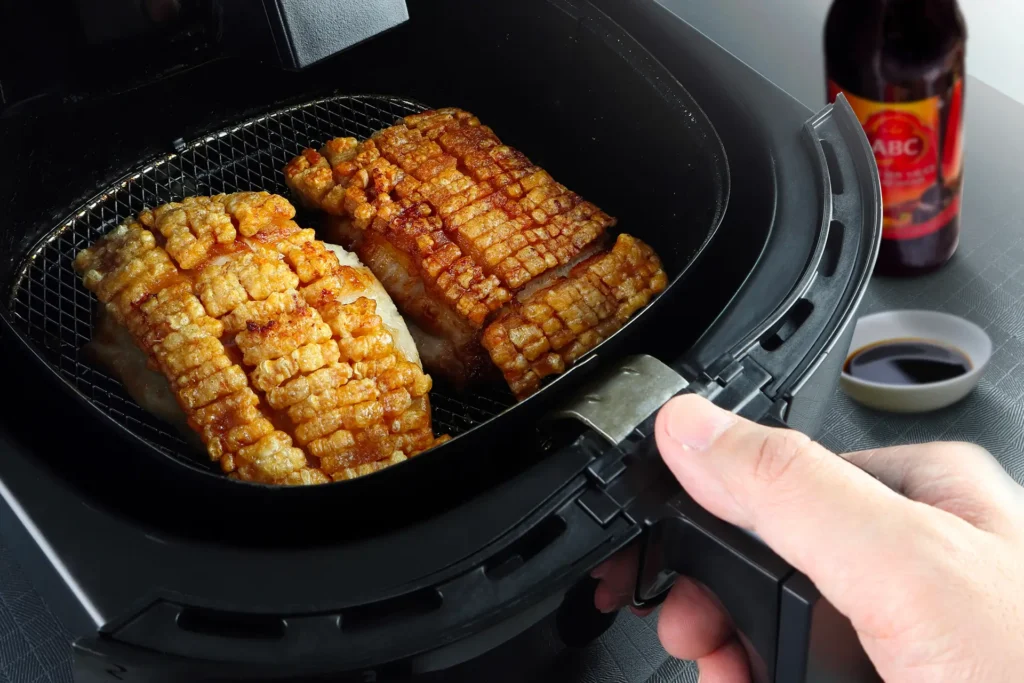
Different foods have different sticking tendencies based on their composition, and high-protein foods, particularly fish, egg-based preparations, and lean proteins without much natural fat, are the most prone to sticking of any category.
The reason is the same chemistry that makes cooking proteins in any pan without adequate oil and heat challenging. Proteins denature and contract when heated, and during this denaturation they can bond covalently with metal surfaces and even with cured nonstick surfaces when the conditions allow direct contact.
The Maillard browning crust that forms on the outer surface of a well-cooked protein is actually the result of these same protein reactions proceeding under the right temperature conditions, and it is this crust formation that creates the physical separation from the cooking surface.
The critical factor for high-protein foods is ensuring that the cooking surface is adequately oiled and preheated before the food contacts it, and that the food itself is adequately dried and lightly oiled before cooking.
For particularly delicate proteins like fish fillets, which have both a high protein content and a tendency to fall apart when removed from the basket, the combination of preheating the basket, oiling both the basket and the fish, and waiting until a firm crust has formed before any attempt at flipping or removal produces the best release results.
For egg-based preparations, where the egg protein is one of the strongest natural adhesives in the food world, parchment liners or silicone inserts are often the most practical solution rather than attempting to achieve adequate non-stick release from the basket coating alone.
The Basket Has Not Been Cleaned Properly
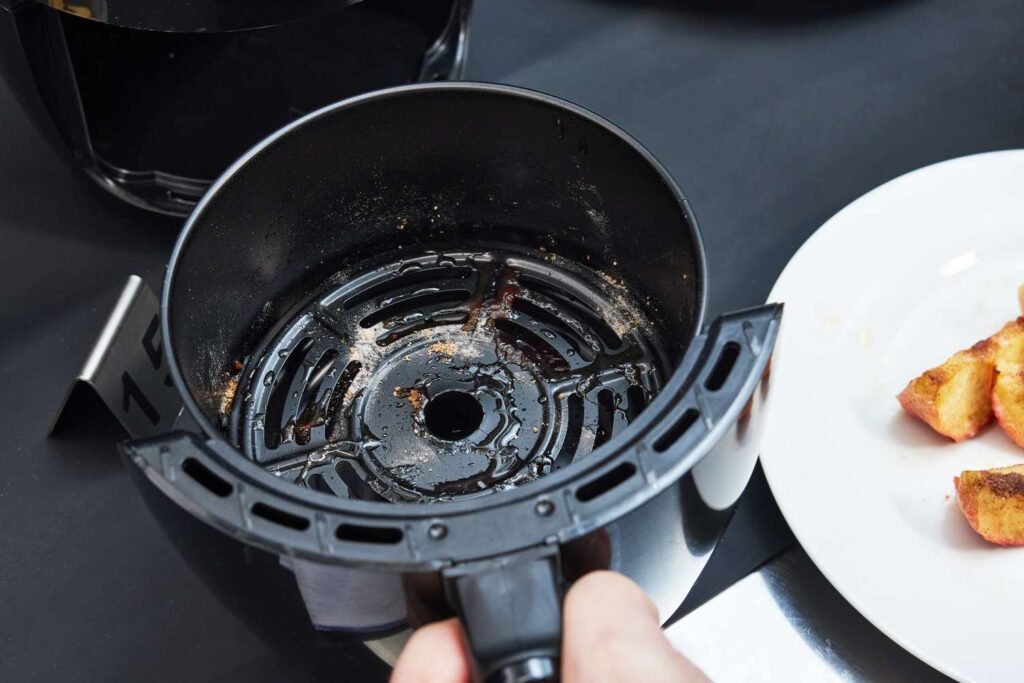
Residue from previous cooking sessions is a cumulative cause of sticking that builds gradually over time and eventually becomes a persistent problem even with ingredients that previously cooked without issue.
Residue from previous cooking includes carbonised food particles, polymerised oil, and the remnants of previous sticky preparations that were not fully removed during cleaning. Each of these residue types creates a rough, irregular surface that provides more adhesion points for subsequent food than the smooth, clean coating beneath them.
The rougher and more coated with residue the basket surface becomes, the worse the non-stick performance gets, in a self-reinforcing cycle where sticking produces more residue which produces more sticking.
Cleaning the basket thoroughly after every use prevents this cycle from beginning. Thorough cleaning means removing all residue, not just the obvious large pieces. A basket that looks clean may have a thin film of polymerised oil or a light coating of food residue on the surface that is not visible but that is contributing to non-stick degradation.
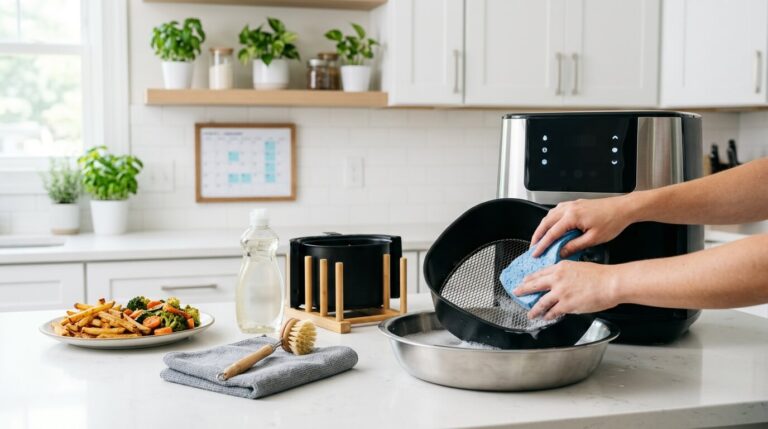
Washing with warm soapy water and a soft sponge or brush, ensuring that the perforated holes in the basket are clear of material, and rinsing completely removes this film and keeps the basket surface in its best possible condition.
For more significant buildup that regular washing has not removed, soaking the basket in hot soapy water for fifteen to twenty minutes softens residue and makes it removable with gentle scrubbing. Baking soda paste, applied to stubborn spots and left for a few minutes before scrubbing gently with a soft brush, addresses carbonised residue effectively without requiring abrasive tools that would damage the coating.
The Temperature Is Set Too Low
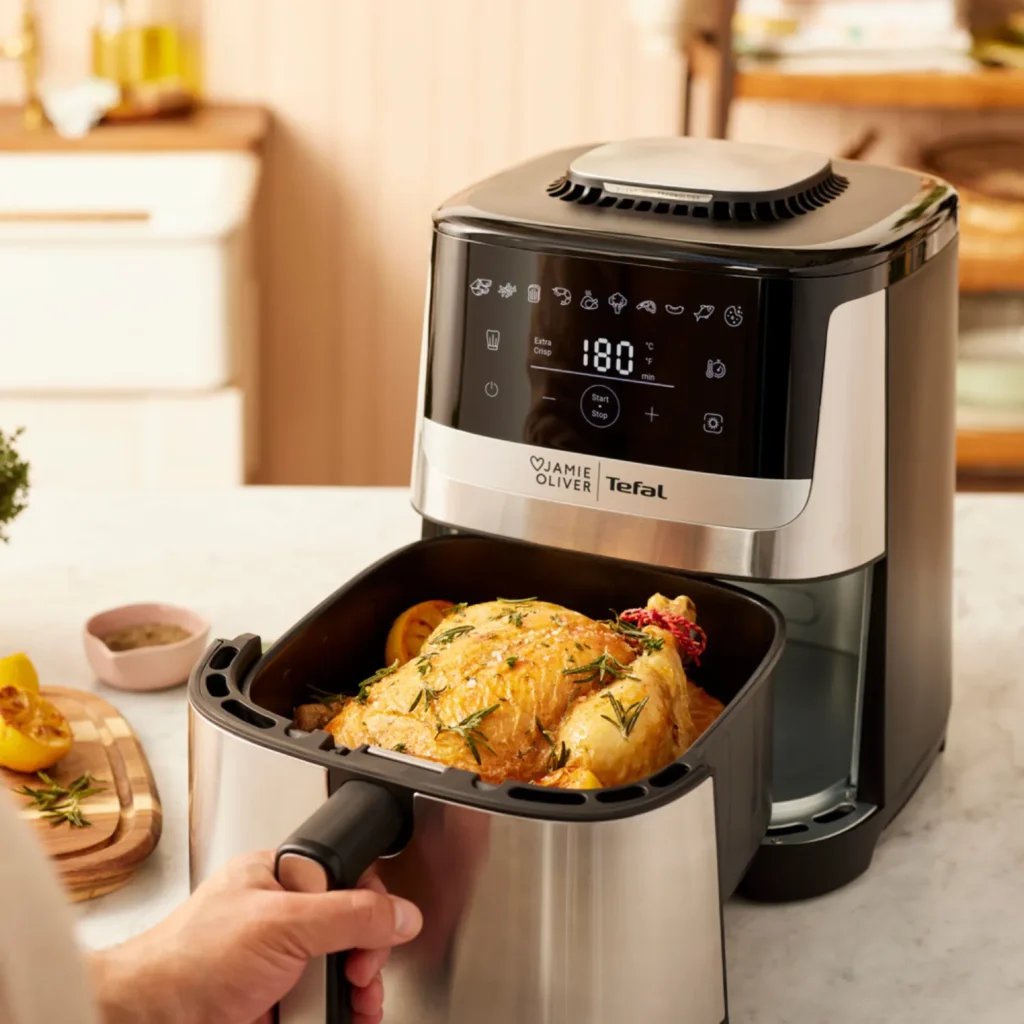
Air fryer cooking temperature affects sticking in a way that most people do not consider. Cooking at too low a temperature extends the time the food spends in the steam-producing phase at the beginning of the cooking cycle, because a lower air temperature raises the food surface temperature more slowly and delays crust formation.
The extended time in this pre-crust, high-moisture phase means more time for the food to bond with the basket surface before the crust that releases it can form. At adequately high temperatures, the food surface transitions through the evaporation phase quickly and begins forming a crust within the first minute of cooking. At lower temperatures, this transition takes longer, and during that extended transition the food is most vulnerable to sticking.
This does not mean that every food should be cooked at maximum temperature. Different foods have optimal temperature ranges that balance surface crisping with thorough cooking. But it does mean that cooking at temperatures significantly below what a recipe specifies, perhaps because you are worried about burning or you are cooking from habit at a lower temperature, can produce worse sticking results than following the specified temperature.
Bringing It All Together
Looking across every cause in this article, there is a pattern worth naming clearly. Food sticks to air fryer baskets when there is direct contact between a wet or cold food surface and the basket, under conditions where that contact is maintained long enough for protein and carbohydrate bonding to occur. Every preventative measure in this article interrupts that contact, that moisture, or that bonding in some way.
Preheating prevents cold-surface adhesion. Adequate oil prevents direct contact. Drying the food surface reduces the moisture that prevents crust formation. Appropriate basket loading allows hot, dry air to circulate and form that crust quickly. Not flipping early allows the crust to form fully before separation is attempted. Keeping the coating clean and undamaged ensures the basket surface itself has the non-stick properties it is designed to provide.
None of these measures require expensive equipment or unusual technique. They require understanding why sticking happens and applying that understanding consistently. An air fryer used with good technique produces reliably non-stick results from the same basket that a poorly operated machine uses and that sticks with. The machine is the same. The outcome is different because the approach is different.