Small Kitchen Changes That Make a Huge Difference (Without a Renovation)
By Amelia Harper | Kitchen and Home Living Writer | Updated July 2026
Most people look at their kitchen and see the things that would require a significant renovation to fix: the layout they cannot change, the cabinets they cannot afford to replace, the countertops that came with the house. They focus on what is permanent and conclude that the kitchen is simply what it is until they can afford to do something major about it.
What they miss is the enormous amount of improvement available through small, low-cost changes that do not touch a single fixture or require any tools more complicated than a screwdriver. The kitchen experience, how functional it feels, how pleasant it is to spend time in, how clean and organised it looks, is shaped as much by dozens of small decisions as by the physical structure of the space itself.
I have been writing about kitchens and home organisation for nearly a decade, and the changes that produce the most satisfaction relative to their cost and effort are consistently the small ones rather than the large ones. Here is every significant small change that genuinely moves the needle.
One of the easiest upgrades is keeping your sink spotless. Explore our guide to simple tips for maintaining a like-new kitchen sink and keep one of the most-used areas of your kitchen looking its best.
Clear the Counters Completely
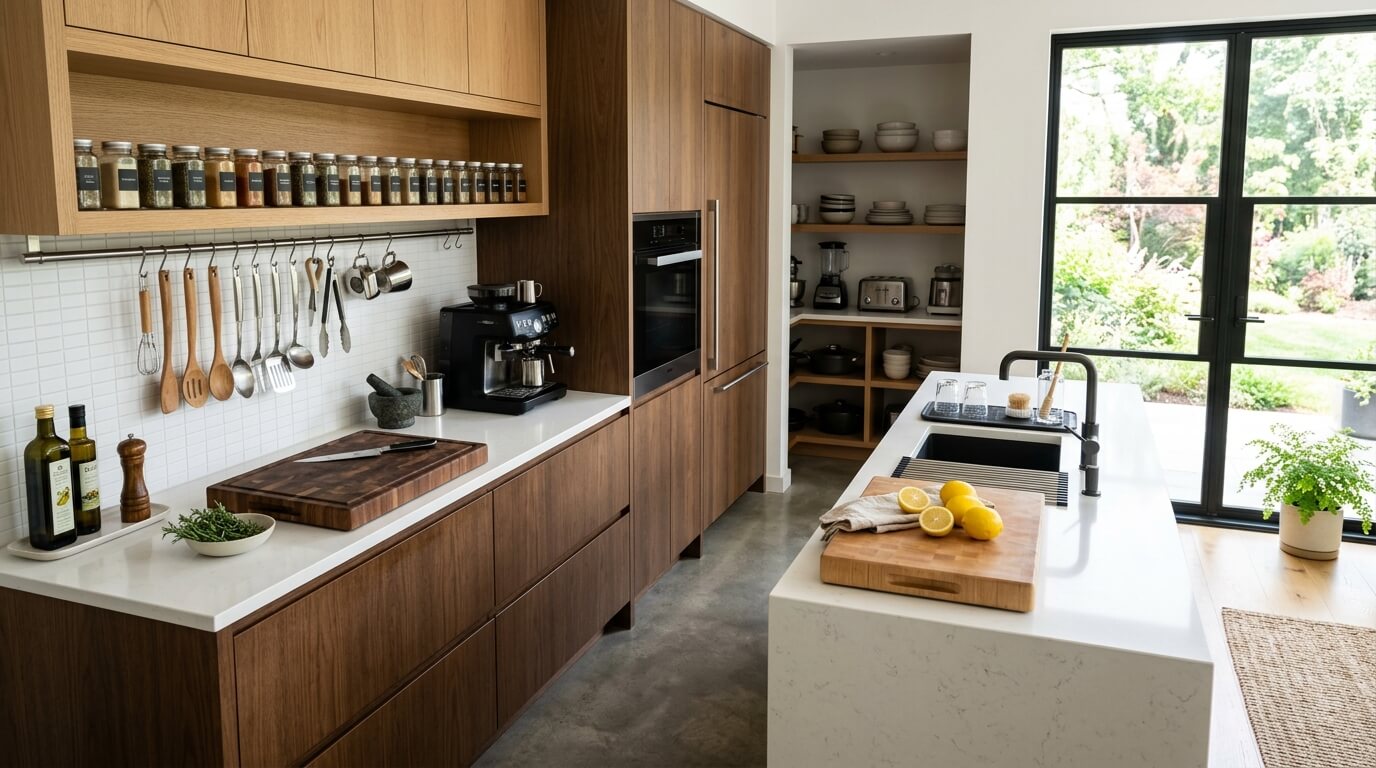
Nothing changes how a kitchen looks and feels more immediately than clearing the counters, and nothing costs less. A kitchen with clear counters reads as larger, cleaner, and more organised than the same kitchen with covered counters, regardless of what else is true about the space.
The psychological effect of visible clutter on the counter is well documented: it increases stress, reduces the sense of control over the environment, and makes the space feel smaller than it is. Removing it has the opposite effect, often dramatically so, in the first day.
The practical process is to remove everything from the counters, clean the surfaces, and then consciously decide what genuinely needs to come back. The criteria for something staying on the counter should be that it is used daily without exception and that storing and retrieving it would meaningfully slow your routine.
For most kitchens, this exercise results in one or two items returning to the counter and everything else finding a home in a drawer, cabinet, or pantry. The transformation in the kitchen’s appearance and feel from this single change is usually the most dramatic of anything in this article.
Decant Dry Goods into Clear Containers
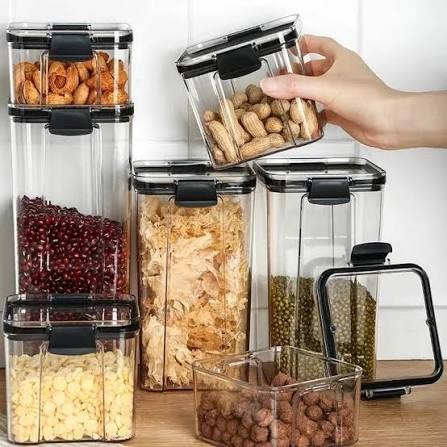
Pantry and cabinet shelves lined with mismatched original packaging, bags clipped shut with various clips, half-used boxes leaning against each other, and containers in every size and colour produce visual noise that makes even a tidy kitchen feel disorganised.
Transferring dry goods including pasta, rice, oats, flour, sugar, nuts, seeds, and cereals into uniform clear containers eliminates this visual noise and replaces it with a calm, organised appearance that makes the entire pantry or cabinet feel significantly more intentional.
Clear containers also provide a practical advantage beyond aesthetics. You can see at a glance what you have and how much remains, which eliminates the problem of discovering you are out of something mid-recipe or buying a duplicate of something you already have.
The transformation applies equally to shelves that are visible and to shelves inside closed cabinets, because opening a cabinet that is visually calm and organised feels noticeably different from opening one that is cluttered with original packaging.
Replace Cabinet and Drawer Hardware
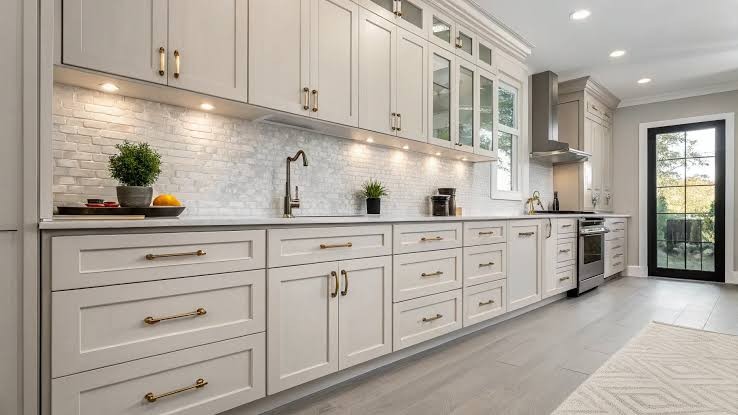
This is one of the highest-impact and lowest-cost changes available for kitchen cabinets short of replacing them entirely. Cabinet hardware is to a kitchen cabinet what a frame is to a painting: it significantly affects the perceived quality of what it surrounds.
Original builder hardware in most homes is the least expensive option available at the time of construction, which typically means it looks generic, ages poorly, and pulls the overall appearance of the kitchen downward. Replacing it with hardware that is better proportioned, better finished, or simply more suited to the style of the kitchen visually elevates the entire cabinet run.
The change requires only a screwdriver in most cases because standard hardware is attached with screws that fit standard drill holes. Choosing new hardware with the same hole spacing as the existing hardware makes the replacement a direct swap with no filling or redrilling needed.
The visual effect of new hardware on dated cabinets is often described by people who have made this change as looking like new cabinets, which is a disproportionately large result for an hour of work and a modest cost per handle.
Improve the Lighting Under Your Cabinets
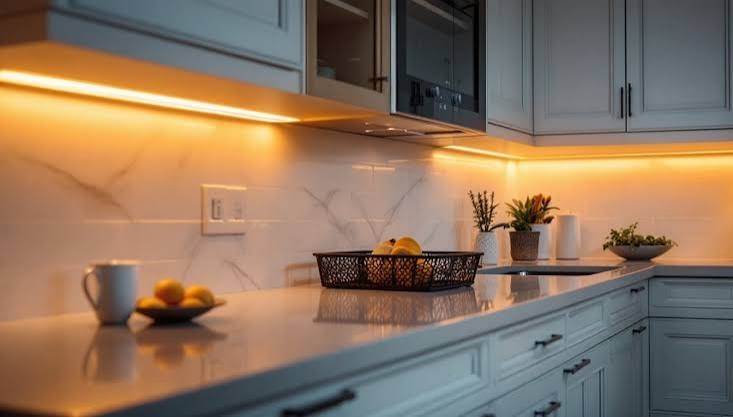
Under-cabinet lighting is the single lighting change that produces the most dramatic functional and visual improvement in most kitchens. Most residential kitchens are lit by a single overhead fixture that illuminates the ceiling and the centre of the room but leaves the counter surface in shadow because the upper cabinets block the overhead light from reaching the work surface directly.
Working in this shadow is inconvenient and tiring, and the resulting need to lean closer to the counter surface to see what you are doing contributes to back and neck strain over time. Adding light directly at the counter level eliminates this shadow zone entirely and makes the kitchen feel both more functional and more inviting.
LED strip lights and puck lights designed for under-cabinet installation are available in plug-in formats that require no hardwiring. They are attached to the underside of the cabinet with adhesive strips or small screws and plugged into an outlet inside the cabinet or near the backsplash. The installation takes less than an hour and requires no electrical knowledge.
The improvement in working comfort is immediate and the visual effect on the kitchen is significant because the counter surface, the backsplash, and the overall brightness of the space are all enhanced simultaneously by this single addition.
Line Drawers and Shelves
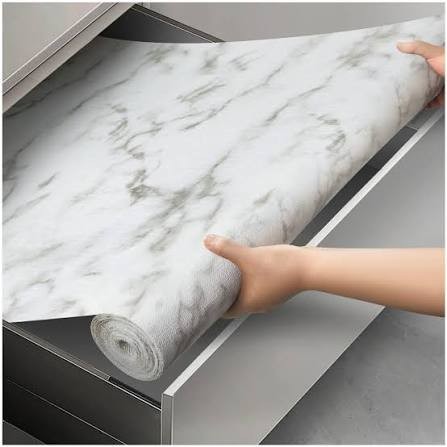
Drawer and shelf liners are a change so small that most people do not think to mention them, but the effect of lined versus unlined kitchen drawers and shelves is more noticeable than expected once you experience the difference.
Unlined drawers accumulate crumbs, moisture residue, and the fine debris of daily kitchen use directly on the wood or composite surface. Over time this residue is difficult to clean and can stain or warp the surface. Unlined shelves develop the same issues, particularly in cabinets that store food or cooking oils.
Liners provide a cleanable surface that can be wiped down or removed and washed rather than requiring the drawer or shelf itself to be cleaned. They also dampen the sound of items being placed in the drawer, provide a non-slip surface that keeps items in their intended position, and give the interior of every drawer and cabinet a clean, fresh appearance that makes the whole kitchen feel more considered and maintained.
Organise One Drawer at a Time
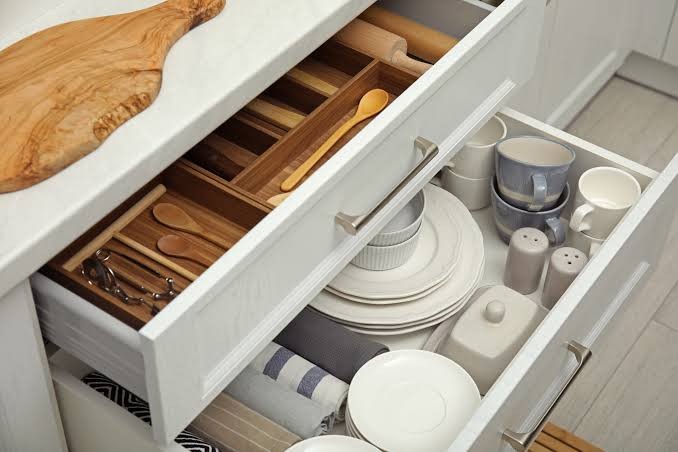
Drawer organisation has a compounding effect that beginners to kitchen organisation underestimate. A single organised drawer, where everything has a specific place and nothing extra is stored, changes how it feels to use that drawer completely.
You reach in for what you need and find it immediately without searching. The drawer opens and closes smoothly without items catching on the sides. The visual experience of opening the drawer is calm rather than chaotic. These small improvements to individual interactions add up across every cooking and meal preparation session every day.
The approach that works best is to empty the drawer completely, discard or relocate anything that does not belong in the kitchen or does not belong in that specific drawer, and then group what remains by type before adding an organiser that fits the drawer’s dimensions and the categories of items being stored.
Starting with one drawer and then moving to the next over a few days or weeks produces sustainable organisation that gets maintained because it was built intentionally rather than reorganised all at once in a way that reverts when life gets busy.
Small improvements can also make your kitchen feel more open. Read our guide to easy ways to create a more spacious kitchen and discover simple design tricks that make a big impact.
Mount a Magnetic Knife Strip
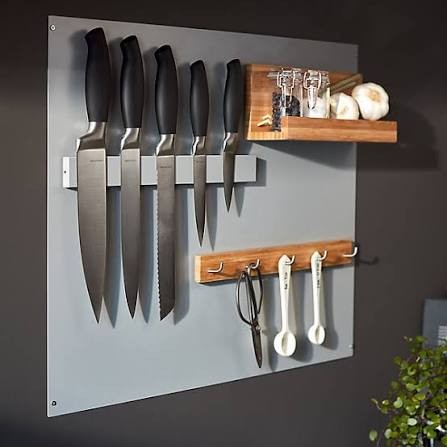
Knife storage is one of the most consequential small decisions in kitchen organisation, both for the safety of the knives themselves and for the practical experience of using the kitchen.
Storing knives loosely in a drawer exposes the blade edges to impacts with other items that dull them rapidly. Storing them in a block takes significant counter space and limits how many knives can be stored. Storing them on a magnetic wall-mounted strip removes them from the counter and the drawer entirely, keeps them immediately accessible, protects the blade edges from impact, and adds a visually intentional element to the kitchen wall.
The installation of a magnetic knife strip requires only two screws into wall studs or drywall anchors, takes approximately ten minutes, and produces one of the most immediate functional improvements available for counter space reduction.
The strip also works for other metal items including kitchen scissors, a peeler, and small utensils with metal handles, expanding the storage utility beyond knives alone.
Add a Kitchen Herb Planter
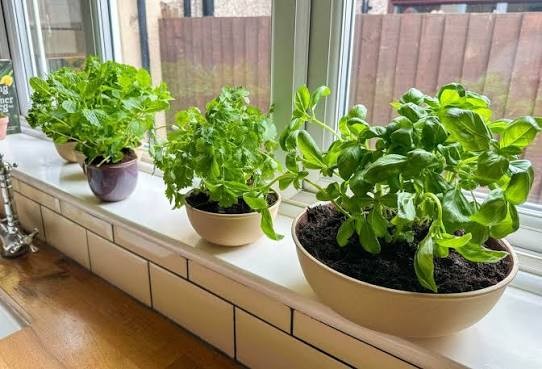
A small herb planter on the windowsill or counter introduces the only genuinely living element most kitchens have, and its effect on the atmosphere of the space is disproportionate to its size.
The presence of living plants in a kitchen, even a very small collection of basil, mint, and parsley in a modest planter, makes the space feel inhabited, fresh, and cared-for in a way that is difficult to replicate with any other kitchen element at a comparable scale and cost.
The practical value of fresh herbs immediately available during cooking is genuine beyond the visual benefit. Fresh herbs improve the flavour of a wider range of everyday dishes than most people realise until they have them available constantly rather than buying them by the bunch and using a fraction before the rest goes limp.
Herbs that grow reliably with minimal care on a kitchen windowsill include basil, mint, chives, parsley, and thyme. These require only adequate light, moderate watering, and occasional trimming to remain productive for months.
Paint the Interior of Cabinets
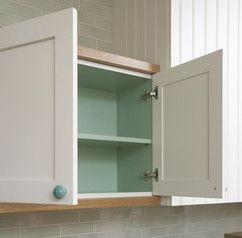
This change is unusual enough that it surprises people when they first encounter it, but the effect of painting the interior of kitchen cabinets is significant and is achieved with very little effort compared to painting the exterior.
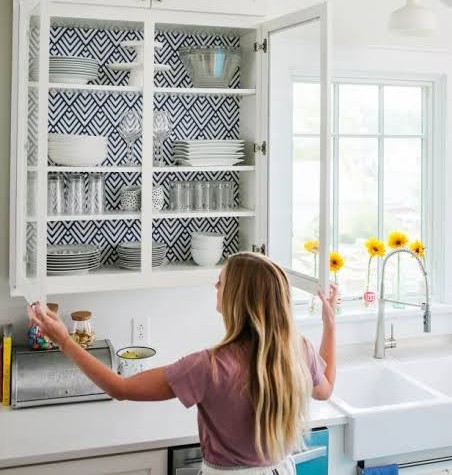
Cabinet interiors are almost always left in the original colour of the material, which is typically a flat off-white or the natural colour of the wood composite. Painting these interiors in a colour, whether a fresh bright white, a soft warm tone, or an unexpected accent colour, transforms the experience of opening the cabinet from a mundane interaction to something that feels deliberately designed.
The interior painting is also visible through glass-fronted cabinets and open shelving, where it forms the background for whatever is stored in front of it and significantly affects the overall visual quality of those storage areas.
The preparation required is minimal because cabinet interiors do not receive the wear that cabinet exteriors do, and a single coat of paint is typically sufficient for an interior that is not regularly touched.
Small upgrades work best when paired with good daily habits. Discover the simple routines behind an always-tidy kitchen and keep your space looking clean with minimal effort.
Switch to Uniform Dish Towels and Cloths
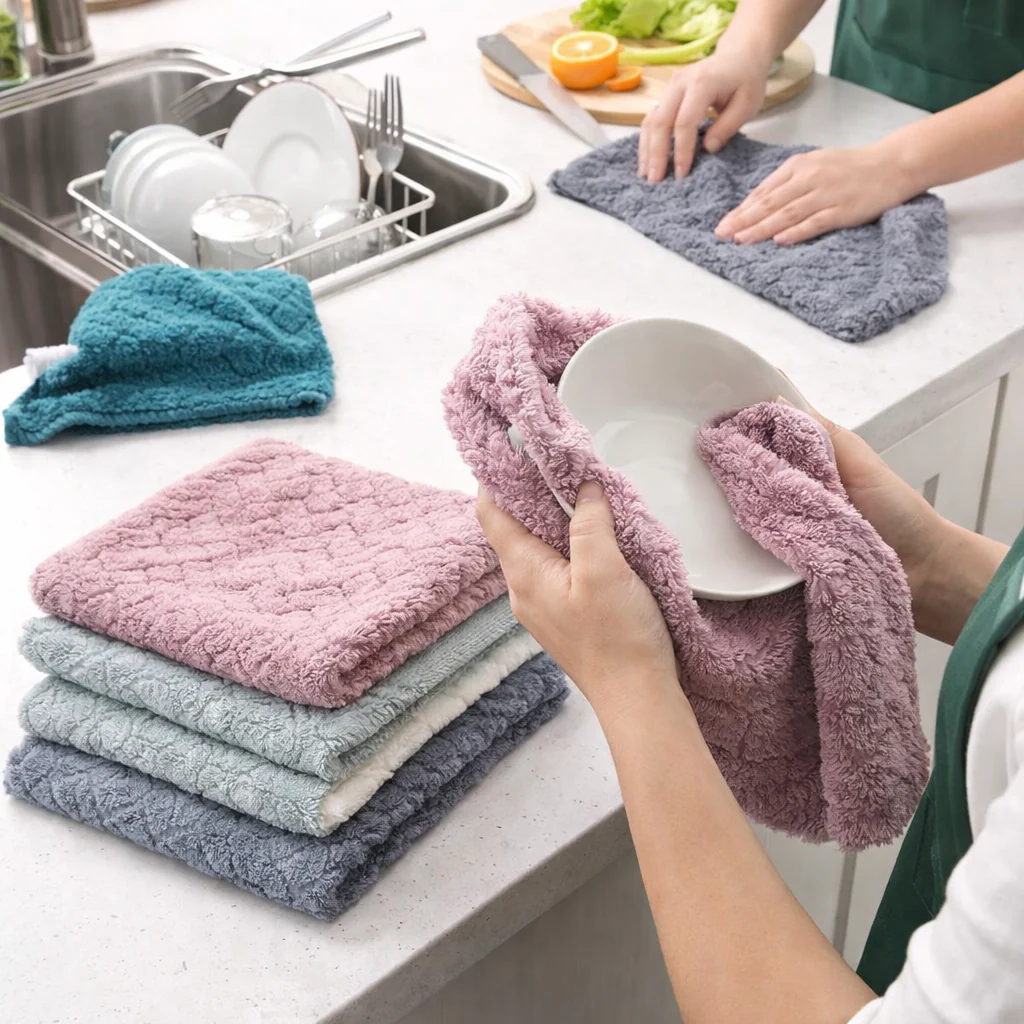
Kitchen textiles are one of the most visible elements in the kitchen and one of the most frequently allowed to deteriorate into a collection of mismatched, stained, fraying items that visually undermine every other organisation and cleaning effort.
The difference in perceived kitchen quality between a kitchen with three or four mismatched towels of different colours and conditions and a kitchen with a set of uniform clean towels in a consistent colour or pattern is immediately visible to anyone who enters the space. It is the same principle as hotel rooms looking clean and composed rather than residential kitchens looking lived-in: the uniformity and freshness of the textiles signals intentionality and care.
Replacing kitchen towels with a uniform set in a colour that works with the kitchen and committing to replacing them regularly, before visible staining or fraying occurs, is a change that costs very little and maintains its effect as long as the routine of replacement is maintained.
The right tools can make small kitchen upgrades even more effective. Explore our guide to essential kitchen gear for every home and discover practical items that improve cooking, organization, and daily convenience.
Add a Paper Towel Holder to the Wall
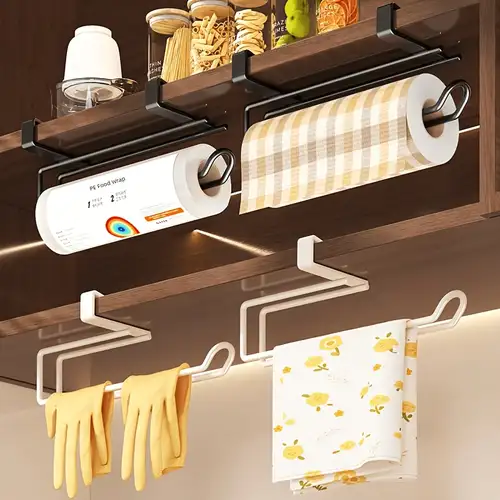
This is a change so minor that it barely qualifies as a change, but moving the paper towel roll from the counter to a wall-mounted holder frees counter space and simultaneously makes the paper towel more accessible because it is at eye level and reachable from any position rather than sitting at the back of the counter.
The wall-mounted paper towel holder also signals a deliberate approach to kitchen organisation that countertop storage does not, even though the function is identical. A kitchen where the paper towel holder is on the wall rather than on the counter reads as more thoughtfully organised than one where it occupies counter space.
Installation is two small screws, a level, and approximately five minutes. The counter space freed by this single change is often the space that was preventing a clear counter, because paper towels are a common counter anchor around which other items accumulate.
Create a Dedicated Coffee or Tea Station
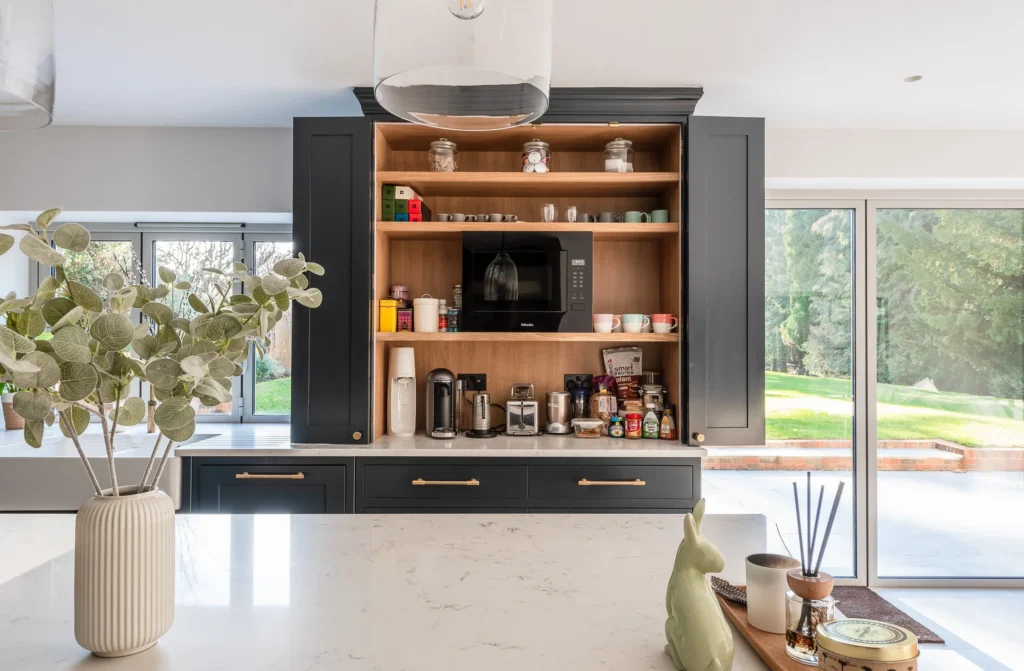
A coffee or tea station, a defined area of the kitchen where everything related to making hot drinks lives together, is a small organisational change that has a surprisingly large effect on both kitchen function and kitchen experience.
Having the coffee maker, the mugs, the coffee or tea, the spoons, and everything else needed to make a morning drink in one location means the first daily interaction with the kitchen is smooth, fast, and requires no searching or moving of items to access what is needed.
It also visually defines that section of the kitchen as a purposeful area rather than a random accumulation of items, which contributes to the overall sense of organisation in the space.
The station does not require any new furniture or fixtures. It is a matter of choosing a specific area of counter or a specific section of a cabinet, gathering everything related to hot drinks into that area, and maintaining the boundary so that other items do not migrate into it.
Replace the Sink Faucet
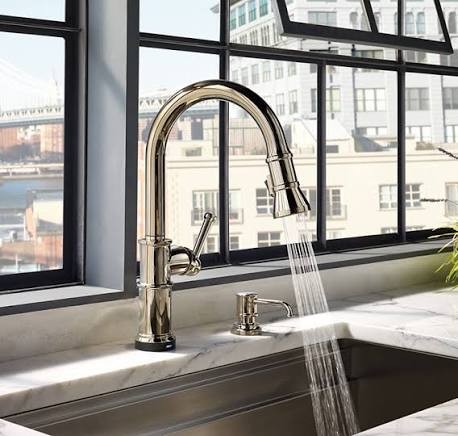
Of all the changes in this article, replacing the sink faucet is the most significant in terms of effort and cost, but it is included because it falls well within what most people can do themselves and the visual impact on the kitchen is disproportionate to the investment.
The faucet is one of the most visually prominent fixtures in the kitchen, positioned at eye level and in the area of the sink that draws the most attention during daily use. An outdated, corroded, or simply unattractive faucet pulls the visual quality of the entire kitchen down in a way that most other small fixtures do not, because of its prominence and the amount of time spent facing it during dish washing and food preparation.
A new faucet in a finish that complements the sink and other fixtures updates the kitchen more effectively than almost any other single change at a comparable investment level. Most standard kitchen faucets can be replaced by a homeowner with a few hours, an adjustable wrench, and the ability to follow the installation instructions that come with the new faucet.
Hang a Pegboard for Utensil Storage
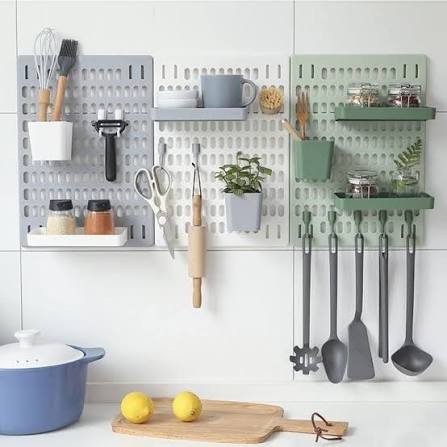
A pegboard mounted on a kitchen wall provides flexible, fully customisable storage for utensils, small tools, and accessories that would otherwise occupy drawer space or counter space, and it does so in a way that is visually intentional rather than merely functional.
Pegboard storage is particularly effective for items that are used frequently enough to merit immediate accessibility but not so frequently that they need to be on the counter. Spatulas, ladles, whisks, measuring cups, colanders, and small pots all work well on pegboard and free the drawer space they previously occupied for items that benefit more from enclosed storage.
The configuration of a pegboard is adjustable at any time by simply moving the hooks, which means it can evolve as your cooking tools and organisation needs change without any permanent commitment to a particular arrangement.
Installation requires anchoring the pegboard to wall studs or using appropriate drywall anchors for the weight being stored, and spacing the board away from the wall by at least half an inch to allow the hooks to engage with the holes from behind.
Use the Inside of Cabinet Doors
The inside surface of cabinet doors is storage space that most kitchens leave entirely unused, and adding appropriate organisers to these surfaces effectively adds storage capacity to the kitchen without changing any of its physical dimensions.
Door-mounted organisers work particularly well for frequently used smaller items: spice packets, measuring spoons, cleaning supplies inside the under-sink cabinet, plastic wrap and foil boxes, and cutting boards that can hang vertically on door-mounted racks.
The items most suited to door storage are those that are accessed frequently enough to warrant the easy access that a door-mounted position provides but that do not need to sit on a shelf with other items. Spices are the most common example because spice bottles stored in this way are visible at a glance and immediately accessible during cooking without moving other items to reach the one needed at the back of the shelf.
Adding door organisers to even two or three cabinets produces a meaningful increase in effective storage capacity and reduces the counter and shelf clutter that results from not having enough accessible places to store small items.
The Compounding Effect of Small Changes
The most important thing to understand about small kitchen changes is that their effect is cumulative rather than additive. Each individual change produces its own improvement, but the changes also reinforce each other in a way that makes the total effect significantly larger than the sum of the parts.
Clear counters make the kitchen feel larger. Better lighting makes it feel brighter. Organised drawers make it feel more functional. Uniform textiles make it feel cleaner. Each of these makes the others more effective, because the overall impression of a kitchen is formed by the combination of everything within it rather than by any individual element.
Starting with any single change in this article and then moving to the next produces cumulative progress that compounds over time into a kitchen that genuinely feels different to spend time in, without a single structural change having been made.