Why Some Kitchens Always Look Clean (And What the Rest of Us Are Missing)
By Amelia Harper | Kitchen and Home Living Writer | Updated July 2026
You have been in that kitchen. A friend’s house, a family member’s home, maybe a rental you stayed in on a trip. Everything looks effortlessly clean. The counters are clear. The sink is empty. The stovetop has no residue. There are no stacks of things waiting to be dealt with. You stand there for a moment and think to yourself: how do people actually live like this?
The answer is not that those people clean more than you do. In most cases, they do not. The answer is that they have developed a set of habits, a particular way of thinking about the kitchen, and a specific approach to the physical organisation of the space, that prevents mess from accumulating in the first place. A kitchen that always looks clean is almost never the result of constant scrubbing. It is the result of a system that reduces the effort required to keep it clean on a daily basis.
I have spent years writing about home and kitchen organisation, and this is one of the most requested topics I cover. The principles are genuinely learnable, and most of them are simpler than people expect. None of them require a renovation, a bigger kitchen, or a significant investment of money. What they require is understanding why clutter and mess accumulate in the first place, and then addressing those causes rather than their symptoms.
Here is what people with clean kitchens actually do differently.
They Clean as They Go, Not After They Are Done
This is the single most transformative kitchen habit, and it is the one that separates kitchens that always look clean from kitchens that require dedicated cleaning sessions to recover from every meal.
Cleaning as you go means washing the bowl you used to mix the batter while the cake is in the oven. It means wiping the stovetop while it is still warm and easy to clean, rather than after the splatter has dried and bonded to the surface. It means rinsing your knife and cutting board immediately after using them rather than adding them to a pile that grows throughout the meal preparation process. It means that by the time dinner is on the table, the kitchen is already 80 percent clean.
The psychology behind this habit is worth understanding. When everything waits until after the meal, the pile of dishes, pots, and utensils feels enormous and the clean-up feels like a separate project. When cleaning happens incrementally throughout the cooking process, each individual task is small and takes thirty seconds rather than thirty minutes, and it never feels like a burden.
The key is matching clean-up actions to natural pauses in the cooking process. Something is simmering for five minutes: wipe the counter. Something is resting: wash the prep dishes. Something is in the oven: put away the ingredients you no longer need. These moments exist in almost every cooking session. Using them deliberately rather than passively is the habit that changes everything.
They Have a Place for Everything, and Everything Has a Place
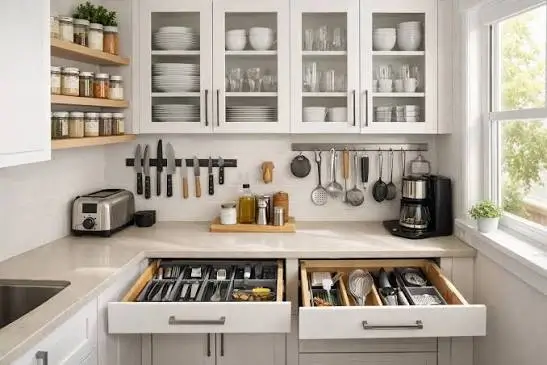
The phrase is old enough to be a cliché, but the principle it describes is genuinely the organisational foundation of every clean kitchen I have spent time in. Mess accumulates fastest in kitchens where items do not have a designated home.
Things get put down on the counter because there is no obvious place to put them away, and counters covered in misplaced items are the defining visual characteristic of a kitchen that looks cluttered regardless of how recently it was cleaned.
When every item in the kitchen has a specific, logical location and when putting it away is as easy or easier than putting it down on a surface, the kitchen naturally stays tidier between cleaning sessions because the natural action after using something is to return it to its place rather than to set it on the nearest available surface.
This requires an honest audit of what is in the kitchen and whether it belongs there. Items that have no logical home tend to migrate to the counter because they have nowhere else to go. If the counter is covered with objects that do not have a designated storage location, the first step is deciding where each of those objects actually belongs. Sometimes the answer is in a drawer or cabinet. Sometimes the answer is in another room entirely.
A tidy kitchen starts with having the right tools. Explore our guide to the essential kitchen items every home should own and discover practical products that make cooking, cleaning, and staying organized much easier.
Their Counters Are Deliberately Minimal
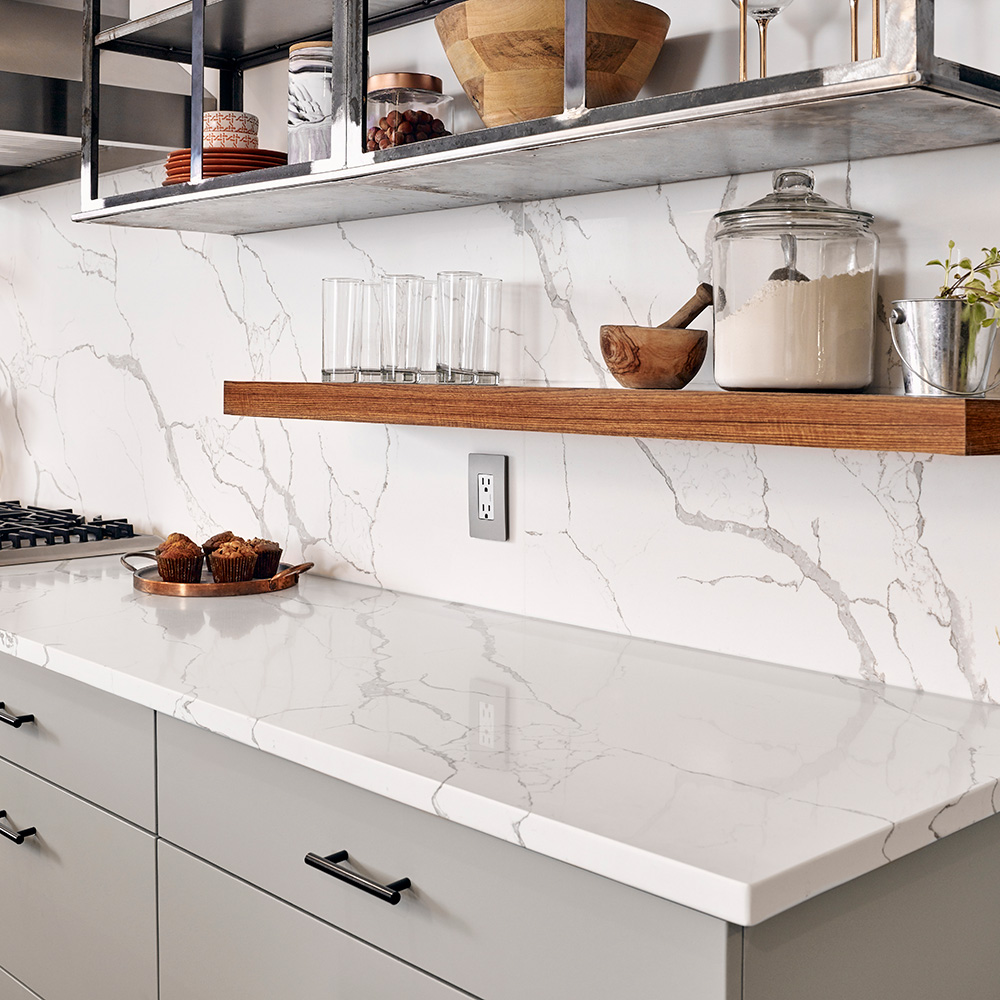
In every persistently clean kitchen I have spent time in, the counters hold only what needs to be there. Not everything that could be there, not everything that is convenient to have accessible. Only what is used so frequently that storing it away and retrieving it for each use would genuinely slow down daily cooking.
The visual noise of a counter covered in appliances, utensils, containers, and miscellaneous objects is one of the primary reasons kitchens look messy even when they are technically clean. Every object on the counter draws the eye, and many objects together create a perception of clutter that makes the space look chaotic regardless of how recently the surfaces beneath those objects were wiped.
A useful exercise is to clear the counters completely and then consciously decide what genuinely needs to come back. For most people, the honest answer is far fewer things than were there before. A coffee maker or kettle for daily morning use. A utensil container near the stove if cooking happens daily. Perhaps a fruit bowl if it gets used regularly rather than simply accumulating what does not fit elsewhere. Everything else deserves a home in a cabinet or drawer.
The discipline of keeping counters clear is not about aesthetics for its own sake. It is about the fact that a clear counter is infinitely faster to wipe clean than a counter covered in objects that each need to be lifted, moved, wiped around, and replaced.
They Deal with Dishes Immediately
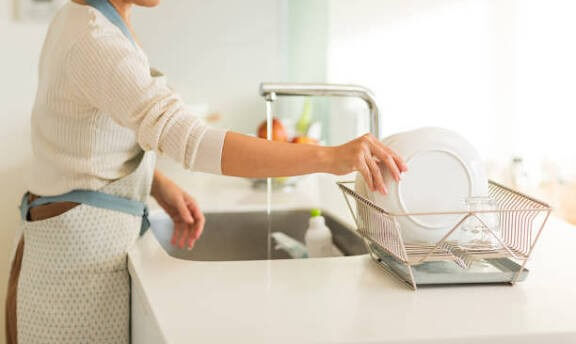
In kitchens that always look clean, dishes do not wait. They are rinsed and placed in the dishwasher, or washed by hand, or at minimum rinsed and stacked neatly immediately after use rather than accumulating in and around the sink over hours.
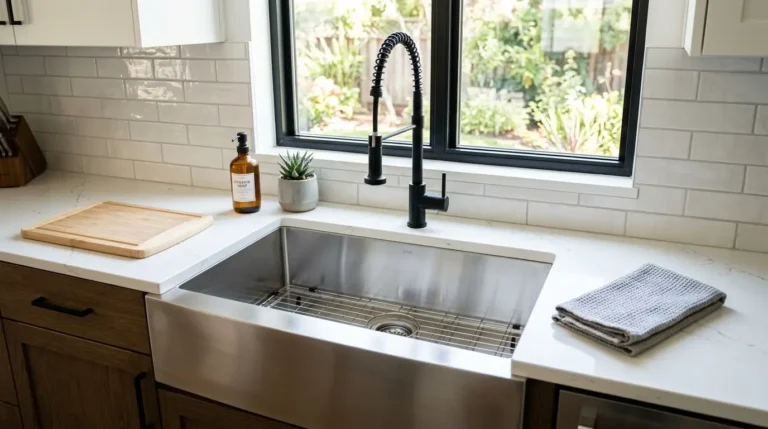
The sink is one of the strongest visual signals of kitchen cleanliness. A clean, empty sink makes the whole kitchen look organised even if the rest of the space is imperfect. A sink full of unwashed dishes makes the kitchen look neglected even if everything else is spotless. People with consistently clean kitchens understand this and treat the sink as a priority space rather than a holding area.
The habit that supports this is a simple rule: nothing goes into the sink without being rinsed first. Rinsing takes five seconds and removes the primary obstacle to dealing with dishes promptly, because a sink full of food-encrusted dishes is psychologically much harder to face than a sink with rinsed, stacked dishes waiting for the next dishwasher cycle or for a few minutes of washing.
For households with a dishwasher, loading directly from the table rather than via the sink as an intermediate step removes an entire stage from the process and eliminates the visual clutter of dishes waiting in transit.
They Wipe Surfaces After Every Use
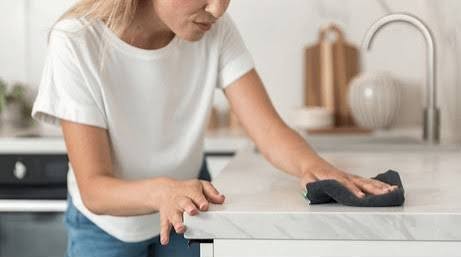
The stovetop, the counters, and the sink basin all look dramatically better when wiped after each use rather than after a meal or after a day of cooking. The reason is that fresh splatter and residue take seconds to wipe away while dried, baked-on, or accumulated residue requires considerably more effort and often a cleaning product to remove.
People with clean kitchens have internalised the habit of wiping surfaces as a reflex rather than as a deliberate cleaning task. After the kettle boils and a coffee is made, the counter gets a quick wipe. After the stovetop is used, it gets wiped while still slightly warm.
After the sink is used, the basin gets a quick rinse and the surrounding counter gets wiped dry. Each of these actions takes ten to thirty seconds and prevents the gradual accumulation of residue that makes periodic deep cleaning necessary.
The tool that makes this effortless matters. A clean, dry cloth that is genuinely absorbent and easy to grab encourages wiping as a reflex. A cloth that is damp, dirty, or tucked away where you have to look for it discourages the habit. People with clean kitchens almost always have a fresh, accessible cloth or sponge near the sink and at least one clean cloth within easy reach of the cooking area.
They Manage Food Storage Proactively

A surprising number of kitchen messes originate not from cooking but from food storage. Produce left out past its prime, containers stacked haphazardly in the fridge, pantry items with no consistent organisation, and ingredients without clearly defined locations all contribute to the general impression of kitchen disorder.
Proactive food storage management means putting groceries away in a consistent location each time rather than wherever fits, checking the fridge before shopping to avoid accumulation of duplicates, storing produce appropriately so it lasts longer rather than composting on the counter, and using clear containers so the contents of the fridge and pantry are visible without excavation.
The fridge interior is often overlooked as a contributor to kitchen cleanliness, but a disorganised or overfull fridge affects daily kitchen use in ways that generate mess. When the fridge is hard to navigate, ingredients get lost and go bad. Spills go unnoticed until they become dried residue on the shelves. Food gets pushed to the back and forgotten.
A fridge that is organised, appropriately stocked, and wiped down regularly means food is easier to see, easier to access, and less likely to create the secondary mess of searching for things or discovering forgotten items.
They Do a Nightly Reset

In almost every consistently clean kitchen, there is a brief nightly routine that resets the space before the household goes to sleep. This does not have to be a thorough cleaning. It is typically ten to fifteen minutes of targeted attention: dishes done or in the dishwasher, counters wiped, any items left out returned to their places, the stovetop checked, the floor swept if needed.
The purpose of the nightly reset is to ensure that the kitchen is in good condition at the start of each day rather than carrying yesterday’s mess into a new morning. Starting the day in a clean kitchen changes the psychological relationship with the space. It feels manageable rather than already behind.
The tasks that happen in the morning, making coffee, preparing breakfast, packing lunch, feel easier and more pleasant in a space that was reset the night before.
The nightly reset habit compounds over time. Because the kitchen is reset each night, the mess that accumulates each day starts from a clean baseline rather than from an already cluttered state. The amount of effort required stays consistent and manageable rather than growing gradually until it requires a weekend afternoon to address.
They Handle Spills and Messes Immediately
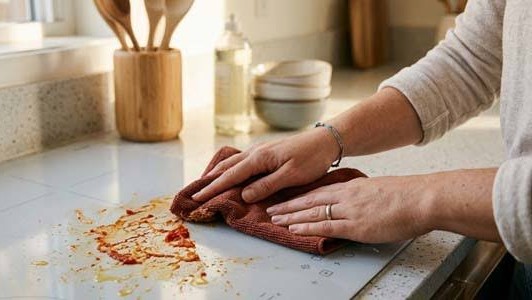
This sounds obvious, but the difference between a kitchen that looks clean and one that does not is often simply how quickly spills are addressed. A spill on the stovetop or counter that is wiped immediately takes seconds. The same spill left for an hour requires effort. Left overnight, it may require a scrubbing product and significant work to fully remove.
The immediate response to a spill is a habit that has to be consciously built until it becomes automatic. The instinct for most people is to note the spill and deal with it later when the current task is finished. Building the habit of stopping immediately, regardless of what else is happening, and addressing the spill before anything else is one of the most impactful changes you can make to how your kitchen looks day to day.
This is especially true of the stovetop. Stovetop splatter from cooking is extremely easy to wipe when still wet and warm. It is significantly harder when it dries and bakes onto the surface. Keeping a cloth within reach of the stove and using it reflexively during and after cooking transforms stovetop maintenance from a periodic difficult task into an effortless daily habit.
They Think Vertically and Use Storage Intelligently
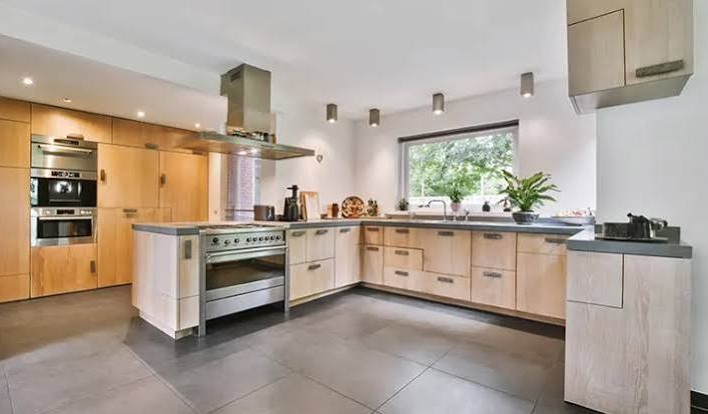
Kitchens that look clean are almost always kitchens where storage is used intelligently, meaning that the available space, including vertical space, is used efficiently enough that everything has a home and nothing has to live on the counter because there is nowhere else for it to go.
Most kitchen cabinets are designed with fixed shelves that leave significant unused vertical space above shorter items. Adding an additional shelf, using stackable organizers, or installing door-mounted storage can double the effective storage capacity of a standard kitchen cabinet without any structural changes.
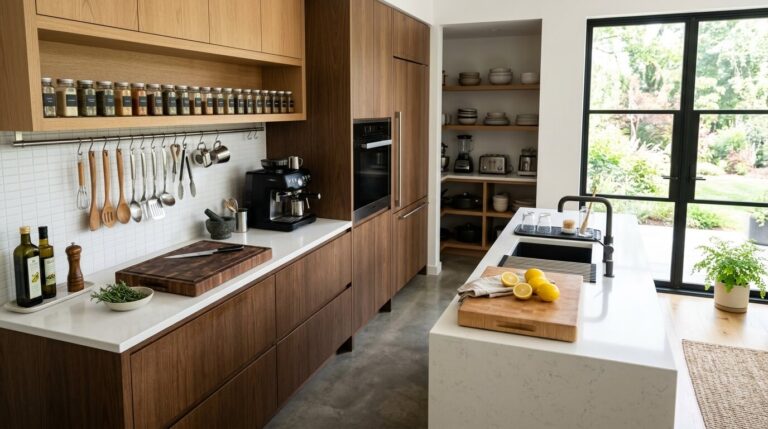
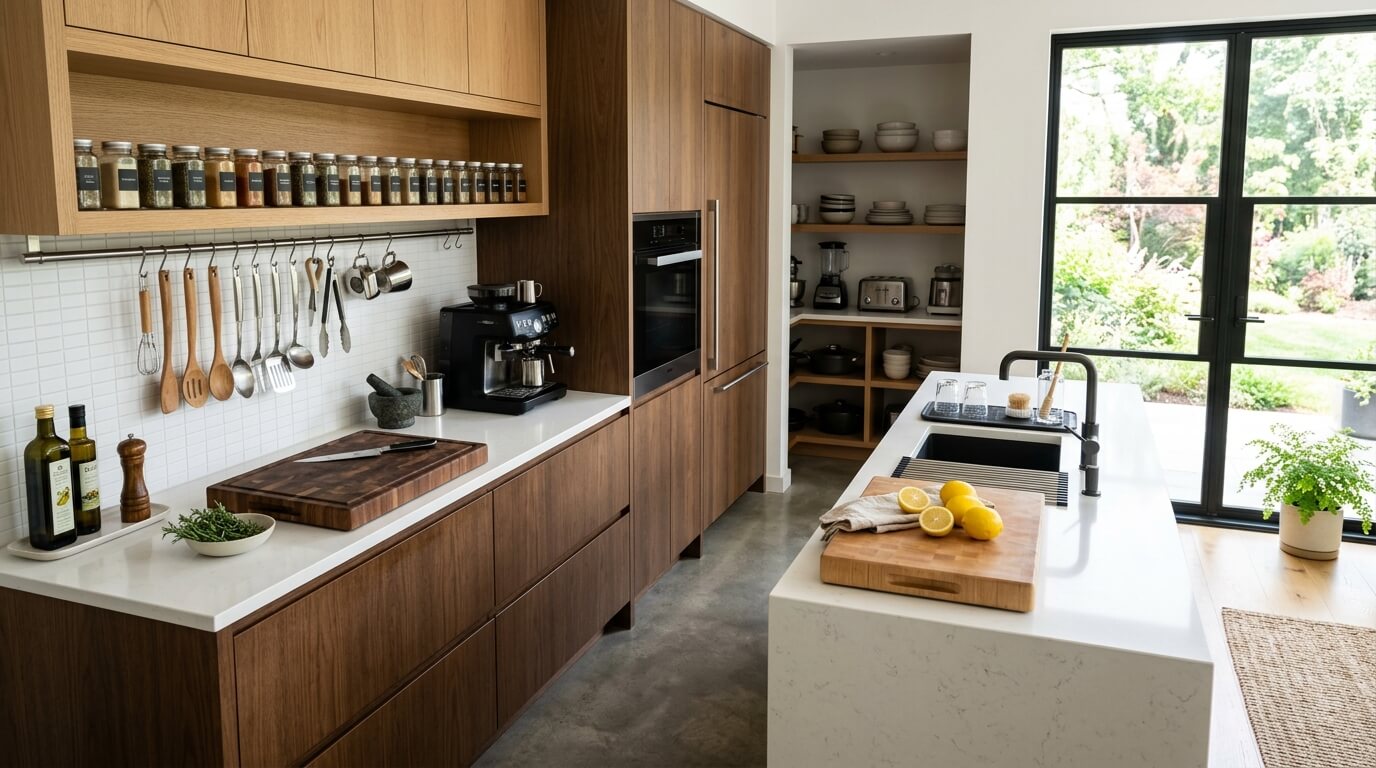
Drawer organizers prevent the drawer from becoming a catch-all where nothing has a specific place. Pot racks, magnetic knife strips, and pegboard wall organisation all move items off the counter and off the stovetop to walls and ceilings that were previously unused.
The goal of storage organisation is not minimalism for its own sake. It is that when everything fits in its designated location, the surfaces stay clear, and clear surfaces are what make a kitchen look clean from the moment you walk into it.
They Keep Cleaning Supplies Accessible

There is a direct relationship between how accessible cleaning supplies are and how often a kitchen gets cleaned as a reflex rather than as a deliberate task. When the cleaning spray is under the sink behind three other things, and the clean cloths are in a different cabinet, the activation energy required to wipe a counter or clean a spill is high enough that it gets put off.
When the spray is on the counter or inside the cabinet door closest to the stove, and clean cloths are stacked within reach, the same task happens immediately and without thought.
People with clean kitchens organise their cleaning supplies with accessibility as the primary consideration. The most-used items, a general surface cleaner, clean cloths, a dish brush or sponge, and a small dustpan, are within arm’s reach of where they will be used rather than stored out of the way for neatness.
This principle extends to the trash and compost bins as well. When the bin is positioned conveniently close to where prep happens, scraps go directly into it rather than accumulating on the counter edge while the bin waits across the kitchen. The bin’s location changes the natural flow of movement during cooking in ways that either support or undermine kitchen cleanliness.
They Do Not Let Flat Surfaces Become Storage
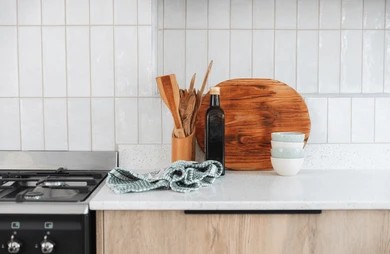
Every kitchen has flat surfaces: the counter, the top of the refrigerator, the windowsill above the sink, the top of the microwave. In kitchens that stay clean, these surfaces are used for their intended purpose. In kitchens that always look cluttered, these surfaces gradually become informal storage for items that do not have a better home.
Mail, keys, chargers, children’s school items, random tools, medication, and dozens of other categories of item tend to migrate to kitchen flat surfaces because the kitchen is a high-traffic area of the house and these things get set down in passing. Once a flat surface starts accumulating items, it becomes easier to add to the pile than to deal with it, and the pile grows until the surface is functionally unavailable for its actual purpose.
Addressing this requires establishing the firm rule that non-kitchen items do not belong in the kitchen. A small designated tray or basket near the kitchen entrance for things that come in with people, keys, wallets, phone, and immediately need a place to land, can contain this tendency without requiring strict enforcement.
But the stovetop, the counter, and the top of the refrigerator should hold kitchen items only, and preferably only the items that genuinely need to be on a surface rather than in storage.
They Finish the Job Completely
One of the subtler habits in a clean kitchen is the tendency to finish tasks completely rather than partially. Putting the ingredients away rather than leaving them on the counter. Wiping the spill rather than making a note to get it later. Putting the dish in the dishwasher rather than rinsing it and leaving it in the sink. Folding the dish towel and hanging it rather than setting it on the counter.
Each of these incomplete actions is individually trivial. Cumulatively, they are the difference between a kitchen that looks finished and one that always seems to be mid-process. A kitchen full of partially completed tasks looks busy and disorganised even when no actual mess is present.
The finish-the-job habit is about closure. Training yourself to complete each small task fully before moving on to the next one keeps the kitchen in a state of readiness rather than a state of accumulation. It is the kitchen equivalent of not leaving a browser tab open forever, things that are open and unfinished create a kind of visual and mental weight, and closing them, completing them, produces an immediate sense of order.
The Pattern That Connects All of These Habits
Looking across every habit and principle described in this article, there is a common thread: clean kitchens are maintained in real time rather than corrected periodically.
The people whose kitchens always look clean are not spending more time cleaning than you are. They are spending that cleaning time distributed differently, in small increments throughout the day rather than in large corrective sessions scheduled after mess has accumulated. A kitchen that is maintained in real time through small, consistent habits requires less total cleaning time than a kitchen that requires periodic recovery from accumulated disorder.
Every one of the habits described here is learnable. None of them require significant effort individually. What they require is conscious practice until they become automatic, and that process typically takes a few weeks of deliberate attention before the habits start to feel natural.
The kitchen that always looks clean is not a lucky accident or the product of someone who simply cares more about cleanliness. It is the product of a set of small, consistent choices made daily by someone who has worked out how to make those choices feel effortless.