
9 Little Kitchen Details Guests Always Notice (Even When They Don’t Realise It)
By Amelia Harper | Kitchen and Home Living Writer
There is a specific experience that happens when you walk into someone’s kitchen for the first time. Before you have consciously registered any individual detail, you have already formed an impression. The kitchen feels well-kept or it feels slightly neglected. It feels welcoming or it feels like a space the occupant would rather you did not look at too closely.
This impression forms in the first five to ten seconds and is surprisingly resistant to revision even when you subsequently notice things that should update it.
What creates this first impression is not the kitchen’s size, the quality of the appliances, or the age of the cabinets. It is a small set of specific details that guests notice at a near-unconscious level but that collectively communicate the care, cleanliness, and intentionality of the space.
None of these details are expensive to address. Several of them require only a few minutes of attention. But their collective effect on how guests perceive the kitchen is disproportionate to the effort they require.
I have been writing about kitchen design and home living for nearly a decade, and the details guests notice most consistently are not the ones most homeowners think about.
Your countertops are one of the first things guests notice, so keeping them both stylish and practical can make a big difference. Explore our guide to beautiful and functional countertop ideas for simple ways to create a kitchen that looks polished without sacrificing everyday usability.
Here are all nine of them, explained with enough context to make the significance of each one clear.
1. The Smell That Reaches Them Before They See Anything

Guests form their first impression of a kitchen through smell before they see a single surface, and this means the olfactory state of the kitchen is more important to their initial perception than almost any visual element.
A kitchen that smells clean, or better still, like something pleasant has recently been cooked in it, communicates care and habitability in a way that no visual arrangement can replace. A kitchen that has an underlying smell of old food, accumulated grease, stale cooking odours, or drain sourness communicates neglect regardless of how clean the visual surfaces appear.
The mismatch between a visually clean kitchen and an unpleasant smell is one of the most disorienting kitchen experiences guests have, because it suggests the cleaning is superficial rather than thorough.
The primary sources of kitchen odour that guests notice are the drain, the bin, and the refrigerator. A slow drain with accumulated organic material produces a sour smell that carries into the kitchen air throughout the day.
A bin with food waste that has not been emptied recently produces increasingly strong odours that permeate the surrounding area. A refrigerator with spills, aged produce, or strong-smelling foods transfers its smell to the kitchen through the door seal every time it is opened.
Addressing all three sources before guests arrive, and maintaining them regularly between visits, is the single most impactful thing that can be done for a kitchen’s guest impression before any cleaning or organisation of the visual elements begins.
2. The State of the Dish Towels and Cloths

Dish towels and cloths are among the first textile elements visible in a kitchen, and their condition communicates the kitchen’s overall standard of care more directly than guests consciously realise.
A fresh, clean dish towel hanging from an oven handle or a hook near the sink reads as attentive and hygienic. A stained, fraying, or slightly damp dish towel in the same position reads as neglected regardless of how well everything else in the kitchen is organised.
Textiles absorb and retain odours as well as staining, which means a towel that has been used for several days without replacement can add to the odour impression described above even when visually the staining is minor.
Guests notice dish towels because they are at eye level, in a prominent position, and because they are the textile equivalent of how a restaurant table cloth communicates the establishment’s standard of care. A fresh cloth signals that the kitchen is managed to a standard where even the functional textiles are maintained properly.
Replacing dish towels before guests arrive and keeping a supply of clean ones available so that the replacement habit does not lapse during a longer visit is the practice that addresses this detail consistently. The aesthetic improvement from switching from mismatched, aged towels to a simple uniform set of clean cloths is immediate and requires no renovation or significant expense.
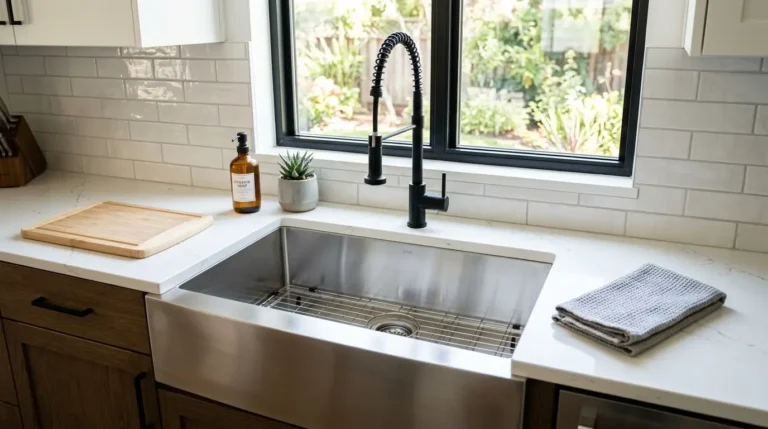
3. The Sink and Faucet Condition

The kitchen sink is the focal point of the kitchen’s cleaning infrastructure, and its condition communicates the cleanliness standard of the entire kitchen more powerfully than any other single fixture.
A clean, dry, shining sink with a streak-free faucet and no water spots on the surrounding counter area reads as a kitchen that is well-managed daily. A sink with water marks, a faucet with mineral deposits at the base, residue in the drain area, or a damp cloth draped over the basin reads as a kitchen that receives attention periodically but not consistently.
Guests almost always look at the sink, often without consciously registering that they are doing so, because the sink is the natural focal point of the view from most kitchen entrances.
The faucet is the specific element within the sink area that guests most often consciously notice when it is poorly maintained, because mineral scale and water spots on a faucet are visible from a distance and because the faucet is an element associated with hygiene in a direct way. A scale-encrusted faucet base affects the perception of the entire kitchen’s cleanliness standard even when the basin itself is spotless.
Cleaning and drying the sink, wiping the faucet and the surrounding counter area, and ensuring there is no standing water or residue in the drain area immediately before guests arrive, and as a daily ending habit, keeps this highest-impact visual element in the condition that communicates a well-managed kitchen.
4. The State of the Stovetop

The stovetop is the element that most directly communicates the kitchen’s cooking frequency and cleaning discipline, and it is one that guests notice because it is at a convenient viewing height from the kitchen entrance and because its condition reflects daily habits rather than periodic deep cleaning.
A clean stovetop, one without baked-on residue around the burners, without grease splatter on the surrounding surface, and without the discolouration that develops when spills are allowed to bake on repeatedly, reads as a kitchen that is cleaned after every use. This daily-cleaning impression is one of the strongest positive signals a kitchen can send to guests because it suggests the cooking that happens there is thoughtful and the care is consistent.
A stovetop with baked-on residue, even when the surrounding kitchen is clean, reads as a space where cleaning happens selectively rather than thoroughly, because the stovetop is the element that is most obviously overlooked when cleaning is done quickly or superficially. Guests who would not notice an imperfect countertop organisation almost always notice a visually compromised stovetop.
The habit of wiping the stovetop while it is still slightly warm, immediately after each cooking session, when the residue is still soft and removable with minimal effort, is the practice that keeps this high-visibility element in the condition that creates the right impression.
You don’t need a major renovation to make your kitchen feel more impressive to guests. Discover small kitchen upgrades that create a big visual impact and see how a few thoughtful changes can completely refresh the space.
5. The Contents and Condition of the Visible Countertop

The visible countertop, everything on it and the state of the surface itself, is the element guests scan most comprehensively during the first moments in the kitchen because it is the largest visible surface area and because it communicates the kitchen’s organisational standard.
A countertop with a clear, organised arrangement and a visible amount of clean, uncluttered surface communicates a kitchen that is both used and managed. A countertop covered with items, where no surface is visible and the arrangement appears accumulated rather than intentional, communicates a kitchen that has been allowed to become a storage surface rather than a working one.
This impression is resistant to correction by cleaning alone, because organisation and cleanliness are two separate qualities and a clean but cluttered counter reads differently from a clean and organised one.
Guests particularly notice the visual noise of the counter, how many separate objects occupy the visible surface, even when they cannot name specific items they are registering. Reducing the number of separate visible objects through trays, consolidating related items, and removing non-kitchen items from the counter surface reduces the visual noise and changes the counter’s impression without changing the underlying functionality.
The condition of the counter surface itself, whether there are stains, dried residue, or water marks under the items that live on it, is secondary to the organisation impression but reinforces it. A clean, organised counter surface communicates the same daily-attention standard that a clean stovetop and sink communicate.
6. Whether the Refrigerator Door Is Clean

The refrigerator is one of the largest visual elements in any kitchen, and its exterior condition, particularly the door and handle, communicates the kitchen’s cleaning standard in proportion to its visual prominence.
Fingerprints and smudges on a stainless steel or glass refrigerator door are one of the most commonly noticed details by guests because they are at eye level on a large surface and because stainless steel and glass both show fingerprints clearly against their reflective surfaces.
A refrigerator door covered in fingerprints and smudges, even when everything else in the kitchen is clean, reads as a kitchen that receives attention in specific areas but misses the obvious large surfaces.
The handle of the refrigerator is the contact point for everyone who opens it and accumulates oils from hands, food residue, and dust that builds into a visible and sometimes tactile grime over time. A handle that is sticky, visibly greasy, or discoloured from accumulated residue is noticed immediately by any guest who opens the refrigerator because they physically contact it at that moment.
Wiping the refrigerator door and handle as part of the kitchen’s regular cleaning routine, using a microfibre cloth that removes smudges from stainless steel without streaking, keeps the kitchen’s largest surface element in the condition that its visual prominence requires.
Your sink may seem like a small detail, but guests can quickly notice stains, buildup, or a dull finish. Explore our guide to simple ways to keep your sink looking fresh and polished for an easy kitchen upgrade.
7. The Organisation of Visible Storage

Any storage that is visible from the kitchen entrance, including open shelves, a visible pantry interior, a utensil crock, or a spice arrangement on the counter, communicates the kitchen’s organisational standard through its arrangement and the consistency of what it holds.
Open shelving in particular is noticed immediately and assessed in a way that closed cabinet storage is not, because the items on open shelves are visible rather than concealed. A set of open shelves with a curated, consistent arrangement of similar items reads as a considered design decision.
The same shelves with a random assortment of mismatched items in varying states of fullness reads as a kitchen where the available storage is insufficient or where the organisation has lapsed.
The utensil crock or container on the counter is a specific visible storage element that guests consistently notice because it is at a prominent height, contains items associated with food preparation and therefore hygiene, and reflects whether the kitchen is organised to a consistent standard or whether items accumulate without a system.
A crock overflowing with more utensils than could realistically be needed, with some items that are not utensils at all mixed in, communicates a kitchen where things end up rather than are placed.
Editing visible storage before guests arrive, removing any items from open shelves or visible storage areas that do not belong or that disrupt the visual consistency, takes less time than any other kitchen preparation task and produces a more significant impression improvement than many more time-consuming efforts.
8. The Condition of Small Details That Reveal Long-Term Maintenance

Beyond the immediately obvious elements of counter, sink, and stovetop, guests who spend time in the kitchen, whether as participants in food preparation or during an extended visit, notice a second tier of details that communicate the kitchen’s long-term maintenance standard.
These details include the state of the cabinet handles and knobs, whether they have accumulated greasy residue at their bases and edges. The condition of the light switch plate and the area around it, which collects fingerprints and marks at a concentration higher than almost any other kitchen surface due to the frequency of contact.
The state of the kitchen bin, whether its exterior is clean and its lid closes fully, and whether the area around it shows any spillage or residue from missed throws. The condition of the window, if present, where grease vapour accumulates on the glass during cooking.
These details are not noticed in the first glance but are noticed during an extended kitchen visit and form the second layer of impression that either reinforces or undermines the first-impression standard. A kitchen that looks well-maintained at first glance but reveals neglected second-tier details on closer inspection reads as a kitchen that is prepared for visits rather than consistently maintained.
The habit of addressing these second-tier details on a regular rather than a pre-visit schedule, as part of a weekly kitchen maintenance routine, means that the impression they create is consistently positive rather than requiring specific preparation.
Even small visual details can make a kitchen feel surprisingly spacious. Discover the simple design tricks that make kitchens feel more open and learn how to create a brighter, less cramped atmosphere.
9. Whether the Kitchen Feels Welcoming as a Space to Be In

The final detail guests notice is not a specific element but a quality created by all the preceding elements working together: whether the kitchen feels like a space that is genuinely inhabited and cared for, or whether it feels like a space that is managed for functionality but not for experience.
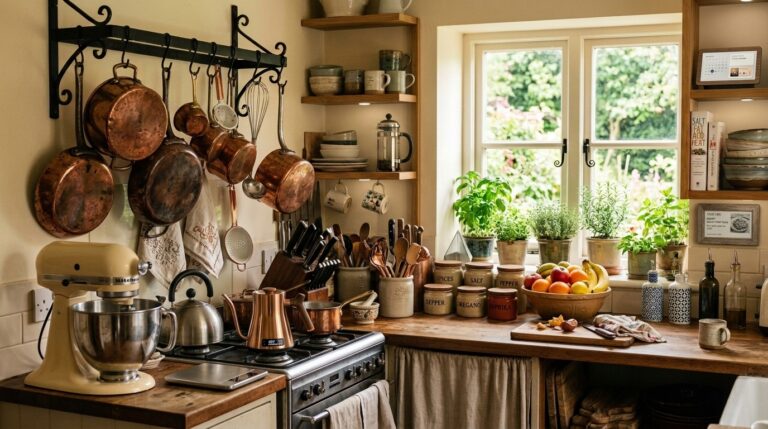
A welcoming kitchen has a lived-in quality that is not the same as a cluttered one. It might have a small plant on the windowsill. A cookbook left open on the counter to a well-used page. A bowl of fruit that is fresh enough to reflect daily restocking.
A dish towel folded in a particular way that feels personal rather than staged. These small signs of genuine habitation make a kitchen feel like a place where someone actually lives and cooks and finds pleasure in both, rather than a showroom that is maintained for appearances.
Guests notice this quality because it communicates something about the inhabitant rather than just the space. A kitchen that feels welcoming invites guests to be in it, to linger and talk while food is prepared, to feel comfortable opening the refrigerator or refilling their glass. A kitchen that feels purely functional, however clean, keeps guests at a slight emotional distance from the space.
This welcoming quality is not achieved by adding more to the kitchen. It is usually the result of the other eight details being well-managed, which creates the headroom for the small personal touches that make a kitchen feel genuinely lived in rather than simply well-kept.
Guests often notice how a kitchen feels at a glance, even when they can’t pinpoint why it looks so put together. Explore the simple habits behind a kitchen that always looks clean to create a more polished and inviting space.
The Impression That Lasts
The nine details in this article are not the most glamorous elements of kitchen design. They are not the countertop material, the cabinet style, or the appliance brand. They are the everyday maintenance and care details that communicate something specific about how the kitchen is lived in rather than simply how it was designed.
Guests remember kitchens that made them feel comfortable and welcome, where the space communicated that someone who cares about their home and about cooking inhabits it. That impression is built from the details above, maintained through consistent daily habits rather than periodic preparation efforts, and experienced by guests at a level that is often below conscious awareness but that is nonetheless real and lasting.
The kitchen that guests always remember fondly is almost never the most impressive one they have been in. It is the one that felt most genuinely cared for.
FAQs About Kitchen Details That Impress Guests
Address the smell before the visual elements. A kitchen that smells clean and fresh makes a positive first impression before guests see a single surface. Emptying the bin, cleaning the drain, and ensuring no old food smells are present takes fifteen minutes and produces the most immediate and powerful impression improvement available.
Yes, particularly when they open it to retrieve something. A refrigerator interior with visible spills, aged produce, and no clear organisation reads as a kitchen where the cleaning standard drops dramatically once the door is closed. Wiping spills immediately and doing a brief edit before visits keeps the interior presentable without requiring a full refrigerator clean each time.
Visual consistency in kitchen items communicates intention rather than accumulation. Matching or harmoniously complementary kitchenware reads as a deliberate choice. Completely mismatched kitchenware reads as a collection built without consideration. The difference in impression between these two states is significant and the solution, choosing a simple uniform set, is one of the most affordable kitchen upgrades available.
Hiding all appliances is not necessary or even desirable, as a kitchen with no visible appliances can feel sterile. The goal is for visible appliances to be clean, positioned intentionally, and accompanied by a clear, organised surrounding counter area. A well-placed, clean coffee maker on an organised counter reads as a positive detail rather than as clutter.
Yes, though it is typically a secondary rather than primary impression factor. A clean floor reinforces the overall kitchen maintenance impression. A visibly dirty floor undercuts any other positive details. The kitchen floor is at a viewing angle where food residue, tracked-in dirt, and spills are all visible, and guests notice floor condition without necessarily registering consciously that they are doing so.
Guests notice whether the kitchen appears to have a system, a sense that things are where they are for a reason rather than where they ended up, more than any specific organisational arrangement. A kitchen that appears systematically organised, even if the specific system differs from their own, reads as well-managed. A kitchen where items appear to be placed without logic reads as disorganised regardless of how clean the surfaces are.
Significantly. A well-lit kitchen appears cleaner, larger, and more welcoming than the same kitchen in poor lighting. Ensuring all ceiling and under-cabinet lights are functioning, replacing any burned-out bulbs before visits, and using the kitchen’s full lighting capacity rather than relying on a single overhead fixture produces an immediate and meaningful improvement in how the space reads.
The right kitchen essentials can make even small details feel more intentional and polished. Explore our guide to the everyday kitchen essentials worth having and discover practical additions that combine style with function.