Why Your Coffee Never Tastes Like a Café (And What Is Actually Going On)
By Amelia Harper | Kitchen and Home Living Writer | Updated July 2026
There is a specific kind of disappointment that comes from trying to replicate a café coffee at home. You buy the same beans, you follow the instructions, you use a decent machine, and what comes out of the cup is fine. It is drinkable. But it does not taste like that. It does not have the depth, the brightness, the richness, or the finish that you get at a good coffee shop. You take a sip and think: what are they doing that I am not?
I have been writing about kitchen appliances and home cooking for nearly a decade, and coffee is one of those subjects where the gap between what most people know and what is actually happening in the cup is genuinely surprising once you understand it.
The answer to why home coffee never quite matches café coffee is not one thing. It is a combination of several variables, most of which are controllable once you know they exist, and a few of which are structural realities of home brewing that take more effort to address. Understanding all of them puts you in a position to close the gap considerably, even if you never fully close it.
Here is what is actually going on.
The Water Temperature Is Almost Certainly Wrong
This is where most home brewing falls short, and it is the variable that most people have no idea they are getting wrong because there is no obvious feedback. The water just looks like boiling water. It does not announce that it is five degrees too hot or fifteen degrees too cold.
The Specialty Coffee Association specifies that water for brewing coffee should be between 195 and 205 degrees Fahrenheit, which corresponds to approximately 90 to 96 degrees Celsius. This range is not arbitrary. It is the temperature at which the soluble compounds that produce coffee’s desirable flavours, the acids, the oils, the sugars, and the aromatic compounds, are extracted at the right rate from the coffee grounds. Water outside this range extracts differently.
Water that is too hot, above 205 degrees Fahrenheit or effectively at a rolling boil, over-extracts from the grounds. It pulls out the bitter compounds more aggressively than the balanced flavour compounds, producing a harsh, astringent cup. Water that is too cool, below 195 degrees Fahrenheit, under-extracts. It pulls out the sour, acidic, underdeveloped flavours without fully developing the sweetness and body that balance them, producing a weak, flat, sometimes sour cup.
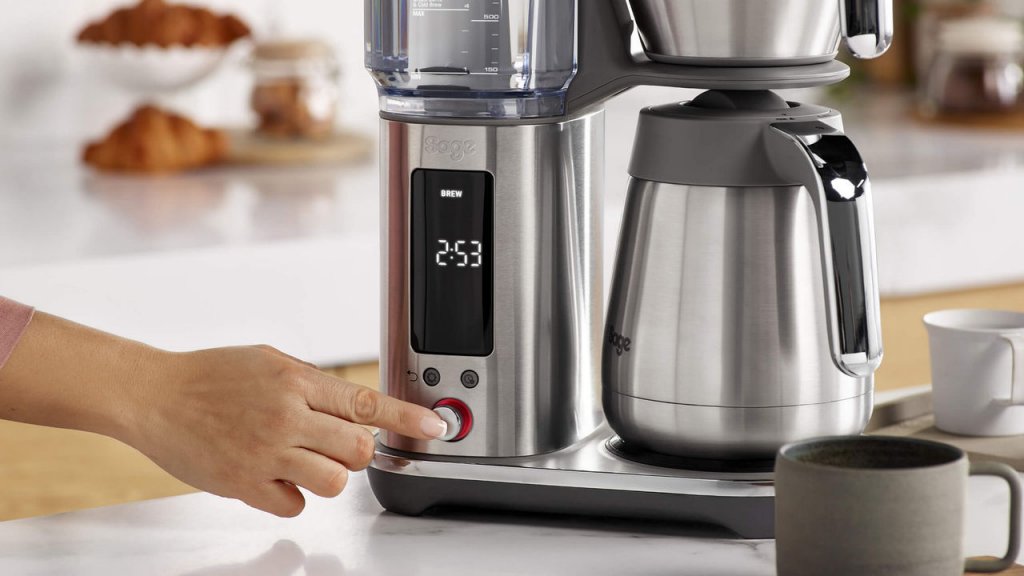
The problem with most home coffee setups is that neither method reliably hits this window consistently. Many budget and mid-range drip coffee machines do not reach 195 degrees Fahrenheit at the point where water contacts the grounds.
Independent testing of drip machines has repeatedly found that machines below a certain quality threshold brew at temperatures of 170 to 185 degrees Fahrenheit, which is meaningfully below the ideal extraction range and produces the thin, watery, underwhelming coffee that people associate with cheap machines.
When you order a coffee at a good café, the espresso machine or commercial drip system is calibrated to hit the extraction temperature within a narrow window every single time. That consistency in temperature alone accounts for a significant portion of the flavour difference between professionally brewed coffee and most home brewing.
The Grind Is the Wrong Size, and Probably Pre-Ground
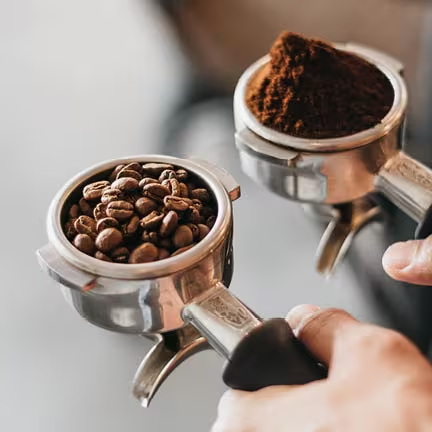
Coffee begins to lose its volatile aromatic compounds the moment it is ground. The grinding process dramatically increases the surface area of the coffee exposed to air, and oxidation of those surface compounds begins almost immediately. Research and practical testing have consistently found that coffee reaches its optimal flavour within minutes of grinding and begins to decline measurably within fifteen to thirty minutes in an unsealed environment.
Pre-ground coffee from a bag or canister, by definition, was ground days, weeks, or months before you brewed it. Every day between grinding and brewing is a day during which aromatic compounds have been oxidising and volatilising away from the coffee. The cup you are making from pre-ground coffee is working with a significantly degraded version of what those beans could have produced if ground immediately before brewing.
A café that cares about its coffee grinds to order for every cup or every batch. Commercial grinders calibrated to produce a precise, consistent particle size are running continuously during service. The coffee grounds that meet the water are minutes or seconds old rather than weeks or months old.
Grind size itself is the second half of this issue. Different brewing methods require different grind sizes, and using the wrong grind size for your brewing method produces extraction problems regardless of how fresh the coffee is. Espresso requires an extremely fine grind because water passes through under high pressure in twenty to thirty seconds.
A fine grind in a French press, where the water contacts the grounds for four minutes, would over-extract dramatically and produce a bitter, harsh cup. A coarse grind in an espresso machine would let water flow through too quickly, under-extracting and producing a weak, sour shot.
The appropriate grind sizes by method, from finest to coarsest, run roughly as follows: espresso requires a fine, powder-like grind. Moka pot requires a fine to medium-fine grind. Pour-over and drip coffee machines require a medium grind, similar to coarse sand.
Chemex pour-over, because of its thick filter, typically needs a slightly coarser medium grind. Aeropress works across a range but generally performs well at medium-fine. Cold brew and French press require a coarse grind, similar to coarse sea salt.
The Coffee Itself Is Not Fresh
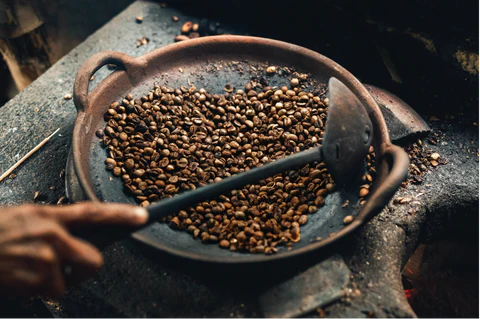
This is uncomfortable to say plainly, but the coffee most people buy at the grocery store is not fresh. It may be within its printed best-by date, but roasted coffee has a meaningful freshness window that is considerably shorter than most commercial packaging implies.
Coffee begins to stale after roasting through a process called oxidation. The aromatic compounds that give coffee its complexity, its brightness, its chocolate or berry or floral notes depending on the variety and origin, are volatile.
They escape from the coffee over time, and once they are gone, no brewing technique or equipment can retrieve them. The technical term for this escape of aromatic compounds is degassing, and it happens continuously from the moment of roasting.
The practical freshness window for roasted whole bean coffee, stored properly in an airtight container at room temperature, is generally considered to be within two to four weeks of roasting for optimal results, with meaningful quality decline after that point.
Coffee that has been sitting on a warehouse shelf, in a distribution truck, on a supermarket shelf, and then in your cabinet can easily be two to four months past roasting by the time it reaches your cup, regardless of the best-by date printed on the package.
Good cafés source their coffee from roasters on a regular delivery schedule that ensures the coffee they serve is within its optimal freshness window. Specialty coffee shops typically display the roast date on the bag and will not serve coffee beyond a certain age. This freshness is one of the largest contributors to the flavour gap between café coffee and home coffee brewed from a bag that has been in the pantry for six weeks.
The Water Quality Is Affecting the Taste
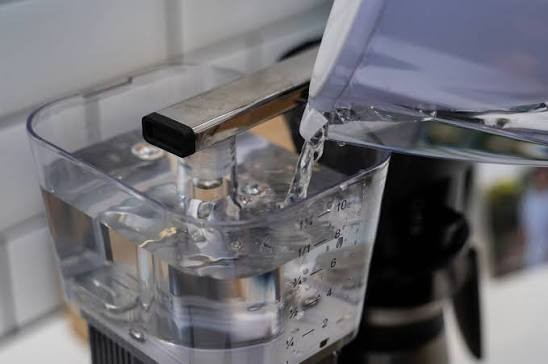
Water makes up approximately 98 to 99 percent of a cup of coffee. The quality of that water, specifically its mineral content and the presence of off-flavours from treatment chemicals, directly affects how the finished coffee tastes.
Chlorine and chloramine, which are added to municipal water supplies as disinfectants and are present in most tap water, have distinct tastes and odours that transfer to anything brewed with them. Coffee brewed with unfiltered chlorinated tap water often has a slightly flat, chemical undertone that diminishes the clarity of the coffee’s natural flavour. This is subtle in any individual cup but noticeable when compared with the same coffee brewed with filtered water.
Water hardness affects extraction differently. Very hard water, with high concentrations of calcium and magnesium carbonate, can interfere with the extraction process by competing with the coffee’s compounds for extraction sites, producing a muted, flat-tasting cup even from quality fresh beans.
Very soft water, with very low mineral content, produces flat, underextracted coffee because the minerals in water actually play an active role in facilitating the extraction of flavour compounds from the grounds.
The ideal water for coffee brewing has a total dissolved solids content of approximately 150 parts per million and a hardness level in the moderate range, which supports good extraction without the interference of excess minerals. Water filtered through a carbon filter, which removes chlorine and chloramine while retaining appropriate mineral levels, is close to this ideal for most municipal water supplies and makes a noticeable difference in cup clarity and flavour quality.
Commercial cafés in serious coffee-serving establishments use water filtration systems specifically calibrated for coffee brewing. This is not incidental. It is considered a fundamental part of coffee quality control at a professional level.
The Coffee to Water Ratio Is Off
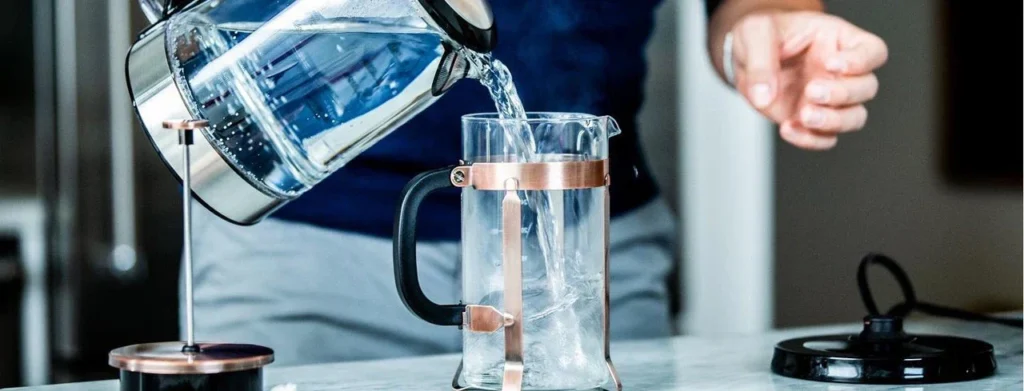
The ratio of coffee to water in a brew determines the strength and balance of the finished cup, and most people are working with a ratio that is either too low, producing weak, thin coffee, or inconsistently applied, producing different results each time.
The Specialty Coffee Association’s Golden Cup standard specifies a ratio of approximately 55 grams of coffee per litre of water for drip brewing, which works out to roughly 1 gram of coffee per 15 to 18 millilitres of water, depending on the desired strength. Most people are using considerably less than this.
The standard tablespoon measure that many coffee scoop instructions refer to produces approximately 5 to 7 grams of coffee per tablespoon, and the instructions on many coffee bags call for one tablespoon per six ounces of water, which is a 1:30 ratio, considerably weaker than the SCA’s recommendation.
A café making drip coffee, or preparing espresso-based drinks, is working with precise weight measurements rather than volume scoops. Espresso is typically prepared at a ratio of 1:2 by weight, meaning 18 grams of coffee grounds producing 36 grams of espresso. This precision, maintained with a scale rather than estimation, is a significant part of why the same coffee produces a better result in a café than at home when measured casually.
Measuring coffee by weight rather than volume also accounts for the fact that different coffees have different densities. A medium roast and a dark roast of the same origin will have different physical densities because darker roasting expands the bean, making dark roast coffee physically larger and less dense per gram.
A tablespoon of dark roast coffee contains fewer grams than a tablespoon of medium roast. Volume measurements introduce inconsistency that weight measurements eliminate entirely.
If your current machine is showing signs of wear, it may be time for an upgrade. Explore our guide to the top coffee machines for every budget and find a reliable model that fits your brewing style.
The Extraction Time Is Incorrect
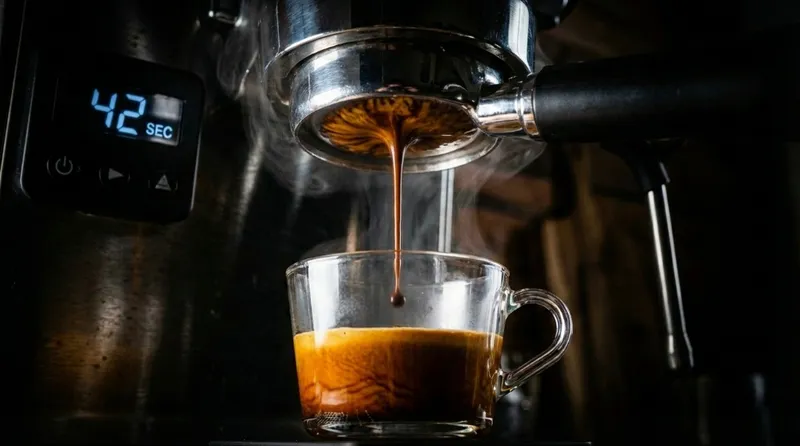
Extraction time, the period during which water is in contact with coffee grounds and actively extracting from them, varies by brewing method and must be matched appropriately to the grind size and the ratio being used.
For espresso, the standard extraction window is between twenty and thirty seconds for a double shot. Shorter than twenty seconds and the shot is under-extracted, producing a sour, hollow, underdeveloped flavour. Longer than thirty seconds and the shot is over-extracted, producing bitterness and an astringent, drying finish. The grind size is adjusted to hit this time window precisely, which is why espresso preparation is particularly sensitive to grind calibration.
For pour-over coffee, total brew time including the bloom phase typically falls between three and four minutes for a medium-fine grind. For French press, four minutes of steep time is the standard recommendation for a coarse grind, with shorter times producing under-extracted, sour coffee and longer times producing over-extracted, bitter coffee.
The bloom phase is worth specific mention because it is a step that most home brewing setups skip entirely and that makes a meaningful difference to extraction quality. When fresh coffee grounds are first contacted with hot water, they release carbon dioxide that was absorbed during roasting.
This carbon dioxide, if not allowed to escape before the main brewing water is added, forms a barrier between the water and the coffee grounds that prevents even extraction. The bloom phase, a preliminary pour of just enough hot water to wet all the grounds followed by a thirty to sixty-second wait, allows this gas to escape before the main brewing water is added, enabling more even and complete extraction.
Specialty cafés use the bloom phase as a standard step in their pour-over brewing protocol. Most home drip machines do not include it in their brewing cycle, though some premium machines have a pre-wetting function that serves the same purpose. This single missing step affects extraction evenness in a way that the finished cup reflects.
The Equipment Is Not Maintaining Consistent Temperature
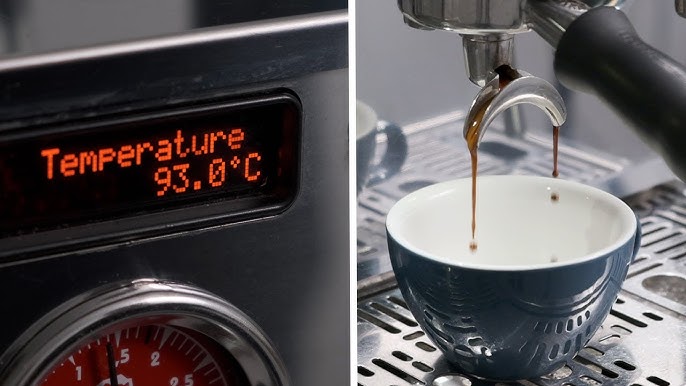
Even if the machine reaches the correct brewing temperature at the beginning of the cycle, maintaining that temperature consistently throughout the entire brew is a separate technical challenge that many consumer machines do not meet.
As hot water flows from the heating element through the brew basket and into the carafe, heat is lost along the path. The temperature of the water contacting the coffee grounds in the final portion of a brew cycle can be meaningfully lower than the temperature at the beginning, producing uneven extraction across the batch.
The first portion of coffee in the carafe is extracted at the correct temperature and has good flavour. The last portion is extracted at a lower temperature and is more sour and underdeveloped. The combined result is a cup that averages out to something less balanced than what a machine maintaining consistent temperature throughout the cycle would produce.
Commercial coffee equipment is designed around temperature stability as a core engineering requirement because the effect on flavour quality is well understood at a professional level. The heating systems in commercial machines are more sophisticated and more tightly controlled than in consumer machines at comparable price points, and the temperature stability they achieve is a meaningful contributor to flavour consistency.
The Filter Type Affects What Gets Into the Cup
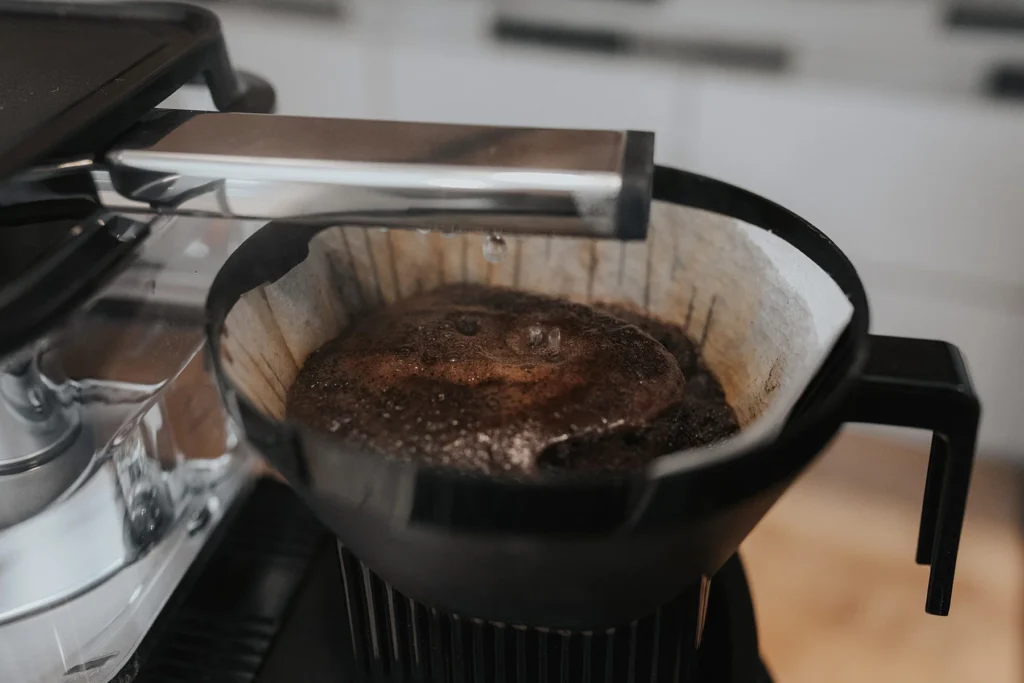
The type of filter used in brewing affects the flavour and texture of the finished coffee in ways that are more significant than most people expect.
Paper filters remove the majority of the coffee’s natural oils and fine particulate matter from the finished cup, producing a clean, bright, light-bodied cup with clarity of flavour but without the richness and full texture that the oils contribute.
Metal mesh filters, used in French press brewing and in some pour-over and drip setups, allow oils and fine particles through into the cup, producing a heavier-bodied, more textured cup with greater richness but less clarity.
Neither is objectively better, but each produces a distinctly different cup from the same coffee, and understanding which result each filter type produces helps you understand why your home coffee might taste different from a café version even when both use the same beans.
Bleached versus unbleached paper filters also make a small but perceptible difference. Unbleached paper filters can impart a faint papery taste to the coffee if not pre-rinsed. Rinsing the paper filter with hot water before adding the grounds removes this taste and also pre-warms the brewing vessel, reducing the heat loss that occurs when the first hot water contacts a room-temperature filter and dripper.
The Equipment Is Not Clean
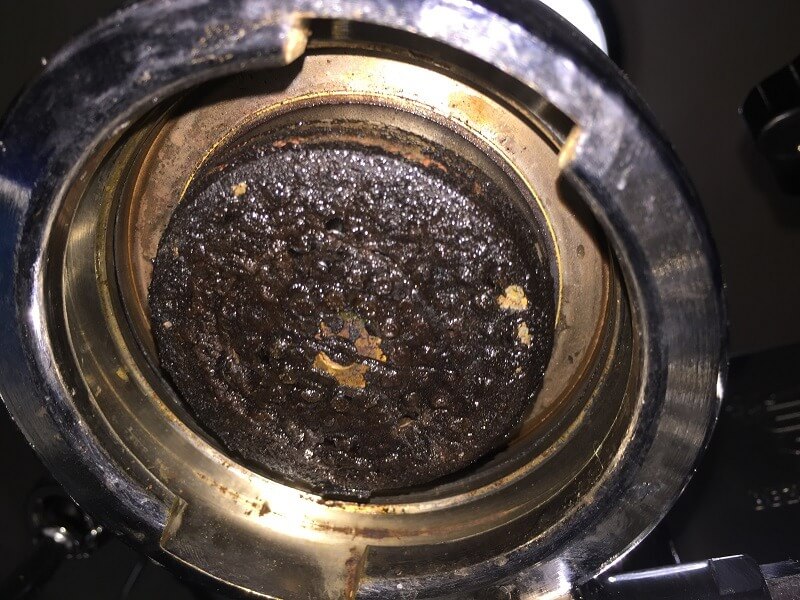
Coffee oils are persistent and cumulative. Every brew leaves a thin coating of oil on the surfaces it contacts: the carafe, the filter basket, the brew basket, and all internal surfaces through which the water has passed. These oils oxidise and become rancid within hours to days at room temperature. The rancid oil from yesterday’s brewing contaminates today’s cup.
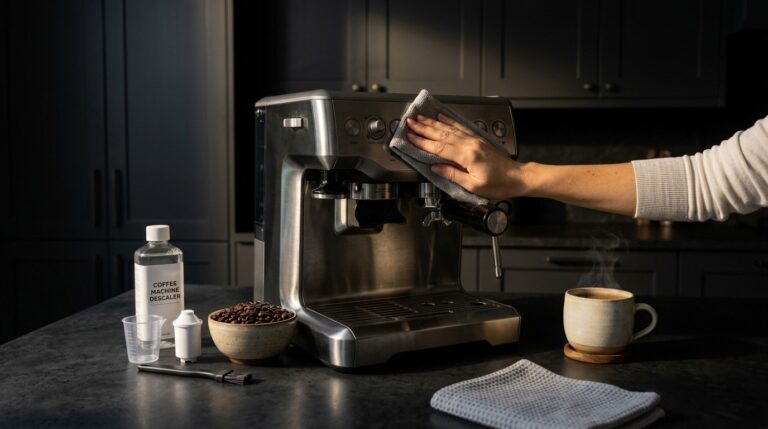
A café that cares about quality cleans its equipment thoroughly after every service and sanitises it regularly. Espresso machines in quality cafés are backflushed daily, group heads and portafilters are scrubbed, and steam wands are purged and wiped after every use. This level of equipment hygiene directly affects flavour quality in every cup.
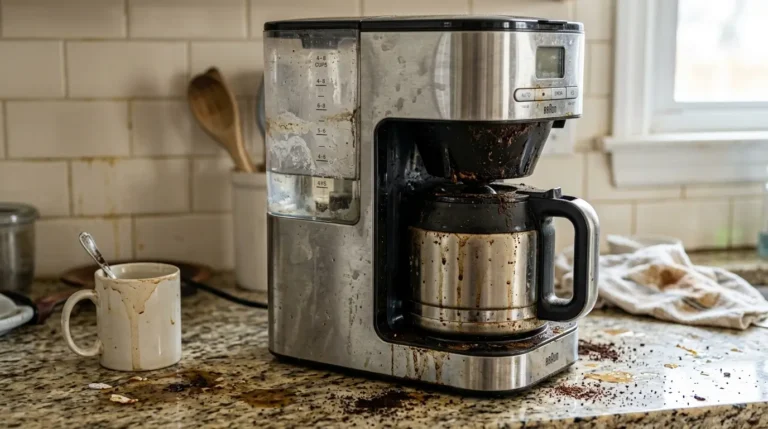
At home, the carafe might get a rinse. The filter basket might get rinsed under water. The machine might never be descaled. The difference in equipment cleanliness between a serious café and a home setup contributes to a persistent background bitterness and staleness in home-brewed coffee that is not the fault of the coffee itself.
The Barista’s Skill and Attention
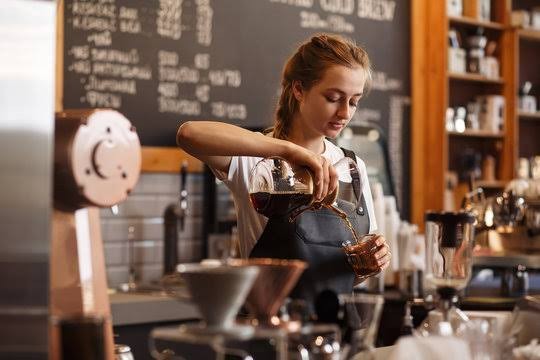
This is the variable that is hardest to replicate at home and the most honest answer to the question of why café coffee tastes different. A skilled barista at a good café is not simply pressing a button.
They are making continuous real-time judgements about extraction, adjusting grind fineness between shots based on how the previous pull behaved, tasting and evaluating the espresso before it goes to the customer, and managing variables like humidity and temperature that affect the coffee throughout a service.
Espresso in particular is a craft that requires experience to do well. Dialling in an espresso grinder, which involves making small adjustments to grind size and evaluating each pull against the expected outcome in terms of time, volume, and taste, takes practice and developed sensory reference points. A barista who has been doing this for years brings a level of calibrated skill to the task that a home setup simply cannot replicate automatically.
This is not a reason to give up on home brewing. It is a reason to develop your own skill and attention in proportion to the brewing method you choose and the results you want. Pour-over brewing done thoughtfully and carefully, with attention to ratio, temperature, grind freshness, and technique, can produce exceptional coffee.
Espresso at home done without that attention produces something acceptable. The gap between these two outcomes is skill, attention, and practice, which are genuinely available to anyone who wants them.
What You Can Realistically Change
After understanding all of the variables above, it is worth being direct about which ones are most impactful and most accessible for home brewing improvement.
Grinding fresh immediately before brewing has perhaps the single largest impact on cup quality relative to the effort required. A burr grinder that produces a consistent grind size, as opposed to a blade grinder that produces an inconsistent chop, is the foundational equipment upgrade that changes everything downstream of it.
Water quality is the second most impactful and most accessible variable. Filtered water at the correct temperature makes a consistent, measurable difference to cup quality without requiring significant investment or skill.
Coffee freshness is the third. Buying from a roaster who displays the roast date on the bag, and brewing within two to four weeks of that date, ensures you are working with coffee that can actually produce the flavour complexity you are trying to replicate.
Ratio precision, using weight measurements rather than volume scoops, improves consistency dramatically and costs nothing beyond the discipline of the habit.
Equipment temperature and extraction time require more investment to address fully, either through a better machine or through a brewing method that gives you direct control over these variables, but understanding them allows you to get the most from whatever setup you are currently working with.
The café will still taste like the café. A skilled barista, commercial equipment, and a calibrated setup working together produce results that a home setup replicates imperfectly at best. But understanding all of these variables puts you in a position to close the gap considerably, and that is a genuinely rewarding pursuit for anyone who loves coffee and spends time making it every morning.