Things You Should Never Put in a Countertop Dishwasher (And Why Each One Matters)
By Amelia Harper | Kitchen and Home Appliance Writer | Updated August 2026
A countertop dishwasher is one of the most convenient appliances in a small kitchen, and the temptation when you own one is to put absolutely everything through it. It is designed to clean dishes with hot water and detergent, and in a busy household the last thing you want is a separate mental category of things that have to be washed by hand.
But that category exists for important reasons, and ignoring it has consequences that range from ruined cookware and damaged appliances to genuine safety concerns. Some items are damaged by the dishwasher environment in ways that are immediately obvious. Others sustain damage that is gradual and invisible until the item fails, which makes the connection to dishwasher use easy to miss.
I have been writing about kitchen appliances for nearly a decade, and damaged items from incorrect dishwasher use is one of the most consistently reported frustrations among kitchen appliance users. Understanding why specific items cannot go in the dishwasher, at the level of what is actually happening to them during the cycle, makes the exclusion list meaningful rather than arbitrary.
Here is every category of item that should never go in a countertop dishwasher, with a clear explanation of what the dishwasher environment does to each one.
1. Wooden Items of Any Kind
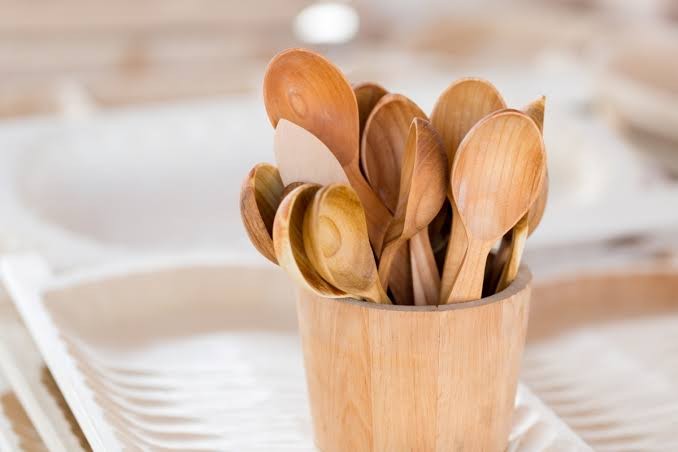
Wood and dishwashers are fundamentally incompatible, and the damage that occurs when wooden items go through a dishwasher cycle is permanent and progressive rather than recoverable.
Wood is a porous, hygroscopic material that absorbs water when wet and releases it when dry. During a dishwasher cycle, the wood absorbs significant amounts of hot water through this process. The heat of the cycle also causes the wood fibres to swell.
During the drying phase, the absorbed water releases rapidly, causing the wood fibres to contract. This repeated expansion and contraction cycle, occurring every time the item goes through the dishwasher, causes the wood to crack, split, and warp.
The damage timeline is faster than most people expect. A wooden spoon or cutting board may look unchanged after the first or second cycle but will show visible warping, splitting at the grain, or surface checking within three to five cycles. Once warped, wood cannot be flattened back to its original shape.
Wooden items that appear to have survived dishwasher cycles without visible damage have still sustained internal structural damage that has not yet expressed itself as visible cracking. The internal cellular damage from repeated water absorption and release weakens the wood progressively.
The visible failure, when it eventually occurs, happens suddenly rather than incrementally, which is why it is often attributed to a single incident rather than to the accumulated damage of dishwasher cycles.
Loading the wrong items isn’t the only thing that can affect your dishwasher’s performance. Explore our guide on keeping mold out of your countertop dishwasher to learn simple maintenance habits that keep it clean, fresh, and running efficiently.
2. Cast Iron Cookware
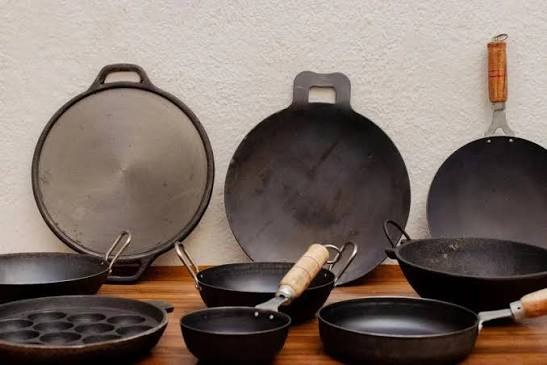
Cast iron is one of the most durable cooking materials available and can last for generations when maintained correctly. It is also one of the most quickly and severely damaged by dishwasher use, which makes the combination of durability in cooking and vulnerability in cleaning confusing for many owners.
Cast iron’s cooking performance depends on a layer of polymerised oil that builds up on the surface through repeated cooking and proper maintenance.
This layer, called seasoning, gives cast iron its natural non-stick properties and protects the bare iron surface from exposure to water and oxygen, which cause rust. The seasoning is not a coating applied to the iron. It is the iron surface itself transformed through the bonding of oil molecules to the metal.
The alkaline dishwasher detergent strips this seasoning completely in a single cycle by breaking the chemical bonds between the polymerised oil and the iron surface. Without the seasoning, the bare iron surface is exposed to water and heated air during the drying cycle, and rust begins to form within hours. Cast iron that has been dishwashed will have rust visible on the cooking surface by the following day.
Restoring dishwasher-damaged cast iron requires stripping the rust, scrubbing the surface, and rebuilding the seasoning layer through multiple applications of oil and baking at high oven temperatures. This restoration process takes several hours and several days before the cookware is back to the condition it was in before the dishwasher removed its seasoning.
3. Non-Stick Cookware with PTFE or Ceramic Coating
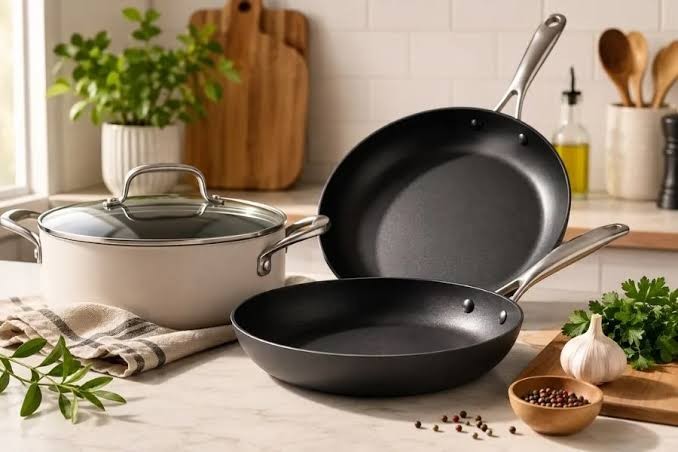
Non-stick pans, pots, and baking items are designed specifically for hand washing, and dishwasher cycles progressively destroy the coating that defines their function regardless of how many cycles are tolerated before the damage becomes visible.
PTFE-based non-stick coatings, commonly known by the brand name Teflon, are degraded by the combination of high alkaline detergent concentration and high water temperature sustained over multiple cycles. The degradation does not happen uniformly.
It begins at microscopic points of coating imperfection or previous abrasion and spreads outward from those points over successive cycles. The surface appears intact until enough coating has degraded that large patches of food begin sticking, at which point the coating has been compromised across a significant area.
Ceramic non-stick coatings are somewhat more resistant to dishwasher conditions than PTFE but are not immune to degradation. High-temperature dishwasher cycles cause the ceramic coating to lose its hydrophobic surface properties over time, progressively reducing its non-stick performance and eventually producing the same sticking that characterises a worn coating.
The dishwasher cycle reduces the lifespan of non-stick cookware significantly. A pan hand-washed correctly may maintain its coating for several years. The same pan machine-washed regularly may show significant coating degradation within twelve to eighteen months, requiring replacement long before the underlying pan structure would have failed.
4. Sharp Knives
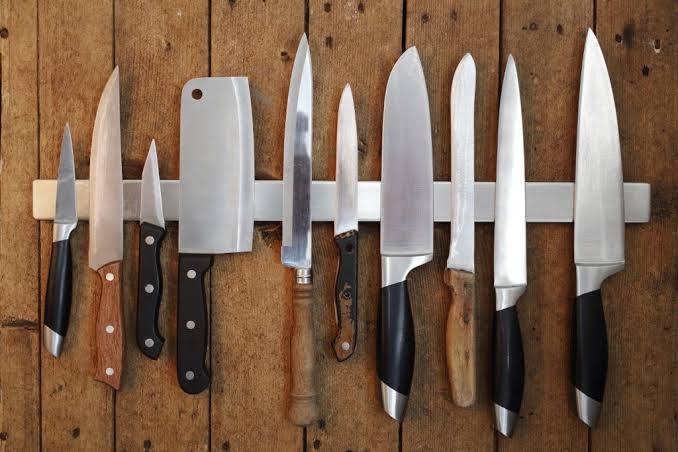
Kitchen knives should never go in a dishwasher regardless of the manufacturer’s cleaning instructions, because dishwasher cycles damage sharp knives through multiple mechanisms simultaneously and produce dull, potentially compromised blades that require professional sharpening to restore.
The first damage mechanism is edge dulling from contact with other items in the dishwasher. Knives moving freely in the cutlery basket during the wash cycle contact other utensils, the basket itself, and the dishwasher interior. Each contact point creates a micro-deformation of the knife edge.
Across a full wash cycle with the vigorous water agitation of a dishwasher, the knife edge experiences dozens of these contact events and the cumulative damage is equivalent to months of normal use.
The second mechanism is handle degradation. Most kitchen knives have handles made from wood, composite materials, resin, or bonded materials. All of these handle materials are affected by the hot water and steam of dishwasher cycles. Wood handles warp and crack. Composite handles can delaminate.
The bond between the handle material and the blade tang can weaken over time, eventually leading to handle loosening that creates a safety issue during use.
The third mechanism specific to high-carbon steel knives, which include many premium Japanese and European chef’s knives, is oxidation. High-carbon steel rusts rapidly when exposed to the extended water contact and the residual moisture of dishwasher cycles. Even stainless steel knives experience surface oxidation from the combination of high-alkaline detergent and prolonged heat exposure.
5. Copper and Brass Items
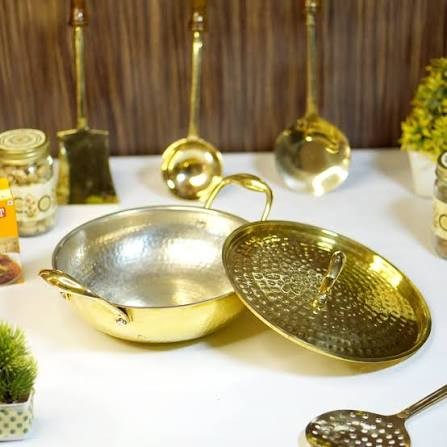
Copper and brass cookware, serving pieces, and kitchen tools are damaged by dishwasher cycles in a way that is immediately and dramatically visible: the warm, rich metallic finish of these materials is replaced by a dull, discoloured, sometimes spotted surface that cannot be restored by further dishwashing.
The dishwasher environment causes accelerated oxidation of copper and brass surfaces. The alkaline detergent reacts with the copper and zinc components of these metals, and the heat accelerates this reaction. The result is a tarnished, greenish, or mottled surface that has undergone oxidation well beyond the normal patina that develops slowly on copper and brass through air exposure.
Lacquered copper and brass items, which have a protective coating applied to prevent tarnishing, suffer a different type of damage. The dishwasher cycle dissolves or lifts the lacquer coating, leaving the metal beneath exposed and causing the metallic surface under the lifted lacquer to begin tarnishing immediately.
Copper-clad or copper-core cookware with stainless steel or non-stick cooking surfaces is also vulnerable because the copper outer layer receives the full detergent and heat exposure during the cycle. Even when the cooking surface is technically dishwasher safe, the copper exterior is not.
Long wash cycles aren’t always caused by the items you load. Read our guide on why your countertop dishwasher runs longer than expected to discover common causes and simple ways to improve cycle efficiency.
6. Silver and Silver-Plated Items
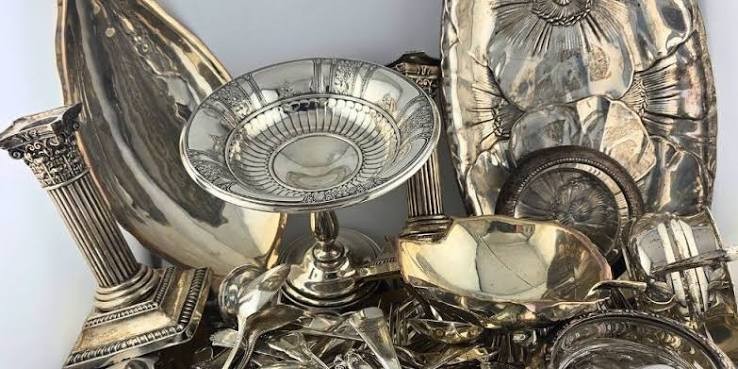
Silver and silver-plated flatware, serving pieces, and decorative items can be permanently damaged by dishwasher cycles through two distinct mechanisms that affect the appearance and structural integrity of the silver differently.
The first is tarnishing acceleration. Dishwasher detergents contain compounds that react aggressively with silver, producing tarnish far more rapidly than normal air exposure would. A single dishwasher cycle can produce the equivalent of months of tarnishing, leaving silver pieces with a dull, dark surface that requires polishing to address.
The second mechanism specifically affects silver-plated items rather than solid silver. Silver plating is a thin layer of silver deposited on a base metal, typically brass or copper. Dishwasher cycles gradually dissolve and strip this plating layer, exposing the base metal beneath.
Once the plating is compromised, the exposed base metal tarnishes and oxidises differently from the silver surface around it, creating a blotchy, permanently damaged appearance that polishing cannot correct.
Contact between silver and stainless steel in the dishwasher creates an additional problem through electrochemical reaction. When silver and stainless steel are in direct contact in the alkaline dishwasher environment with an electrical current from the heated water, ions transfer between the metals, pitting the silver surface and permanently marking both metals.
7. Aluminium Cookware and Bakeware

Uncoated aluminium is one of the most reactive materials in the dishwasher environment, and a single cycle can cause visible and permanent discolouration that changes the appearance of aluminium cookware and bakeware from shiny to dull grey or black.
The alkaline detergent oxidises the aluminium surface during the cycle through a process called alkaline etching. The aluminium reacts with the hydroxide ions in the detergent solution, forming aluminium hydroxide on the surface that then further oxidises to aluminium oxide. This layer appears as dark discolouration that is embedded in the aluminium surface rather than sitting on it and that cannot be removed by washing or polishing.
Anodised aluminium, which has been electrochemically treated to create a hard oxide layer on the surface, is somewhat more resistant but still susceptible to dishwasher damage. The anodised layer can be partially dissolved by repeated dishwasher cycles, revealing the untreated aluminium beneath and producing patchy, uneven discolouration.
Aluminium baking sheets, muffin tins, and cake pans that go through dishwasher cycles not only discolour but may also develop pitting in the surface where the alkaline etching was most concentrated. This pitting creates rough areas where food sticks more readily in subsequent baking sessions.
8. Crystal and Delicate Glassware
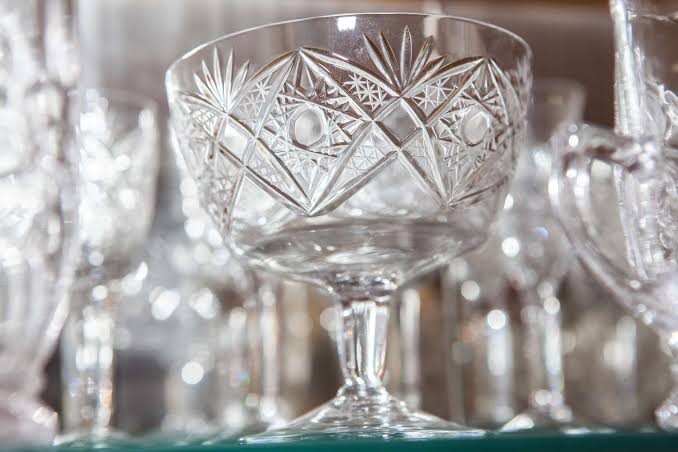
Crystal glassware, including wine glasses, champagne flutes, and decorative crystal pieces, cannot withstand the conditions of dishwasher cycles without progressive damage that eventually renders them permanently cloudy or structurally weakened.
Genuine lead crystal and lead-free crystal both experience a process called glass corrosion in the dishwasher environment. The alkaline detergent gradually leaches minerals from the glass surface, creating microscopic pits and channels that scatter light rather than allowing it to pass through cleanly.
This produces the permanently cloudy, etched appearance that dishwasher-damaged crystal develops over cycles. The etching is structural damage to the glass itself and cannot be polished away or reversed.
Thermal shock is the second risk for crystal and delicate glass. The rapid temperature changes of dishwasher cycles, from cold or room temperature on loading to hot water temperatures during the wash and then cooler temperatures during the final rinse, create stress in the glass structure. Crystal is more susceptible to thermal shock than standard glass because its molecular structure is less resilient to rapid temperature change.
Hand-painted or gilded glassware faces additional damage from the detergent dissolving the paints, glazes, or metallic decoration applied to the glass surface. Even one dishwasher cycle can noticeably fade or partially remove decorative elements that survived years of careful hand washing.
9. Insulated Mugs and Travel Tumblers

Insulated drinkware that relies on a vacuum-sealed double wall for its temperature retention properties is damaged by dishwasher cycles in a way that does not affect the appearance of the item but destroys its functional performance completely.
The insulation in a vacuum-insulated mug or tumbler is created by evacuating the air from the space between the inner and outer walls of the container. This vacuum is sealed by welds and adhesives that bond the two walls together at the rim and base. Dishwasher cycles subject these seals to sustained hot water immersion and thermal cycling that gradually degrades the seal integrity.
When the vacuum seal fails, air enters the space between the walls, eliminating the vacuum insulation entirely. A mug with a failed vacuum seal cannot maintain drink temperature any better than a single-wall container. The failure is not visible from the outside and is only discovered when the drink cools or warms much faster than expected.
The failure typically occurs gradually over multiple dishwasher cycles rather than suddenly after one cycle, which means the insulation performance declines progressively before the failure is noticed. Many people attribute the reduced performance to age rather than to dishwasher damage, which is why the instruction to hand wash insulated drinkware is often not taken as seriously as it should be.
If your dishes still come out dirty even when you avoid washing unsuitable items, there may be another issue. Explore our guide on fixing poor countertop dishwasher cleaning performance to identify common problems and restore spotless results.
10. Items with Paper, Cardboard, or Adhesive Labels

Any item with a paper or cardboard label, a sticker, or an adhesive label that has not been removed before loading should not go through a dishwasher cycle, and this applies particularly to new items being put through the machine for the first time.
Labels and stickers dissolve or detach during the dishwasher cycle. The paper and adhesive material that separates from the item during the cycle becomes suspended in the wash water and is then deposited throughout the machine. Paper fibres clog the filter. Adhesive residue coats the spray arm holes. Both problems reduce the machine’s cleaning performance and require cleaning of the filter and spray arms to resolve.
Label adhesive that remains attached to its backing during the cycle but is softened by the water can bond to adjacent items or to the interior surfaces of the machine when the water temperature drops and the adhesive re-hardens. Adhesive bonded to dishwasher interior surfaces is difficult to remove and can accumulate into a residue that affects the appearance of the machine interior.
Always remove labels, stickers, and any adhesive residue from items before loading them in the dishwasher. For items with stubborn adhesive residue after label removal, cleaning the adhesive from the item’s surface before dishwashing prevents the adhesive from detaching inside the machine during the cycle.
11. Hollow-Handled Knives and Utensils
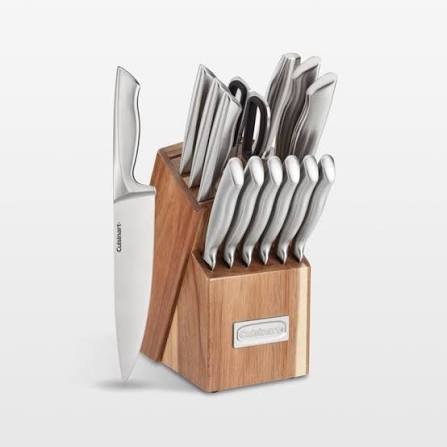
Knives and serving utensils with hollow handles joined to the blade or head with adhesive rather than through solid construction should not go in dishwashers, because the hot water and steam of the cycle dissolves the adhesive bond that holds the two pieces together.
Hollow-handled knives use an internal adhesive or resin to bond the blade tang into the handle cavity. This adhesive is formulated for the moisture levels encountered in normal hand washing and kitchen use. It is not formulated to withstand sustained immersion in hot detergent water or the high temperatures of dishwasher cycles.
As the adhesive softens during a cycle, the blade can become loose within the handle. Initially this manifests as a slight wobble that is noticeable during use. Over multiple dishwasher cycles, the bond continues to weaken until the handle separates from the blade entirely. A knife whose blade separates during food preparation is a serious safety hazard.
The same principle applies to any utensil where the head and handle are joined with adhesive rather than through mechanical fastening. Servers, ladles, and spatulas with bonded joints are all vulnerable to this type of failure through dishwasher use.
12. Cheese Graters and Items with Fine Perforations
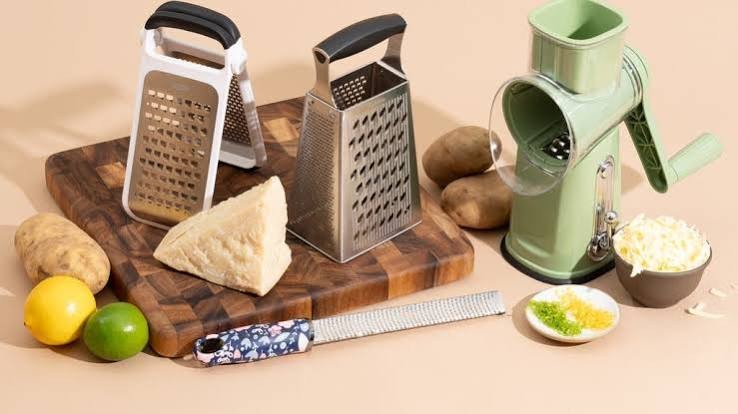
Cheese graters, microplane graters, food mills, and any kitchen tool with very fine perforations or sharp microstructure present a specific dishwasher-related problem that is separate from the material damage issues discussed for other items.
The fine holes and sharp edges of a cheese grater trap food particles that the dishwasher’s water jets cannot dislodge because the water pressure required to force residue through fine holes is higher than dishwasher jets provide. The result is that a grater that appears clean after a dishwasher cycle retains residue in its perforations that dries and hardens between uses.
Accumulated cheese, dough, or other food residue in fine grater holes is a bacterial growth risk because the recessed, food-filled holes are warm, moist between uses, and inaccessible for inspection. The food residue in the holes also deteriorates the grater’s cutting performance by reducing the effective sharpness of the cutting edges over time.
Hand washing with a soft brush specifically designed to push through the perforations from one side and pull residue out the other is the effective cleaning method for fine graters. This process takes two to three minutes and ensures the perforations are genuinely clear rather than appearing clean while retaining residue inside.
13. Anything Labelled Hand Wash Only

This is the category that covers everything not specifically mentioned above, and it is worth addressing explicitly because the hand wash only label is sometimes treated as a conservative suggestion rather than as the functional requirement it represents.
Manufacturers apply the hand wash only designation when the item’s materials, construction, joinery, surface treatment, or functional properties cannot withstand dishwasher conditions without damage. The designation is the result of testing that identified specific failure modes, not a precautionary label applied uniformly to items that probably would survive.
Antique ceramics and porcelain with aged glazes or hairline cracks can absorb water through existing cracks during a dishwasher cycle, causing further cracking or staining. Enamelled cast iron with any chips or cracks in the enamel allows water to reach the cast iron beneath during a cycle, causing rust to form under the enamel and eventually pushing it off from below.
Melamine and certain plastics warp at dishwasher temperatures even when they do not melt, permanently deforming items that appeared structurally solid.
Taking the hand wash only label at face value is always the correct approach. The brief additional effort of hand washing these items is never as costly as the replacement or restoration required after dishwasher damage has occurred.
If your current unit can’t handle your everyday needs or struggles with certain items, it may be time for an upgrade. Explore our guide to the top countertop dishwashers for small kitchens and compare models that offer better cleaning performance, efficiency, and convenience.
The Common Thread Behind Every Exclusion
Looking across every category in this article, the same pattern appears: dishwasher cycles combine alkaline detergent chemistry, sustained hot water immersion, high temperatures, and rapid thermal cycling in a way that is highly effective for robust, non-reactive materials like glazed ceramic, standard glass, and stainless steel, and highly damaging for materials that are reactive, absorbent, coated, bonded, or structurally sensitive to any of those conditions.
The countertop dishwasher is an excellent cleaning tool for the items it is designed to clean. It is genuinely harmful to items that fall outside that design. The exclusions in this article are not restrictions on the machine’s convenience but rather the guidelines that allow you to use it at its full convenience without the frustration of damaged and prematurely replaced items.
A kitchen that hand washes what cannot go in the machine and machines what can gets the benefit of both approaches without the cost of either’s downsides.
FAQs About What Cannot Go in a Countertop Dishwasher
Plain stainless steel pots and pans without non-stick coatings are generally dishwasher safe, but sustained dishwasher use can dull the finish over time and may cause discolouration at the base of pans with aluminium or copper cores. Check the manufacturer’s instructions for your specific cookware before regular dishwashing.
A single dishwasher cycle may not produce visible damage but causes internal structural damage through water absorption and heat exposure. After one cycle, the wood fibres have swelled and then dried in a stressed state. Visible warping or cracking typically appears after two to four cycles as the accumulated structural stress reaches a visible threshold.
Dishwasher safe labelling on non-stick cookware means the item will not fail immediately in the dishwasher. It does not mean that dishwasher use will not degrade the coating over time. Hand washing extends non-stick coating life significantly compared to dishwasher use, regardless of the label designation.
Dishwasher-safe plastic and acrylic drinkware can be machine washed, but should be placed away from the heating element to prevent warping from radiant heat during the dry cycle. Items labelled hand wash only, including many decorative or novelty plastics, should always be excluded.
The cloudiness is glass etching, which is microscopic damage to the glass surface caused by the alkaline detergent dissolving minerals from the crystal structure. This damage is permanent and cannot be reversed by further cleaning. Etched crystal can sometimes be partially improved with dedicated crystal polishing products, but the underlying surface damage remains.
No. Bamboo is a grass rather than a hardwood but has the same water absorption and expansion properties as wood. Dishwasher cycles cause bamboo to crack, split, delaminate if it is a laminated product, and lose its smooth surface texture. Hand washing with mild soap and drying immediately is the correct cleaning method for bamboo kitchen items.
Even if the lid is dishwasher safe, the container itself should not go in the dishwasher if it is vacuum-insulated. The lid and container have different construction and different vulnerabilities. Washing the lid in the dishwasher and hand washing the container is the correct approach for insulated food containers with dishwasher-safe lids.