Food Processor Mistakes Beginners Make (And How to Fix Every One of Them)
By Amelia Harper | Kitchen and Home Writer | Updated July 2026
A food processor is one of those appliances that should make cooking easier but somehow manages to frustrate people in their first weeks of ownership more than almost any other kitchen tool. The machine itself is capable. The problems beginners run into are almost entirely about how the machine is being used rather than anything wrong with the machine itself.
I have been writing about kitchen appliances for nearly a decade, and food processor mistakes come up consistently whether someone has bought a basic twelve-cup machine or a premium model with every attachment imaginable. The good news is that these mistakes are all learnable and correctable once you understand what is causing the problem.
Here is every mistake beginners make with a food processor, and exactly what to do instead.
1. Overfilling the Work Bowl
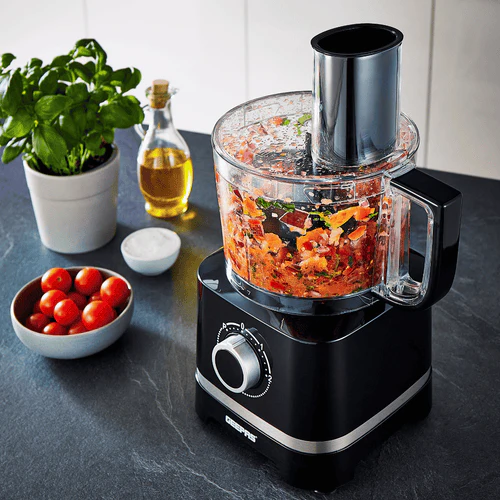
The fill line marked on the inside of a food processor bowl exists for two specific reasons: safety and performance. When the bowl is overfilled, the lid cannot contain the contents during processing and material escapes around the seal, creating a mess and potentially a safety hazard.
More practically, an overfilled bowl does not process evenly. The blades in a food processor reach a specific diameter, and material above that reach cannot be effectively processed without stopping the machine and redistributing the contents manually. The result is inconsistently processed food with some portions finely chopped and others still in large chunks.
The effective working capacity of most food processor bowls is about two-thirds of the total stated volume. A fourteen-cup bowl processes most efficiently when loaded to about nine or ten cups. Working within this range produces more consistent results in less time than pushing the bowl to its maximum.
For large batches, working in multiple smaller loads and combining the results is faster in total than running an overfilled bowl repeatedly, stopping to redistribute, and running it again.
2. Processing Everything on the Same Speed Setting
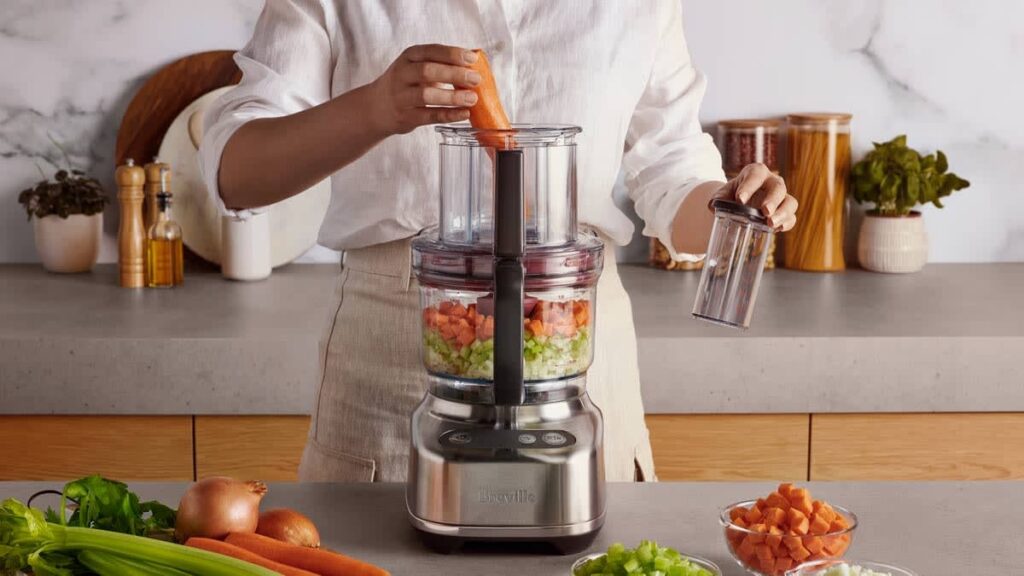
Most food processors offer at least two operating modes: continuous processing and pulse. Beginners tend to pick one and use it for everything, which produces poor results for specific tasks that require the other.
Continuous processing runs the blade at full speed for as long as you hold the button or the machine runs. It is appropriate for tasks that require extended blending or mixing, such as making hummus, pureeing soup, mixing pastry dough, or producing smooth sauces where the goal is the finest possible texture.
Pulse delivers short bursts of power, typically half a second to one second per press, and stops between bursts. It is the correct choice for tasks where texture control matters, such as chopping onions, making salsa, processing nuts, or producing breadcrumbs. These tasks require control over how fine the result becomes, and continuous processing runs past the target texture in seconds while pulse allows you to stop exactly where you want.
The most common pulse mistake is a single long hold of the pulse button that functions as continuous processing by another name. Short, decisive presses with a brief pause between them give you actual control over the texture.
3. Not Cutting Ingredients Down to a Manageable Size
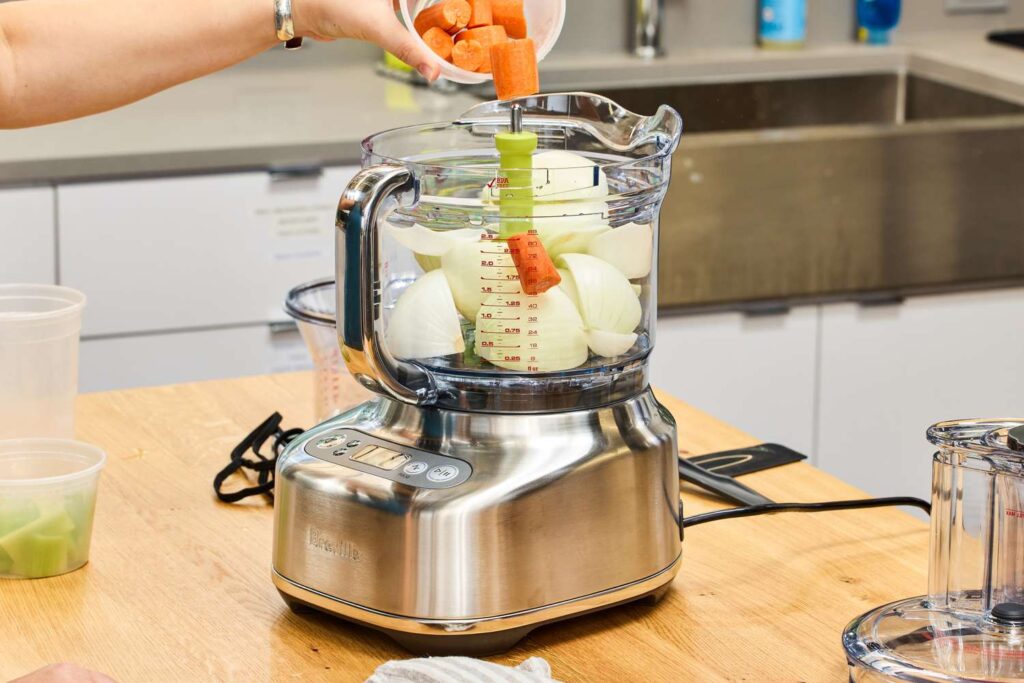
A food processor blade is powerful but it is not magic. It cuts ingredients that are physically small enough to make contact with the blade, and it struggles with ingredients that are too large to move freely in the bowl or that present too much resistance for the blade to engage with efficiently.
Large chunks of raw carrot, whole blocks of cheese, whole onions, and large potatoes all process poorly when added to the bowl in their full-size form. They tend to bounce around the bowl rather than being drawn into the blade, producing irregular results and putting unnecessary strain on the motor.
The practical guideline is to cut most ingredients into roughly one to two inch pieces before adding them to the bowl. This size allows pieces to move freely, contact the blade consistently, and be processed evenly without over-taxing the machine.
For very hard ingredients like raw sweet potato or large blocks of hard cheese, cutting into pieces smaller than one inch produces significantly better results and reduces the time needed to reach the target texture.
If you’re still struggling to get consistent results, your appliance could be the problem. Explore our guide to the top food processors for every kitchen and find a model that’s easy to use and built for everyday meal prep.
4. Processing Wet and Dry Ingredients Together Without a Strategy
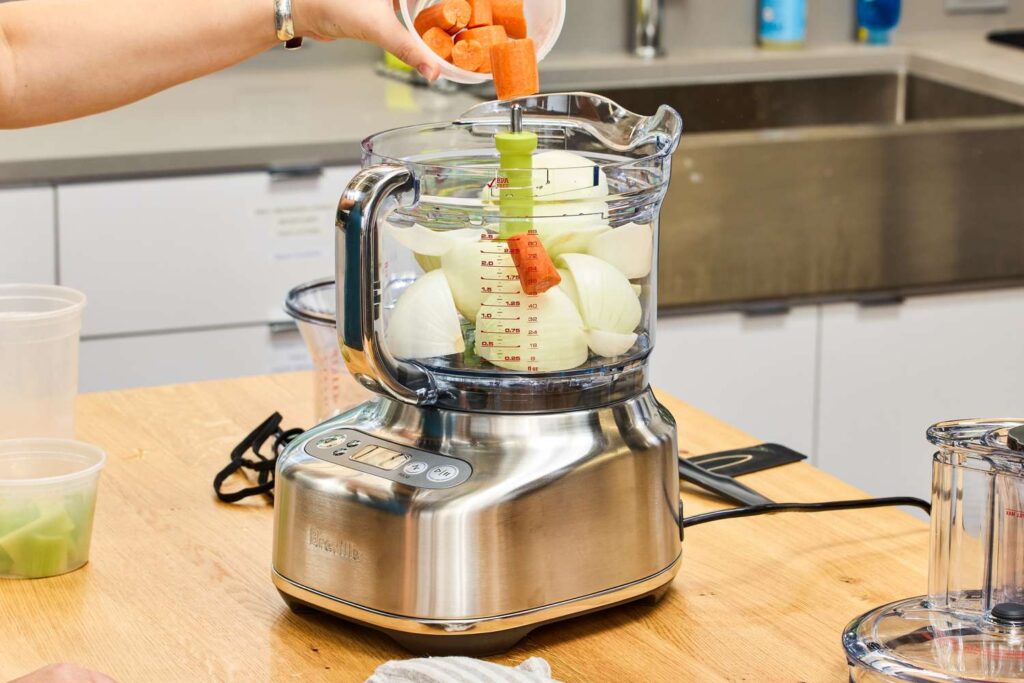
The food processor treats all materials in the bowl equally. It will process wet ingredients and dry ingredients, but combining them in the wrong order or proportion produces results that are neither what the wet preparation nor the dry preparation should look like.
The most common example is adding liquid ingredients to the bowl before dry ingredients when making pastry dough or breadcrumbs. The liquid coats the bowl and causes the dry ingredients to clump together in a way that the blade cannot break apart efficiently, producing uneven results and requiring considerably more processing time.
The correct approach for most preparations that combine wet and dry ingredients is to start with the dry ingredients processed to the target texture first, then add wet ingredients through the feed tube with the machine running. This allows the blade to distribute wet ingredients evenly through already-processed dry material.
For pastry and dough specifically, adding cold fat cut into small pieces to the dry ingredients and pulsing to a breadcrumb texture before adding the liquid produces the flaky, even texture that pastry requires and that is destroyed by adding liquid first.
5. Ignoring the Feed Tube When Slicing and Shredding
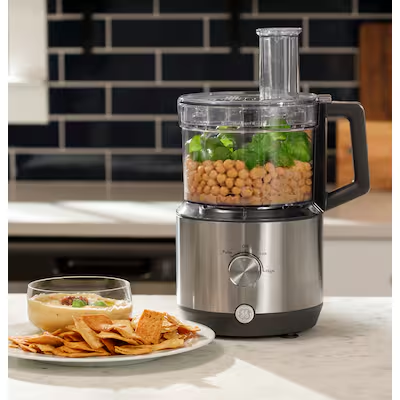
The feed tube on top of the food processor lid is not just a slot for adding ingredients mid-process. It is a precision tool for controlling how ingredients are presented to the slicing and shredding discs, and using it correctly is the difference between even, consistent results and irregular, uneven ones.
When using a slicing disc, ingredients need to be packed into the feed tube in an upright, consistent orientation and pushed down with the food pusher at steady, even pressure. The slicing disc cuts across the cross-section of whatever is presented to it, and ingredients that are crooked, loosely packed, or pushed down at irregular pressure produce slices of different thicknesses.
Packing the feed tube tightly with similarly sized pieces, oriented vertically, and applying consistent downward pressure with the pusher throughout the cut produces uniform slices every time. For round vegetables like cucumbers and zucchini, the large feed tube accommodates multiple pieces side by side, and slicing several at once produces consistent results more efficiently than slicing individually.
For shredding, the same principles apply. Consistent pressure and consistent orientation of the ingredient in the feed tube determine the length and evenness of the shredded result.
6. Running the Machine for Too Long Without Stopping
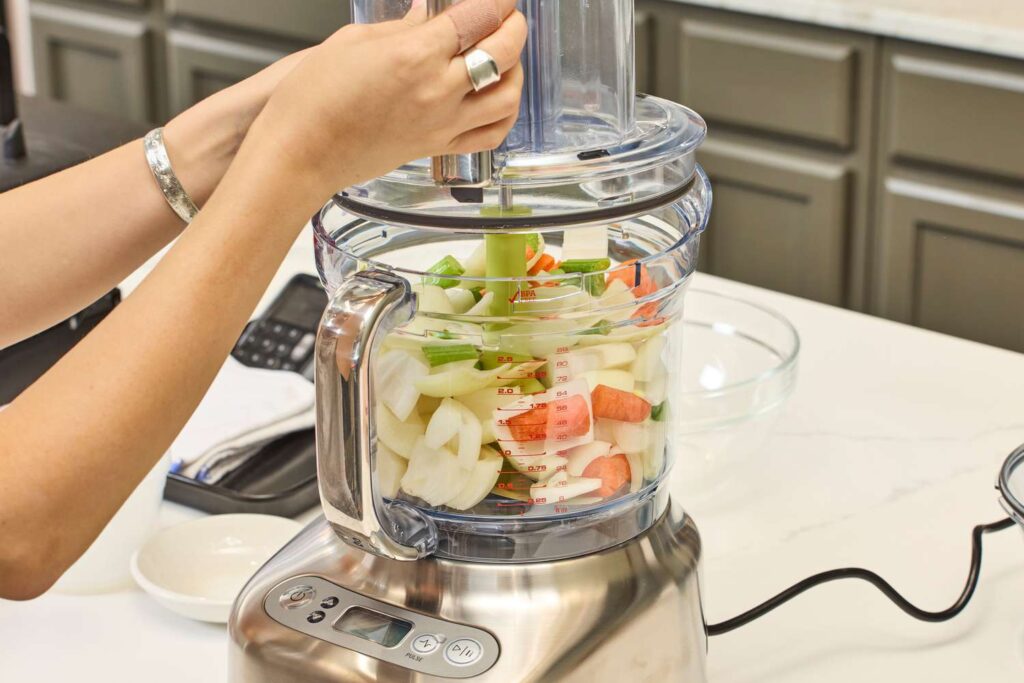
Continuous processing beyond the point where the target texture is reached produces results that are overprocessed, and overprocessed food in a food processor often cannot be corrected.
Hummus that runs thirty seconds too long becomes slightly warmer and slightly looser than intended as the friction of the blade warms the contents. Salsa that runs ten seconds too long becomes a smooth puree rather than a chunky salsa. Nuts processed too long go from finely chopped to nut butter, which is a different preparation entirely.
The correct approach for most food processor tasks is to run the machine in shorter intervals than you think you need and check the texture between runs. For pulse tasks, check after every five or six pulses. For continuous processing tasks, stop and check every fifteen to twenty seconds.
This takes slightly longer in real time but produces the correct texture on the first attempt rather than requiring a second batch to correct the first one.
7. Adding Too Much Liquid at Once
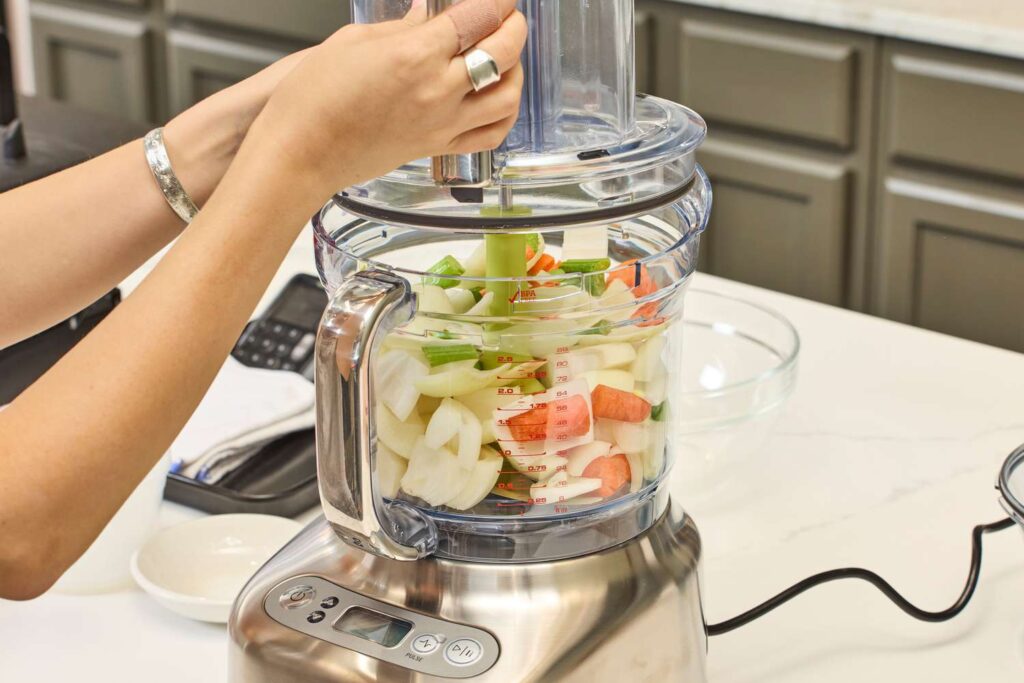
When a recipe requires liquid to be added to a food processor preparation, adding it all at once is one of the most reliable ways to produce a preparation that is too thin, too smooth, or structurally wrong.
Hummus is the clearest example. The chickpea mixture processes first without liquid to a coarse texture, then liquid is added gradually, a tablespoon at a time, with the machine running between additions. This gradual addition allows the processor to emulsify the liquid into the preparation and lets you stop exactly when the texture you want is reached.
The same principle applies to pastry dough, pestos, and sauces. The difference between a perfectly textured result and a wet, loose one is often just a tablespoon or two of liquid, and adding all the liquid at the beginning of the process removes your ability to stop at the right point.
Adding liquid through the feed tube with the machine running rather than stopping the machine, adding liquid, and restarting produces a more even distribution of the liquid through the preparation and gives you better control over the rate of addition.
8. Using the Wrong Blade for the Task
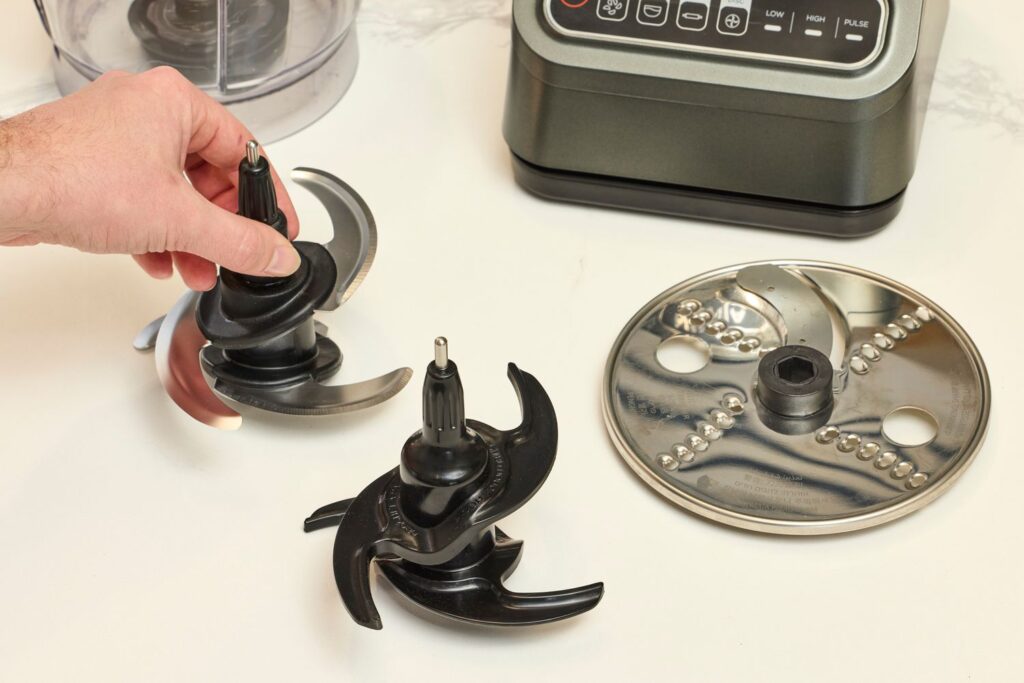
Most food processors come with at least three attachments: an S-shaped chopping and mixing blade, a slicing disc, and a shredding disc. Some include additional blades for specific tasks. Beginners often default to the S-blade for everything because it is the most familiar, and this produces disappointing results for tasks that the other attachments handle better.
The S-blade, also called the multipurpose blade or chopping blade, is appropriate for chopping, pureeing, mixing, and making dough. It is not appropriate for producing uniform slices or consistent shreds, which require the dedicated slicing and shredding discs that are designed to produce those specific results through their geometry rather than through random contact between blade and ingredient.
Trying to produce shredded cheese with the S-blade, for example, produces uneven crumbles rather than uniform shreds. The shredding disc produces clean, even shreds in seconds. Trying to produce uniform cucumber slices with the S-blade produces rough chopped pieces. The slicing disc produces even, precise rounds.
Taking two minutes to identify which blade is appropriate for the task before starting saves significantly more time than using the wrong blade and then dealing with the suboptimal result.
9. Not Scraping Down the Sides During Processing
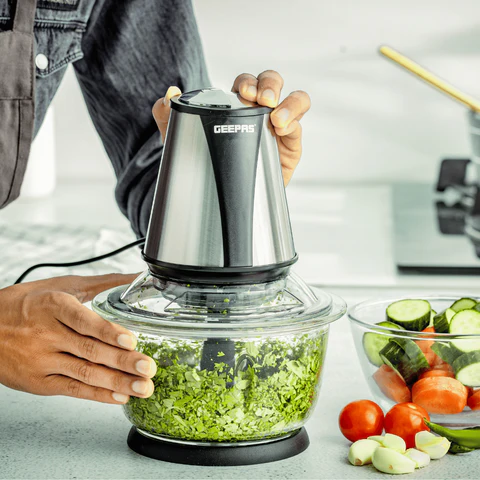
During continuous processing, ingredients on the inner walls of the bowl above the blade reach are not being processed. They rest on the sides of the bowl while the blade works through the material below. Over a longer processing session, this means a significant portion of the total volume may go through very little actual processing time.
This is why preparations like hummus, pesto, and nut butter require periodic scraping. Stopping the machine, removing the lid, and scraping the sides and bottom of the bowl with a spatula redistributes this unprocessed material back into the active zone near the blade. Running the machine again then processes this redistributed material to the same degree as what has already been processed below.
For most standard chopping tasks, scraping is not necessary because the short processing time does not allow significant material to accumulate on the walls. For longer blending and pureeing tasks, scraping once or twice during the process makes the difference between a preparation with a uniform texture throughout and one with inconsistent fine-processed sections and coarser unprocessed sections.
The right tool for scraping a food processor bowl is a flexible silicone spatula that can conform to the curved inner wall of the bowl and reach into the area between the blade assembly and the bowl floor. Rigid tools miss the material right at the base of the blade.
10. Attempting to Process Very Hot Liquids
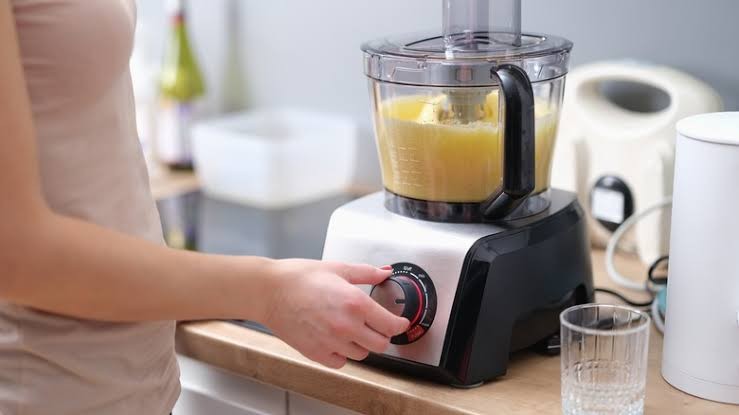
Hot liquid in a food processor presents a specific and genuinely dangerous risk that beginners sometimes discover the hard way. Hot liquid expands significantly when the processor blades create turbulence and agitate it at high speed, and the expanding steam creates pressure inside the sealed bowl that can force the lid off explosively, spraying hot liquid with considerable force.
The general guidance from most food processor manufacturers is to allow hot liquids to cool to at least room temperature before processing, or to process in very small quantities with the lid held firmly in place and the machine started at the lowest available speed. Some newer food processors include a vented lid specifically to address this issue, but the standard sealed lid design is not appropriate for very hot liquids.
For hot soups and sauces that need to be pureed immediately rather than after cooling, an immersion blender is a safer tool because it operates directly in the pot without the sealed container that creates pressure. If the food processor must be used for a warm preparation, allow it to cool until it is just above room temperature and process in batches no larger than half the bowl capacity.
11. Not Cleaning the Machine Immediately After Use
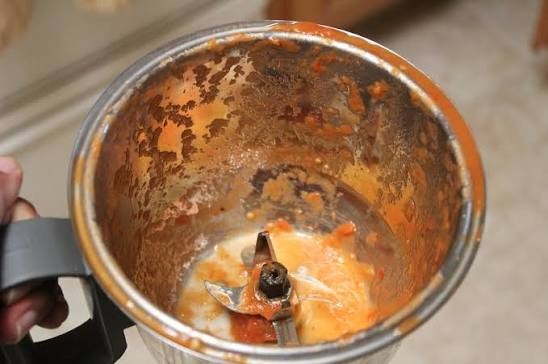
Food residue in a food processor hardens as it dries, and the geometry of the bowl and blade assembly creates areas where residue can accumulate that are difficult to reach after drying has occurred.
The easiest cleaning of any food processor takes place immediately after use, while residue is still wet and loose. A quick rinse of the bowl and blade under warm water removes most residue in seconds. Following this with a wash using warm soapy water and a soft brush that can reach the areas around the blade assembly hub completes the cleaning without any scrubbing.
Dried food residue, particularly from sticky preparations like hummus, dough, and thick sauces, requires soaking and considerably more effort to remove than the same preparation removed immediately after use. Building the habit of rinsing the bowl immediately after emptying it, before moving on to any other kitchen task, keeps cleaning simple and prevents residue buildup.
The blade assembly specifically requires careful attention. Residue that accumulates between the blade arms and the central hub of the assembly is difficult to remove without a small brush designed to reach these areas, and it can harbour bacteria if not cleaned properly. A dedicated bottle brush or toothbrush reserved for this purpose reaches these areas effectively.
12. Storing the Machine Fully Assembled
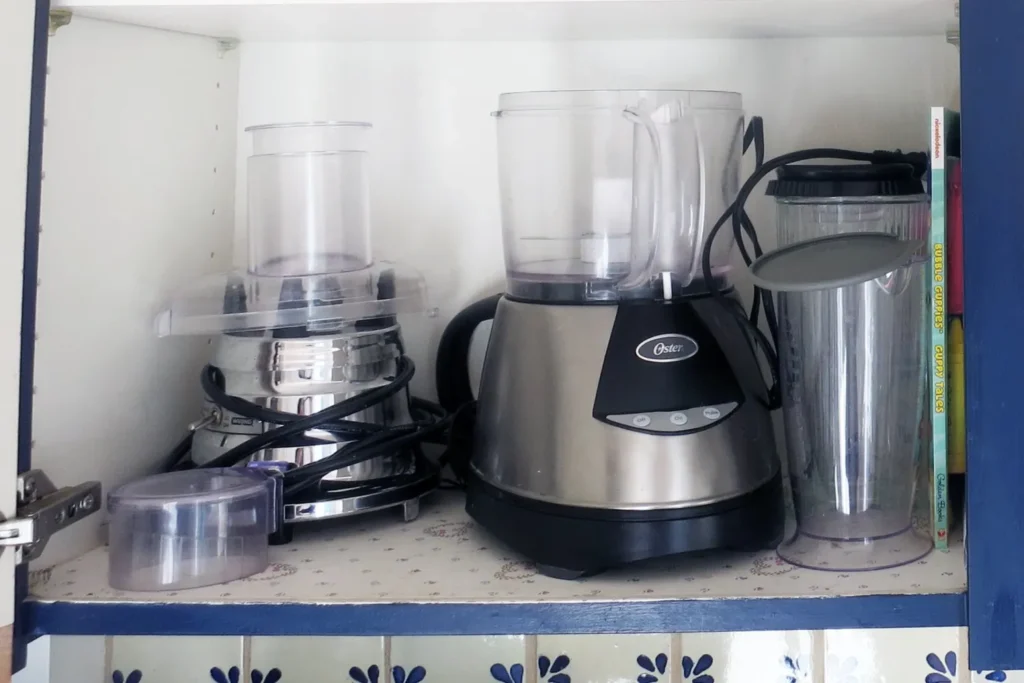
Many beginners store the food processor with all components assembled as they were after use, on the logic that it is quicker to set up for the next use. This creates two practical problems over time.
The first is that any residual moisture trapped between the lid, bowl, and base cannot evaporate when the unit is stored sealed. Trapped moisture creates conditions for bacterial growth and unpleasant odours that transfer to subsequent preparations. Storing the components separately allows air circulation and complete drying between uses.
The second issue is that constant pressure on the seal between the bowl and the base can degrade the seal over time. Repeated use naturally compresses the seal, and storing the machine with the seal under constant pressure accelerates this compression and shortens the seal’s effective life.
Storing the bowl, lid, and blade assembly separately either in the cabinet beside the base unit or inside the bowl with the lid placed loosely on top rather than locked down keeps everything accessible and allows drying without the problems of fully assembled storage.
13. Expecting the Food Processor to Replace a Chef’s Knife
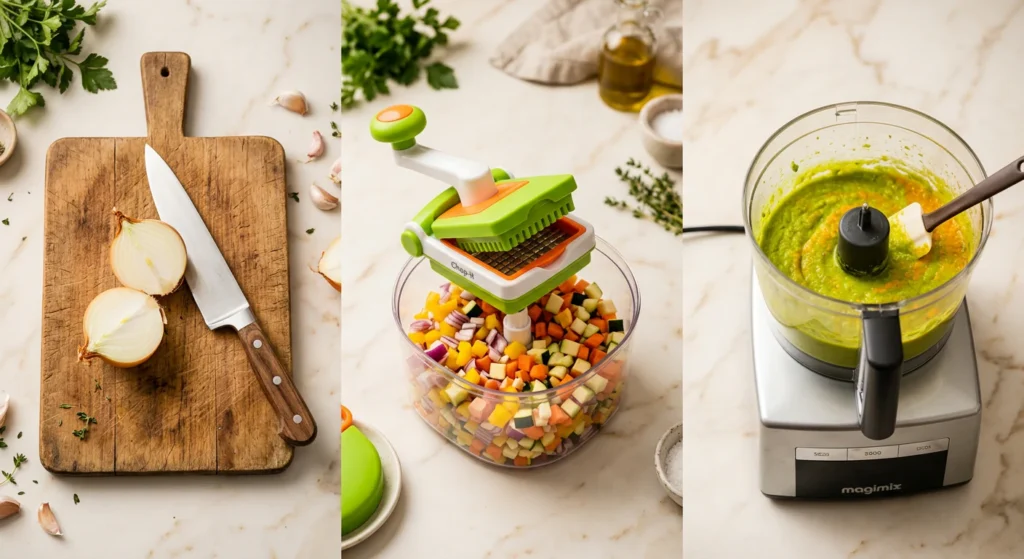
A food processor is a powerful and genuinely versatile tool, but it does not do every cutting and chopping task better than a knife. Understanding which tasks it genuinely improves and which tasks are better suited to knife work prevents the frustration that comes from expecting it to excel at everything.
The food processor excels at tasks requiring high volume, consistency across many pieces, and speed for repetitive work. Chopping a full onion for a soup, slicing an entire zucchini into uniform rounds, or shredding a large block of cheese for a recipe are all tasks where the food processor is dramatically faster and more consistent than knife work.
It is less suited to fine precision cuts, small-quantity preparations, and tasks where the specific shape of the cut matters for presentation. Julienning vegetables into fine matchsticks, producing a decorative brunoise, or cutting a single onion into specific-sized dice for a garnish are all tasks that a sharp knife and practiced technique handle better than the food processor.
Recognising the food processor as a high-volume, high-speed production tool rather than a universal replacement for knife skills places it in the role it genuinely excels at and produces the satisfaction that comes from using any tool correctly.
14. Not Using the Pulse Function for Dough
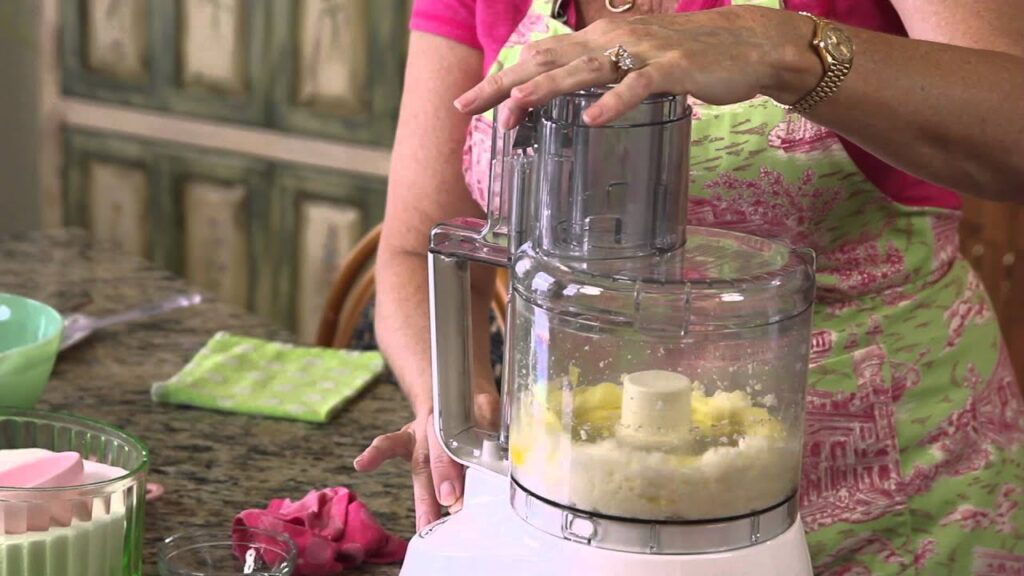
Making pastry dough in a food processor is one of the most genuinely useful applications of the machine, because the food processor’s speed keeps the fat cold enough to produce flaky pastry in a way that hand mixing struggles to match in warm kitchens. But the technique matters enormously, and beginners who use continuous processing for dough consistently produce tough, overworked pastry rather than the tender, flaky result the machine is capable of producing.
The reason is gluten development. When flour is mixed with water and worked continuously, the gluten proteins in the flour align and strengthen, producing an elastic, chewy dough that is appropriate for bread but destructive to pastry. Pastry requires minimal gluten development, which is achieved by keeping mixing time as short as possible.
The correct technique is to use very brief pulses, no longer than half a second each, and stop as soon as the dough just begins to come together into clumps. At this point the dough looks rough and unfinished, with some dry areas still visible. It should not look smooth or fully combined. Pressing a handful of this rough mixture together and watching it hold its shape is the test for whether it is ready. It then comes together fully when shaped and chilled.
A well-made food processor pastry dough takes eight to twelve pulses from the point of adding the liquid. More than this overworks the dough and sacrifices the flakiness that was the point of using the machine.
15. Not Reading the Specific Instructions for Your Model
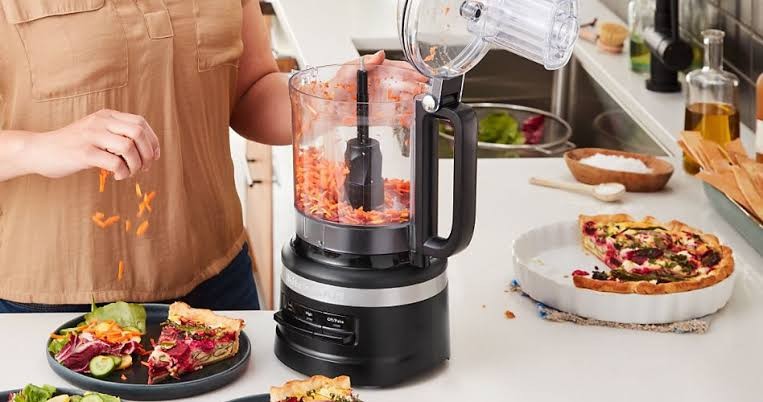
Food processors from different manufacturers vary in motor power, bowl design, blade geometry, and the specific tasks their mechanisms are optimised for. Generic food processor advice applies to the category in general, but the specific instructions that came with your machine contain information about that machine’s particular capabilities and limitations that generic advice cannot provide.
Maximum processing times for different tasks, specific ingredients or preparations that the manufacturer recommends against, the correct way to assemble and disassemble the blade assembly, the appropriate cleaning method for your specific bowl and blade materials, and the specific locations of safety switches that must be engaged for the machine to operate are all things that vary between models and that are covered in the manual.
The manual for most food processors is also where you will find recipes and preparation guides specific to that machine’s capabilities, which are written with knowledge of the motor power, blade speed, and bowl geometry of the specific model you own. These recipes are often more reliable starting points than generic recipes that may have been developed on a machine with very different characteristics.
If the physical manual has been lost, most manufacturers make current and archived manuals available as downloadable PDFs on their websites. Taking twenty minutes to read the manual for your specific model before the first use prevents the majority of user errors that occur in the first weeks of ownership.
The Common Thread
Looking across all fifteen of these mistakes, the pattern is consistent. Most food processor problems come from the same two underlying causes: either the machine is being used beyond what it can do comfortably given its design, or the technique being applied does not match what the specific task requires.
The food processor is a genuinely powerful and versatile kitchen tool that makes a wide range of cooking tasks faster and more consistent than doing them by hand. Used correctly, with appropriate loading, appropriate speed selection, appropriate blade selection, and appropriate ingredient preparation, it produces results that are difficult to achieve with any other single kitchen tool.
The investment required to use it correctly is not equipment. It is knowledge, attention, and a willingness to adjust technique based on what the results are telling you.