Why Your Countertop Dishwasher Is Not Cleaning Properly (Every Cause Explained and Fixed)
By Amelia Harper | Kitchen and Home Improvement Writer | Updated July 2026
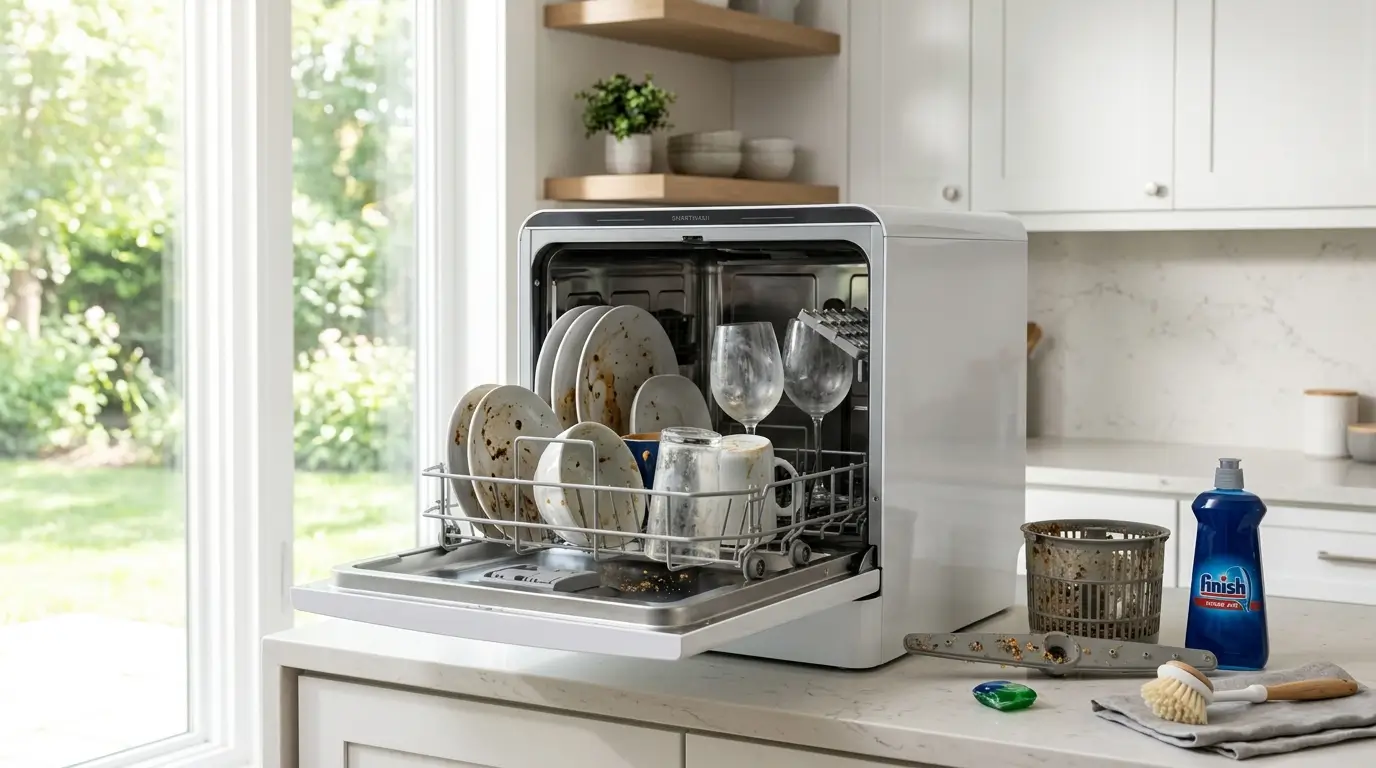
A countertop dishwasher that is not cleaning properly is one of those appliances problems that starts as a minor annoyance and quickly becomes a daily frustration. You run a full cycle, open the door, and the dishes come out with food still attached, glasses with a cloudy film, or cutlery that looks barely rinsed.
You run them again and the results are nearly identical. At some point you start wondering whether the machine is broken or whether you are simply doing something wrong.
In most cases, the answer is that something specific and correctable is happening, and it falls into one of a handful of identifiable categories. Countertop dishwashers are simpler machines than full-size built-in units, and their cleaning mechanism depends on a small number of variables all working correctly simultaneously. When any one of those variables is off, the cleaning results deteriorate in predictable ways.
I have been writing about kitchen appliances for nearly a decade, and countertop dishwasher troubleshooting is a subject where the causes are consistent and the fixes are almost always straightforward once you know what to look for. Here is every reason a countertop dishwasher fails to clean properly, with the specific correction for each cause.
1. You Are Not Using the Right Detergent or the Right Amount
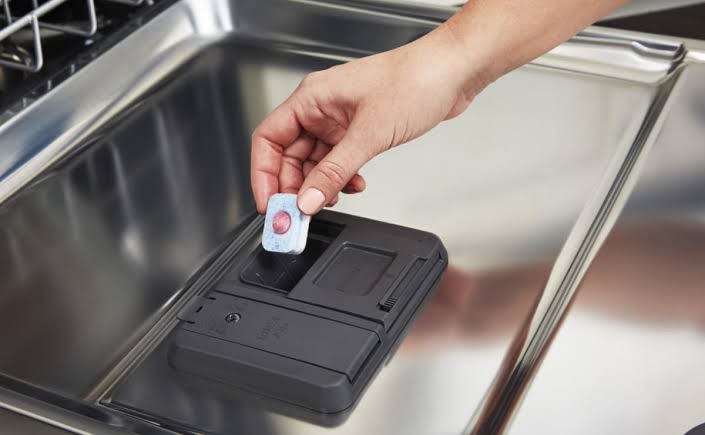
Detergent type and quantity are the most common causes of poor cleaning results in countertop dishwashers, and they are the first variables to check before investigating anything else.
Countertop dishwashers require detergent formulated specifically for automatic dishwashers. Dish soap designed for hand washing produces excessive suds when used in a dishwasher, which cushions the water jets and prevents them from contacting the dishes with the force needed for effective cleaning. The suds also overflow the machine during operation and can damage internal components over time.
Detergent quantity matters as much as type. Using too little detergent leaves insufficient cleaning agent in the water to break down grease and food residue. Using too much, counterintuitively, can also impair cleaning by creating too much foam in the wash water and by leaving residue on dishes after the rinse cycle.
Most countertop dishwashers use far less detergent than full-size machines, typically one teaspoon to one tablespoon per cycle depending on the cycle and the detergent concentration.
The detergent format affects performance as well. Pods and tablets dissolve at specific temperatures and are formulated for standard dishwasher cycle conditions. In countertop dishwashers with shorter cycles or cooler wash temperatures than standard machines, pods may not dissolve completely before the cycle ends, leaving partially dissolved detergent on dishes.
Powder or gel detergents dissolve more reliably across a wider range of cycle conditions and are often more appropriate for compact machines.
2. The Spray Arms Are Blocked or Clogged
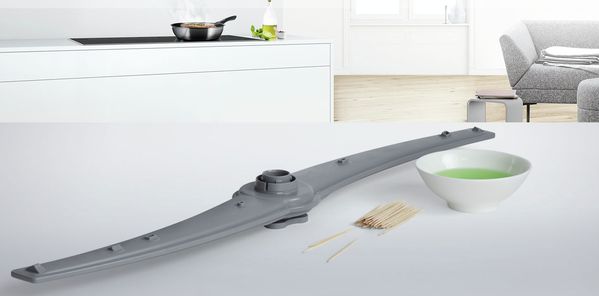
The spray arms are the rotating components that distribute water throughout the dishwasher interior during the wash cycle, and they are the mechanical heart of the cleaning process. When they are blocked, water distribution is uneven and some dishes receive adequate cleaning while others receive very little.
Spray arm blockages occur in two ways. The first is physical obstruction from tall dishes, utensil handles, or items that have shifted during the cycle and are now positioned to block the spray arm’s rotation path. When a spray arm cannot rotate freely because an item is in its path, it delivers water only in the direction it is pointed rather than distributing it throughout the machine.
The second type of blockage is internal clogging of the spray arm holes from mineral scale, food particles, or detergent residue. The spray arm holes are small and can be partially or completely blocked by these deposits, which reduces water flow through the affected holes and creates uneven water distribution across the dishes.
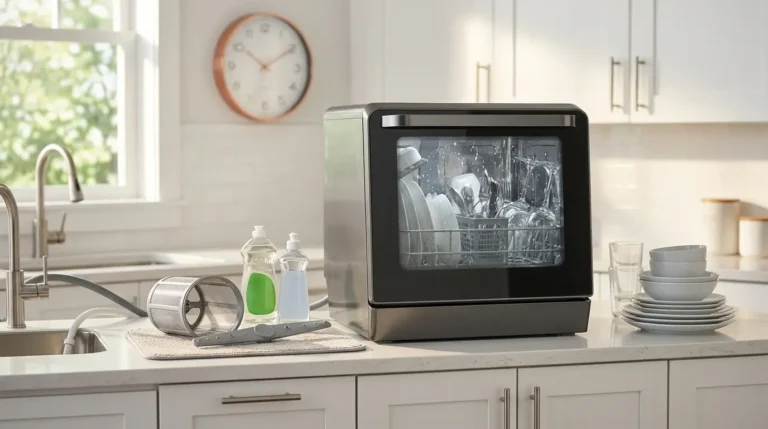
Checking the spray arms before loading is a useful habit. After every few cycles, remove the spray arms according to the machine’s instructions and rinse them under running water, using a toothpick or a thin wire to clear any blocked holes. Checking that no loaded items obstruct the spray arm rotation path before starting the cycle prevents the physical obstruction problem from occurring.
3. The Dishes Are Loaded Incorrectly
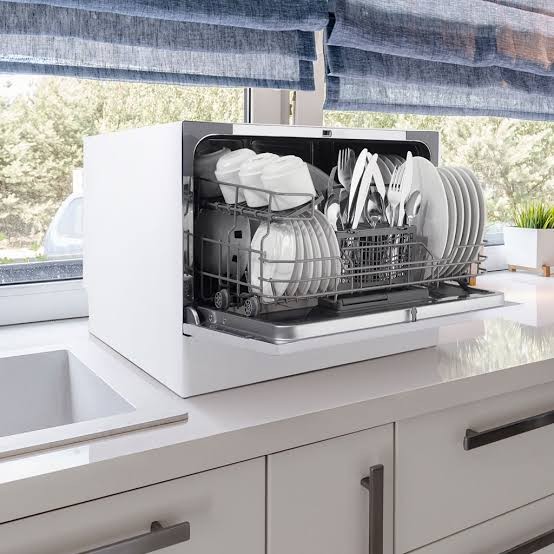
Loading method has a direct and significant effect on cleaning results, and most cleaning failures attributed to machine problems are actually caused by loading that prevents water from reaching all surfaces that need cleaning.
Dishes stacked on top of each other, nested bowls that trap water and food between them, and cups placed right-side-up that collect water rather than allowing it to drain all prevent adequate water contact with the surfaces that need cleaning. These areas essentially never get cleaned during the cycle regardless of how well the machine is functioning.
The general principles for effective dishwasher loading are consistent: dishes should face the water source, which is the spray arm. Bowls, pots, and concave items should be angled downward so water can reach their inner surfaces and drain freely rather than collecting. Glasses and cups should be placed upside-down. Items should not touch each other, because contact between dishes blocks water from reaching the contact surfaces.
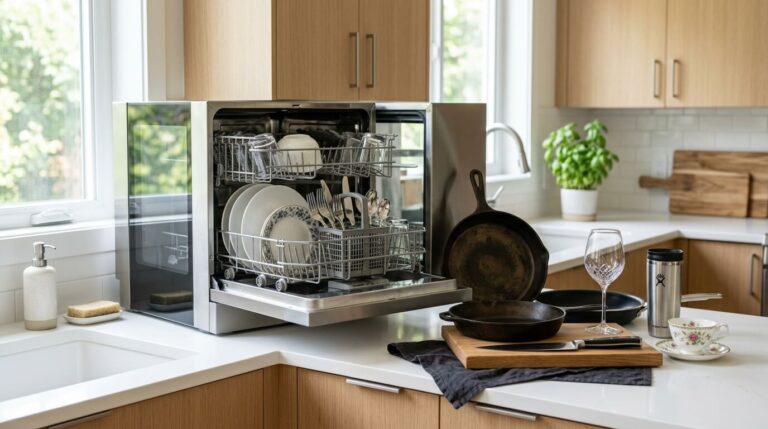
Cutlery should be loaded with handles pointing down in the cutlery basket so the food-contact surfaces face the water spray. The exception is knives, which should be loaded with handles up for safety. Nesting spoons and forks together in the cutlery basket creates the same obstruction problem as nesting bowls, preventing water from reaching the concave surfaces.
If you’ve tried every troubleshooting step and your dishwasher still isn’t delivering clean dishes, it may be time for a replacement. Explore our guide to the top countertop dishwashers for spotless results and compare models with stronger cleaning performance and better efficiency.
4. The Filter Is Dirty or Clogged
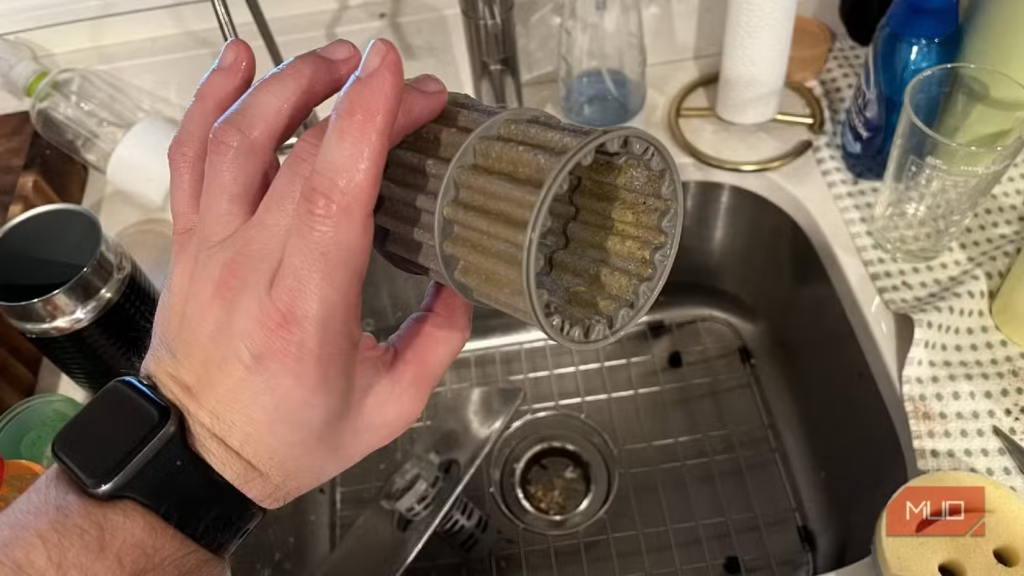
Every countertop dishwasher includes a filter system that captures food particles from the wash water to prevent them from being redeposited on clean dishes during the cycle. A filter that is not regularly cleaned becomes clogged with accumulated food debris and dramatically reduces cleaning effectiveness.
When the filter is clogged, the water circulation system cannot move water through the machine at the design flow rate. Reduced water pressure means reduced spray arm velocity, which means less cleaning force applied to the dishes. In severe cases, a heavily clogged filter can reduce water flow to the point where dishes receive little more than a light rinse rather than a proper wash.
Food particles that accumulate in a clogged filter also decompose over time and produce odour that is detectable on dishes after the cycle and that makes the machine smell unpleasant when opened. This food decomposition odour is often mistaken for a plumbing or machine fault when it is actually a maintenance issue with a straightforward solution.
Most countertop dishwasher filters are located at the bottom of the interior beneath the lower spray arm and are designed to be removed without tools. Rinse the filter under warm running water after every three to four cycles, and scrub it gently with a soft brush if food particles have dried onto the mesh. Replace the filter according to the manufacturer’s schedule, which is typically every six to twelve months depending on use frequency.
5. The Water Temperature Is Too Low
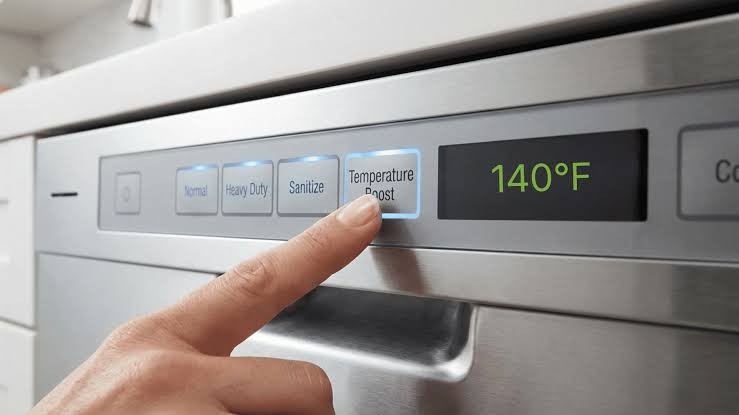
Water temperature is one of the most impactful variables in dishwasher cleaning effectiveness and one of the least visible, because the wash water is enclosed inside the machine during the cycle and its temperature is not directly observable.
Dishwashers clean through a combination of mechanical action from the spray arms and chemical action from the detergent. The chemical action of the detergent, specifically its ability to break down fats, proteins, and mineral deposits on dishes, is significantly temperature-dependent. At temperatures below 120 degrees Fahrenheit, common dishwasher detergent formulations do not activate fully and their cleaning performance is substantially reduced.
Countertop dishwashers that draw water from a cold tap, particularly during winter when incoming water is colder, may not heat the water sufficiently to reach effective washing temperature within the cycle time. The machine’s internal heater is designed to supplement the incoming water temperature, but if the incoming water is very cold, the supplemental heating may not bring it to the optimal range before the cycle progresses past the wash phase.
Running the hot tap in the sink until it reaches its maximum temperature before connecting the dishwasher inlet hose ensures the machine starts with hot water rather than cold. This simple practice can significantly improve cleaning results in machines that are underperforming specifically because of low inlet water temperature.
6. The Machine Needs Descaling
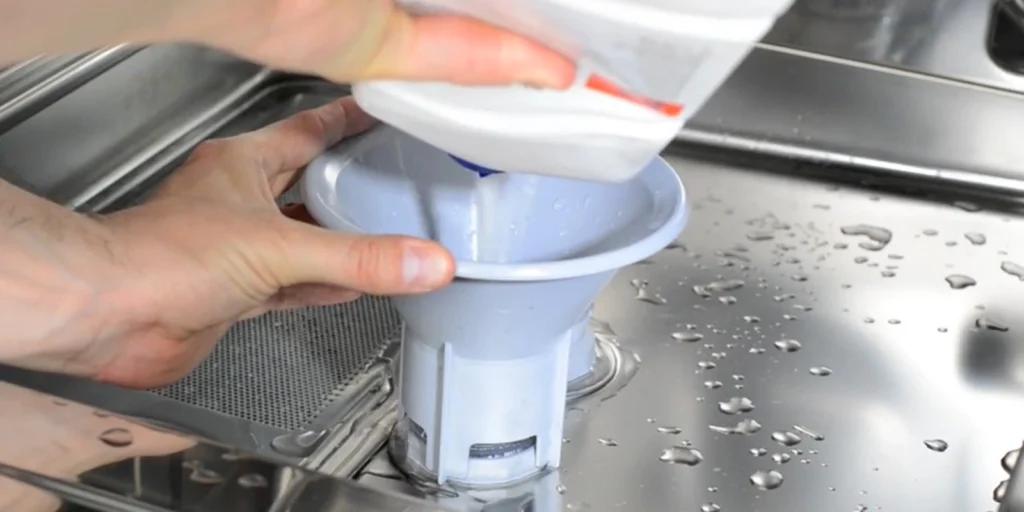
Mineral scale from hard water accumulates inside countertop dishwashers in the same way it accumulates in coffee makers, kettles, and other water-heating appliances. In dishwashers specifically, scale builds up on the heating element, inside the pump, on the spray arm mechanisms, and throughout the internal water passages.
Scale on the heating element reduces its efficiency, resulting in lower wash water temperatures that compromise detergent activation and cleaning effectiveness. Scale inside the pump and water passages reduces water pressure throughout the machine. Scale on the spray arm mechanisms can restrict rotation. All of these effects compound over time and progressively degrade cleaning performance.
The cleaning results from a scaled-up machine deteriorate gradually rather than suddenly, which means the decline is easy to miss until the performance gap from when the machine was new has become quite large. If the machine has been in use for several months or longer without descaling, and cleaning performance has declined from its initial level, scale is a very likely contributing factor.
Descaling a countertop dishwasher requires running a descaling cycle with a descaling solution appropriate for dishwashers, either a commercial product or a homemade solution of white vinegar and water, with no dishes in the machine. Consult the machine’s manual for the specific descaling procedure recommended by the manufacturer, as procedures vary between models.
7. You Are Overloading the Machine
The capacity stated in the machine’s specifications represents the maximum number of place settings the machine can clean effectively when loaded correctly, not the maximum physical number of items that can fit inside.
When dishes are packed into the machine beyond its effective capacity, the spray arm cannot distribute water to all surfaces because some areas of the loaded items block the water path to other items. The result is that some dishes in favourable positions come out clean while dishes in positions blocked by other items come out with food still attached.
The temptation to maximise each dishwasher cycle is understandable, particularly with the smaller capacity of countertop machines. But running two cycles with correctly loaded half-capacity loads produces significantly better cleaning results than one cycle with an overloaded machine and achieves clean dishes more reliably than hoping a heavily packed cycle will succeed.
Checking each item as it is loaded to ensure it has clear water access and is not blocking access to another item is the habit that prevents overloading-related poor results most effectively.
If your dishwasher isn’t cleaning properly, unusually long wash cycles could be part of the problem. Read our guide on what causes slow countertop dishwasher cycles to discover why your appliance takes longer than expected and how to improve its efficiency.
8. The Water Inlet Is Kinked or Restricted
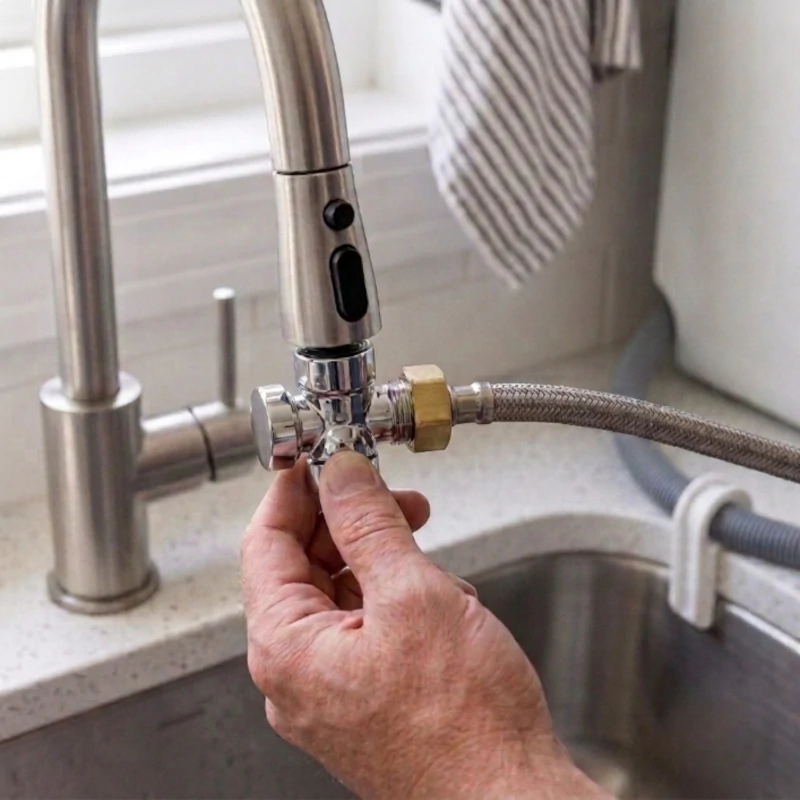
The water supply to a countertop dishwasher arrives through an inlet hose connected to the kitchen tap. If this hose is kinked, pinched, or positioned in a way that restricts water flow, the machine receives inadequate water volume and cleaning performance declines.
A kink in the inlet hose is the most obvious form of restriction and typically produces very clear symptoms: the machine takes much longer than normal to fill, the spray arms operate at low pressure, and dishes come out with very little cleaning having occurred. Visually tracing the inlet hose from the tap connection to the machine entry point and checking for any sharp bends, compression by heavy objects, or other physical restriction addresses this quickly.
Water pressure at the tap connection also affects filling rate. Most countertop dishwashers require a minimum water pressure of around 10 to 15 PSI to fill within the expected timeframe. In buildings with very low water pressure, the machine may not fill completely within the fill phase of the cycle, resulting in insufficient water volume for the wash.
Ensuring the inlet hose is routed without sharp bends, not compressed under or behind any objects, and connected to a tap with adequate pressure ensures the machine receives the water volume it needs for effective cleaning.
9. The Detergent Dispenser Is Blocked or Damaged
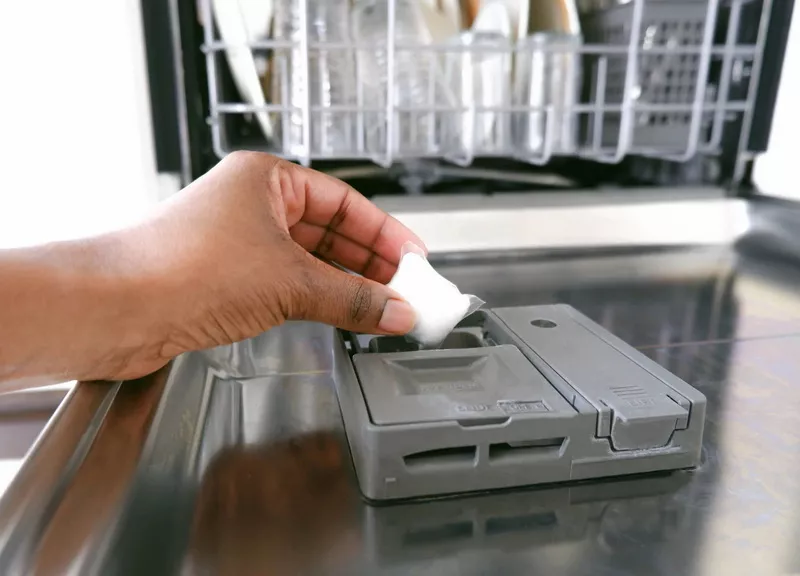
In machines that include a detergent dispenser compartment, a blocked or damaged dispenser prevents the detergent from being released at the correct point in the wash cycle, which means the water circulates throughout the cycle without the detergent needed for effective cleaning.
Detergent dispensers can become blocked by dried detergent residue that has accumulated over multiple cycles without adequate rinsing. The residue hardens and physically prevents the dispenser door from opening at the correct time, leaving the detergent inside and unavailable for the wash.
Inspect the dispenser compartment after each cycle to confirm it opened during the wash. If it consistently remains closed or partially closed, cleaning the compartment with a soft brush and warm water to remove any dried residue restores its function. If the dispenser mechanism is damaged or the spring is broken, a repair or replacement may be necessary.
For machines without a separate detergent dispenser, where detergent is added directly to the interior before each cycle, ensuring the detergent is placed in the correct position and is not washed away before the main wash phase begins is the relevant consideration.
10. Rinse Aid Is Not Being Used
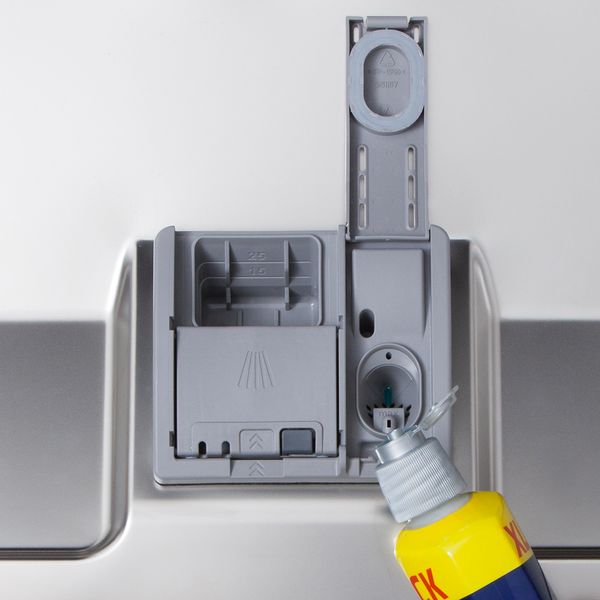
Rinse aid is a commonly overlooked component of dishwasher cleaning, and its absence produces one of the most visible forms of poor dishwasher results: cloudy glasses, water spots on dishes, and dishes that appear to have a film even when the detergent performance is otherwise adequate.
Rinse aid works by reducing the surface tension of the rinse water, which causes it to sheet off dishes rather than forming droplets that dry into mineral spots. Without rinse aid, even properly cleaned dishes develop the white haze and water spot marks that most people associate with hard water but that are actually caused by the absence of rinse aid as much as by the mineral content of the water.
Most countertop dishwashers include a rinse aid dispenser that releases a small amount of rinse aid during the final rinse phase. Filling this dispenser according to the machine’s instructions and checking it every two to three weeks during regular use ensures rinse aid is present during every cycle.
For machines without a built-in dispenser, adding a small amount of rinse aid directly to the interior of the machine before the cycle, or using a dishwasher tablet that includes a built-in rinse aid element, provides the same spotting-prevention benefit.
11. The Cycle Selected Does Not Match the Load
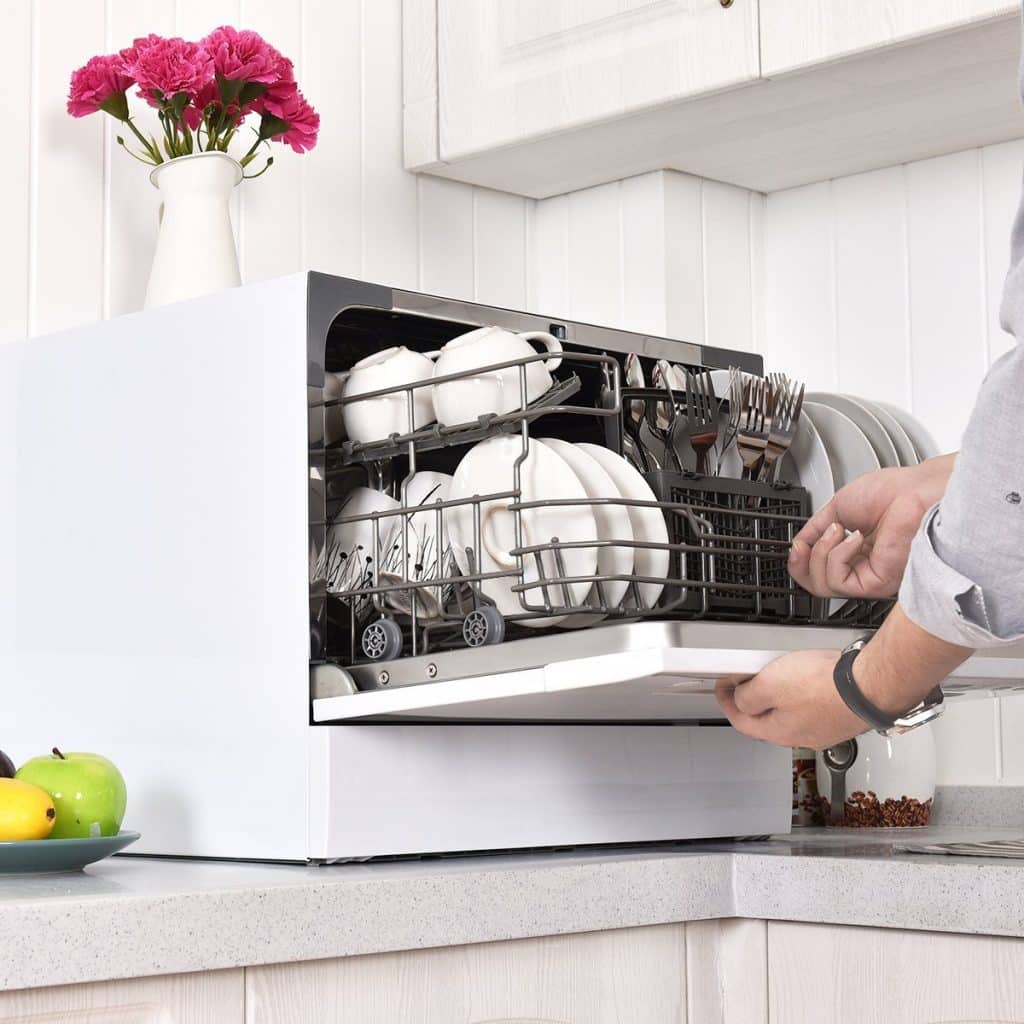
Most countertop dishwashers offer multiple wash cycle options that differ in water temperature, wash duration, and wash intensity. Selecting a cycle that does not match the cleaning demands of the load produces predictable poor results.
A quick or economy cycle is appropriate for lightly soiled dishes that were used for simple preparations like toast, sandwiches, or fruit and were loaded promptly without significant drying time. These cycles use less water and lower temperatures, which are adequate for light soil but genuinely insufficient for heavily soiled items.
Heavily soiled dishes, greasy pots and pans, items with dried or baked-on food, and baby bottles that require sanitising all need a normal or intensive cycle with higher temperatures and longer wash phases. Using a quick cycle for these items is one of the most common reasons for consistently poor cleaning results because the cycle is simply not designed to handle the level of soil present.
Matching the cycle to the actual condition of the dishes being loaded, rather than defaulting to the quickest option to save time or energy, is the calibration habit that prevents cycle-mismatch cleaning failures.
Poor cleaning performance can sometimes be caused by hidden mold and moisture buildup inside the appliance. Explore our guide to keeping your countertop dishwasher free from mold and learn simple maintenance habits that help it stay clean, fresh, and efficient.
12. The Dishes Have Dried Food That Was Not Pre-Rinsed

Countertop dishwashers are designed for dishwasher-level cleaning, which handles most fresh food residue effectively. They are not designed to dissolve heavily dried, baked, or caked-on food that has been left to harden on dishes before loading.
Food that has dried onto dishes over several hours or days before loading requires pre-rinsing or brief soaking before the dishwasher can clean it effectively. The spray arm water pressure and the cycle duration in a countertop machine are calibrated to handle normal food residue, not to reconstitute and dissolve hardened food that has the mechanical properties of cement.
A brief rinse under the tap before loading, or a short soak in warm water for items with baked-on residue, removes the material that the dishwasher cannot handle and leaves only the normal residue that the machine cleans effectively. This is not a workaround for a machine limitation but rather the appropriate preparation for items that genuinely have more residue than a dishwasher cycle is designed to address.
13. The Machine Itself Needs Cleaning
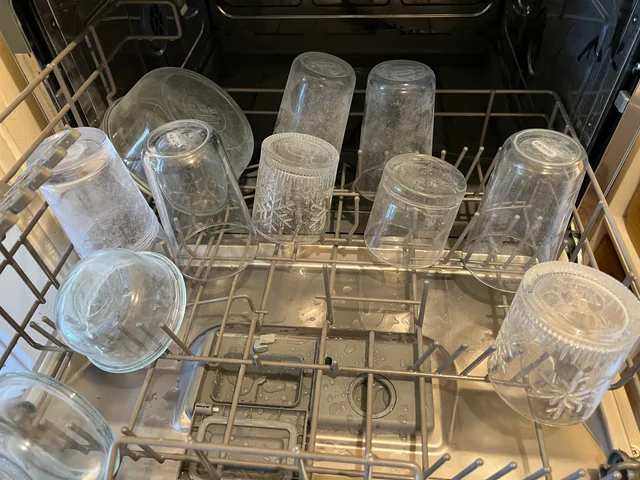
A countertop dishwasher that cleans dishes cannot simultaneously be dirty inside, but this paradox is exactly what develops when the machine interior is never deliberately cleaned. The filter, spray arms, interior walls, and drain area accumulate grease, mineral scale, and food residue over time that progressively impairs every aspect of the cleaning process.
Running a cleaning cycle with a dishwasher cleaning tablet or with a cup of white vinegar placed on the top rack of an otherwise empty machine removes this accumulated residue from internal surfaces that regular dish washing cycles do not adequately clean. The cleaning cycle should be run monthly for machines used daily and every six to eight weeks for less frequent users.
After the cleaning cycle, wiping the door seal, the interior walls near the door, and the drain area with a damp cloth addresses the external surfaces that the internal cleaning cycle does not reach. These areas accumulate residue in the same way as the filter but are accessible for direct cleaning rather than requiring a dedicated cycle.
Understanding Why the Machine Stopped Working Well
Looking across every cause in this article, the pattern is consistent. Countertop dishwasher performance is determined by the combined effect of water quality, detergent selection, loading method, machine maintenance, and cycle selection. When all of these are correct, the machine performs at its designed level. When one or more are off, cleaning results deteriorate in specific and identifiable ways.
The diagnostic approach is to work through each potential cause in the order of most common to least common: detergent type and quantity first, then loading, then filter cleanliness, then spray arm condition, then water temperature, then scale buildup, then the remaining causes. Most cleaning problems resolve within the first two or three checks.
A countertop dishwasher that is cleaned, loaded, and supplied correctly performs reliably for many years. The cleaning problems most people experience are not machine failures. They are maintenance and technique issues with straightforward solutions.
Even the best dishwasher can’t clean properly if it’s loaded with unsuitable items. Check out our guide to what not to wash in a countertop dishwasher to avoid damage, improve cleaning results, and keep your appliance running efficiently.
FAQs About Countertop Dishwasher Cleaning Problems
Cloudiness on glasses is almost always caused by the absence of rinse aid, by hard water mineral deposits, or by etching from overly hot water and alkaline detergent applied to delicate glass repeatedly. Try adding rinse aid and see if the cloudiness improves after two or three cycles before investigating other causes.
Selective cleaning failure, where some items are clean and others are not, almost always indicates a loading problem rather than a machine fault. Items that are not clean were probably positioned in a way that blocked water from reaching them, either from the spray arm or through obstruction by another item.
Not necessarily. If dishes are wet and not clean, insufficient water temperature is the most likely cause, preventing detergent from activating properly and reducing the drying function simultaneously. Run the hot tap until it reaches full temperature before starting the cycle and see if both issues improve.
Place a lightweight item like a paper cup at a strategic position in the machine, close the door, and run a cycle. When the cycle ends, check if the cup has moved from its original position. If it has not moved, the spray arm may not be rotating. Remove and inspect the spray arm for blockages in the rotation path.
No. Regular dish soap produces excessive foam that overwhelms the machine’s water management system, reduces cleaning effectiveness significantly, and can damage the pump seals over time. A very small amount of baking soda as a one-time substitute is safer than dish soap if you genuinely have no dishwasher detergent available.
A persistent bad smell after running a cleaning cycle usually indicates food debris accumulated in the drain area or the filter that the cleaning cycle did not fully remove. Remove and thoroughly clean the filter, and manually clean the drain area at the base of the machine interior with a damp cloth and a small brush.
In hard water areas, monthly descaling is appropriate for machines used daily. In soft water areas, descaling every three months is generally sufficient. If you notice reduced spray arm pressure, cloudy dishes despite adequate rinse aid, or a longer cycle time than usual, descale immediately regardless of when the last descaling occurred.