How to Prevent Mold Inside Your Countertop Dishwasher (A Complete Prevention Guide)
By Amelia Harper | Kitchen and Home Appliance Writer | Updated August 2026
Mold inside a countertop dishwasher is one of those problems that develops quietly, in the dark, behind a closed door, and then announces itself all at once. You open the machine to load dishes and the smell hits you before you can see anything. Or you notice dark spots along the door seal that were not there a month ago. Or the dishes come out with a faint musty quality that no amount of rewashing fully removes.
The frustrating part is that a machine specifically designed to clean things with hot water and detergent should not be a hospitable environment for mold. But the conditions inside a countertop dishwasher between uses, warm residual temperature, trapped moisture, small amounts of food residue, and limited air circulation, are precisely the conditions mold thrives in.
Understanding why mold grows where it does inside these machines is what makes prevention both logical and achievable.
I have been writing about kitchen appliances for nearly a decade, and mold in compact dishwashers is a topic I address more frequently than most owners expect. The good news is that mold prevention in a countertop dishwasher is genuinely simple once the contributing conditions are understood and addressed. Here is everything that matters.
Preventing mold starts with proper use as well as regular cleaning. Check out our guide to items you should keep out of your countertop dishwasher to avoid moisture buildup, unpleasant odors, and unnecessary wear.
1. Understand Why Countertop Dishwashers Are Particularly Susceptible to Mold
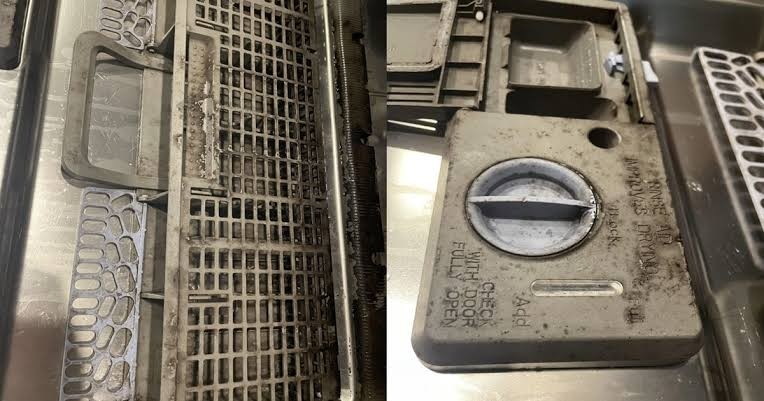
Countertop dishwashers are more susceptible to mold growth than full-size built-in units for several structural and usage reasons that are worth understanding before getting into prevention.
The compact interior volume means that moisture from completed cycles has less space to dissipate. A full-size dishwasher has a larger interior volume with more surface area exposed to the gradual air exchange that occurs as the door seal slowly allows ambient air in over time. A countertop machine traps residual moisture in a smaller, more enclosed space.
Most countertop dishwashers also lack the heated dry cycle that many full-size machines include, which uses the heating element after the final rinse to evaporate residual moisture from dishes and the interior. Without active drying, moisture remains inside the machine for hours after cycle completion, providing the water activity that mold growth requires.
The door seal and the areas immediately behind the door frame are particularly vulnerable because they combine moisture retention, food particle accumulation from the wash water, and reduced air circulation. These are the first areas where mold typically appears and the areas that require the most consistent targeted attention.
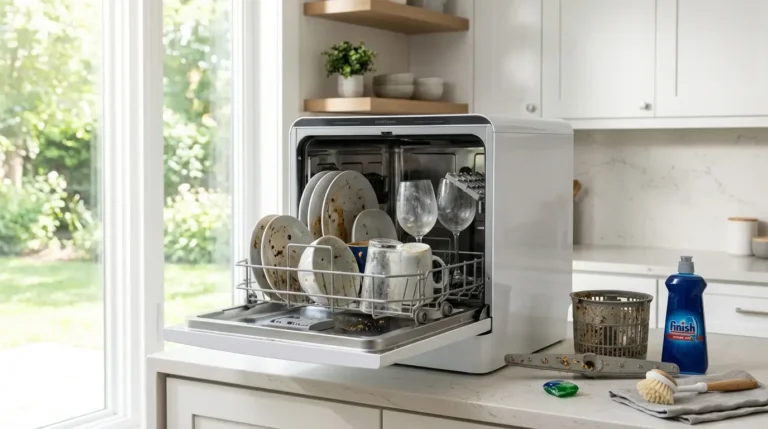
2. Leave the Door Open After Every Cycle
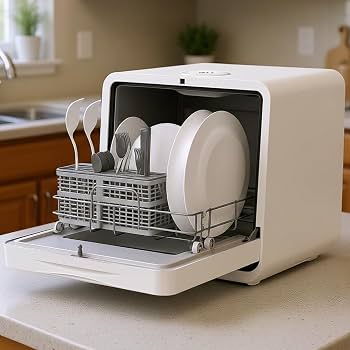
The single most effective mold prevention practice for any dishwasher, and especially for compact countertop units, is opening the door immediately after the cycle ends and leaving it ajar until the interior is completely dry.
When the cycle ends and the door remains closed, the residual heat inside the machine causes the remaining moisture to condense on the cooler interior surfaces, the walls, the door interior, and particularly the seal. This condensation sits on these surfaces in a warm, food-residue-containing environment with no airflow and no evaporation until the interior eventually cools to room temperature, at which point the moisture film simply remains without drying.
Opening the door immediately after the cycle allows the residual heat to do useful work by accelerating evaporation of the moisture on the interior surfaces and dishes. The combination of residual warmth and ambient air circulation dries the interior significantly faster than a closed door allows, dramatically reducing the window of moisture availability that mold requires.
For countertop machines without an auto-open feature, the practice of opening the door as soon as the end-of-cycle signal sounds and leaving it open until the interior feels dry to the touch, typically thirty to sixty minutes, should become as automatic as pressing the start button.
3. Wipe the Door Seal After Every Cycle
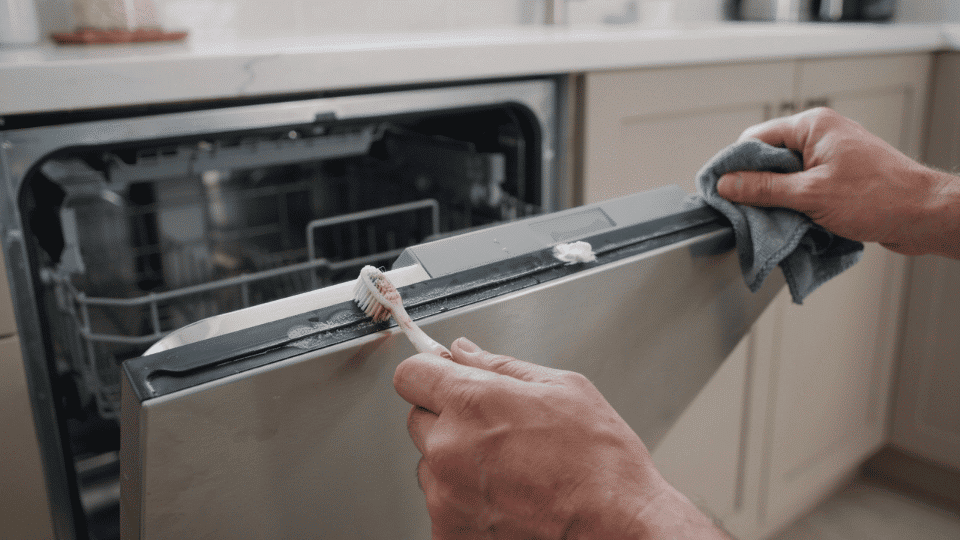
The door seal is the most mold-prone location in any dishwasher, and in countertop machines specifically, it deserves individual attention after every cycle rather than only during periodic cleaning sessions.
The door seal is a rubber or silicone gasket that creates the watertight closure between the door and the machine body. During the wash cycle, wash water, food particles, and detergent residue contact the seal’s inner surface.
After the cycle, residue remains in the folds and ridges of the seal where it is not fully rinsed by the rinse cycle water. This residue, combined with the moisture that remains on the seal’s surface, provides both the nutrient source and the water activity that mold needs to establish itself.
Wiping the door seal with a clean dry cloth immediately after the cycle removes this surface moisture and most of the residue film before either can contribute to mold growth. This takes approximately thirty seconds and, done consistently after every cycle, prevents the progressive residue accumulation that creates conditions for mold.
For seals that already have visible discolouration or a musty smell, a wipe with a cloth dampened with a small amount of white vinegar before the dry wipe removes established residue and kills early-stage mold growth. The acetic acid in vinegar creates an inhospitable environment for mold while being safe for rubber and silicone seal materials.
Mold and moisture buildup can sometimes reduce your dishwasher’s efficiency over time. Explore our guide on what causes slow countertop dishwasher cycles and learn simple ways to keep wash times running as expected.
4. Clean the Filter Regularly
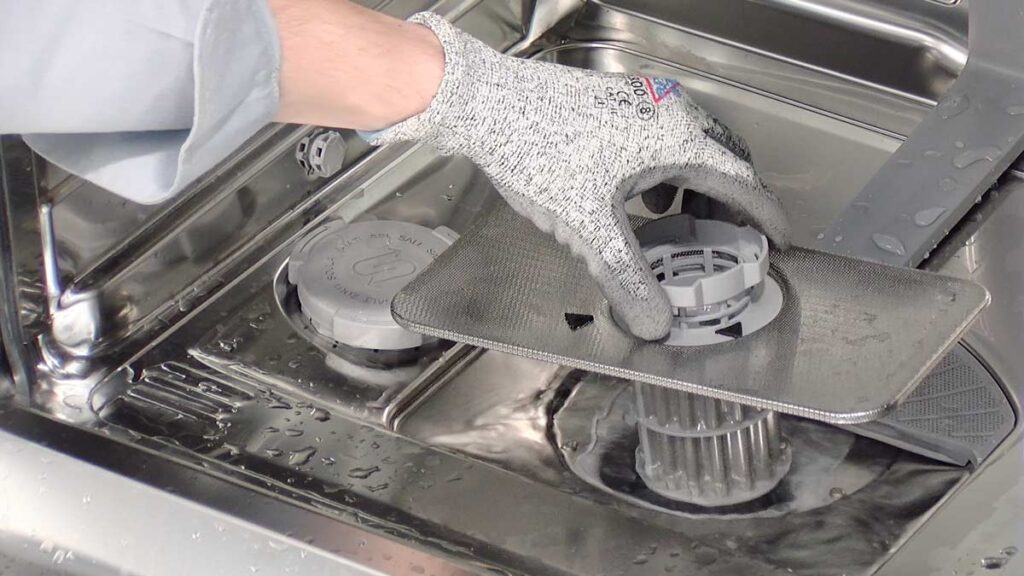
The filter at the base of the countertop dishwasher interior is the component that accumulates food particles most rapidly, and a dirty filter is one of the most reliable conditions for mold development inside the machine.
Food particles trapped in the filter are the primary nutrient source for mold inside a dishwasher. Even small amounts of food debris provide sufficient organic material for mold to establish itself when combined with the moisture and warmth present inside the machine between uses. A filter cleaned regularly removes this nutrient source and eliminates one of the three conditions mold requires.
Most countertop dishwasher filters are removable without tools, located beneath the lower spray arm. Removing and rinsing the filter under warm running water after every three to four cycles prevents food particle accumulation from reaching the level where mold colonisation becomes likely. For machines used daily or for cooking meals with significant food residue, cleaning the filter after every two cycles provides better protection.
Scrubbing the filter gently with a soft brush when rinsing removes any food particles that rinsing alone does not dislodge, particularly from the mesh areas where fine particles can become compacted. Allowing the filter to dry briefly before reinserting it reduces the amount of moisture being returned to the machine interior with each filter reinstallation.
5. Remove Standing Water After Each Cycle
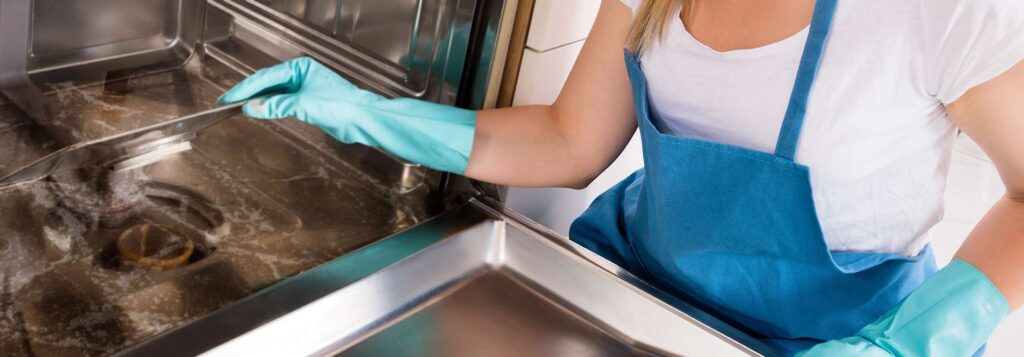
Residual water that remains pooled at the base of the machine after a completed cycle is a direct mold risk because it maintains high moisture conditions inside the machine for an extended period after the cycle should have resolved them.
A small amount of residual water at the machine’s drain point is normal in most countertop dishwashers. What is not normal is visible pooling across the base floor of the interior, which can indicate a drain issue, a filter so clogged it is restricting drainage, or a position of the machine that causes water to collect in an area not reached by the drain.
After opening the door following a cycle, check the base of the interior for pooled water. If water is consistently present beyond a very small amount at the drain, investigate whether the filter is restricting drainage or whether the machine’s positioning is creating a low point that traps water. Correcting the underlying drainage issue removes the standing water condition rather than simply drying it up each time.
For small amounts of residual moisture on the interior floor that are not draining but that do not indicate a blockage, wiping the base with a dry cloth after opening the door removes this moisture and prevents it from remaining as a mold-supporting wet surface.
6. Run a Hot Cycle Regularly to Prevent Mold Establishment
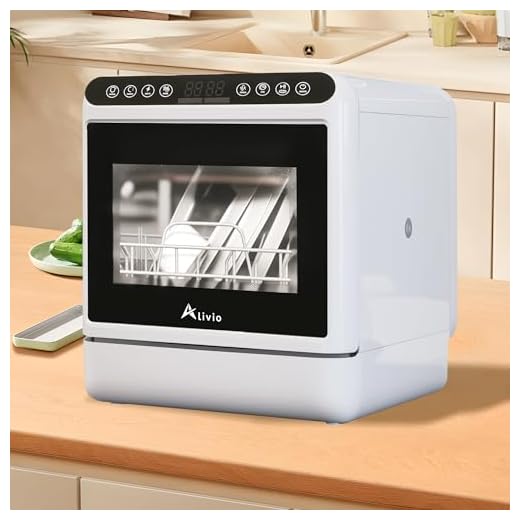
Running the dishwasher on its hottest available cycle periodically, even when it is not needed for cleaning dishes, is an effective preventive measure because the combination of high temperature and detergent creates conditions that are hostile to mold at every stage of its life cycle.
Mold spores that have settled on interior surfaces are killed by sustained exposure to temperatures above 140 degrees Fahrenheit. The hot water cycle in most countertop dishwashers reaches temperatures close to or above this threshold, which kills established mold colonies and renders recently settled spores unable to germinate. Running a hot cycle prevents mold from progressing past the initial colonisation stage.
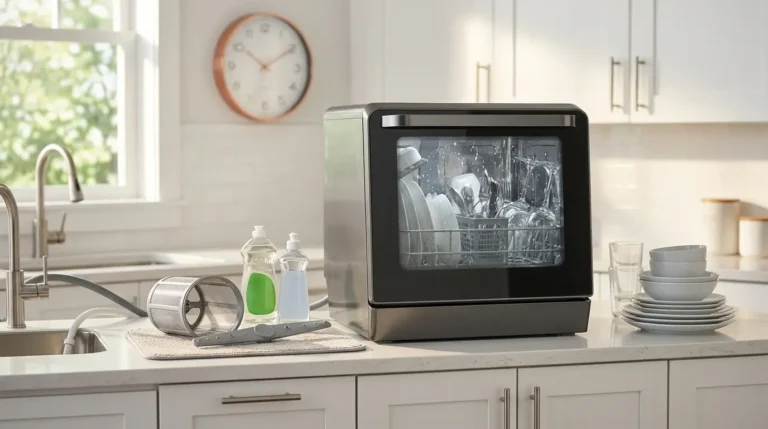
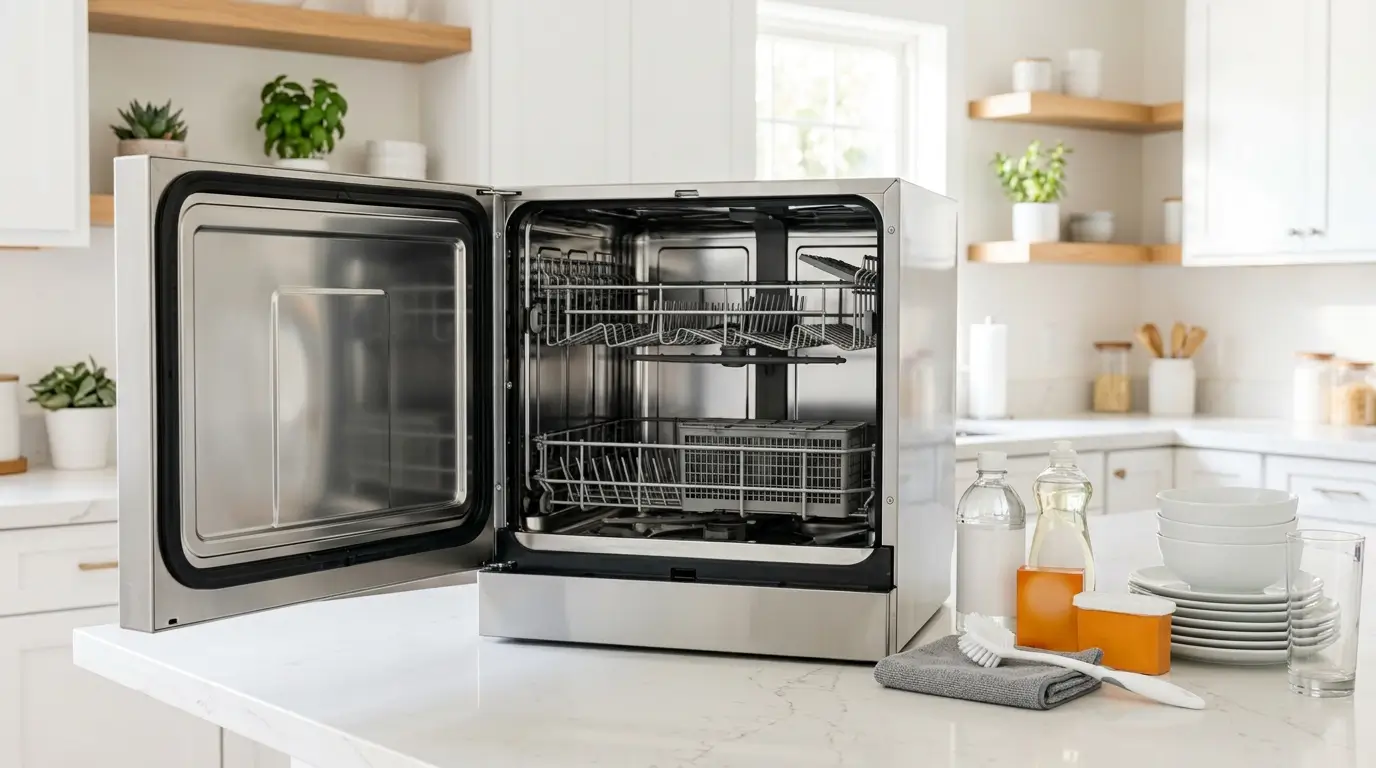
A monthly maintenance cycle run on the hottest available setting with a dishwasher cleaning tablet or a cup of white vinegar placed in the interior provides both the thermal treatment and the chemical cleaning action that removes residue from surfaces not reached by standard cleaning. This cycle is run with no dishes inside so the full cleaning focus is on the machine interior rather than on dish cleaning.
The thermal effect of the hot cycle is most significant for the areas furthest from air circulation, including the filter housing, the pump housing, and the lower areas of the door frame. These are the locations where mold most commonly establishes itself first, and the hot cycle reaches them effectively.
7. Never Leave Dirty Dishes Sitting in the Machine
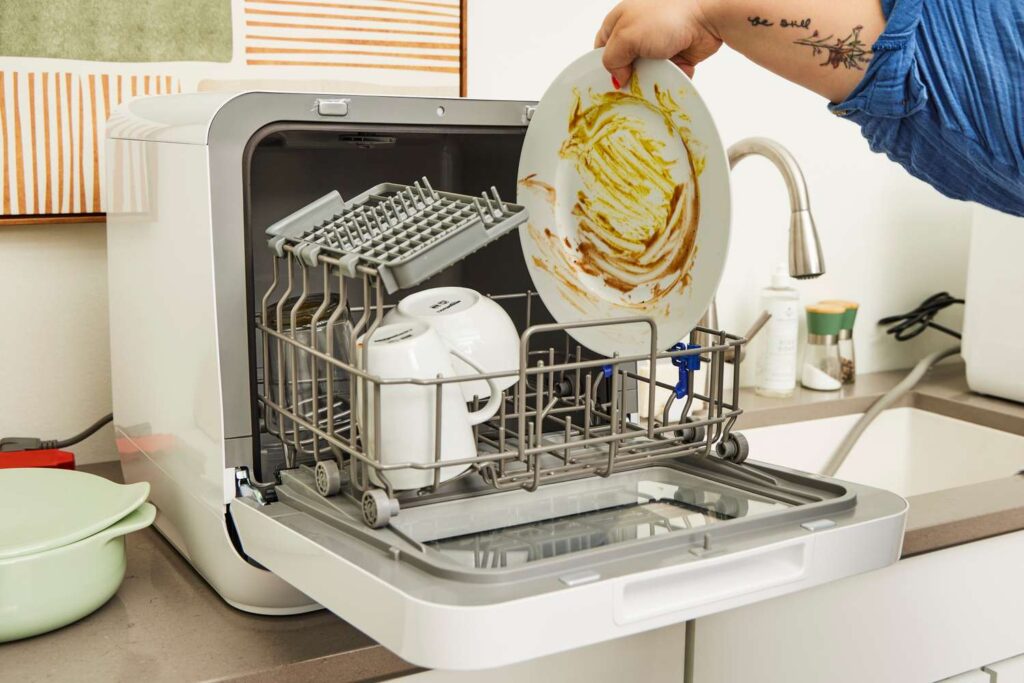
Loaded dirty dishes sitting in a closed countertop dishwasher for hours before the cycle is run create exactly the conditions that produce mold growth most rapidly: food residue, moisture from the dishes themselves, warmth from the kitchen environment, and no airflow.
The food on dirty dishes sitting in the machine provides a nutrient source far richer than the residual particles that remain after a wash cycle. The moisture from the dish surfaces and any remaining liquid in cups or bowls contributes water activity. The closed machine traps both the nutrients and the moisture in a warm, unventilated environment.
In addition to creating mold-supporting conditions, pre-cycle food residue from sitting dirty dishes can fall from the dishes into the filter and lower areas of the machine where it contributes to the accumulation that requires more frequent filter cleaning. Dishes left overnight before washing are also significantly harder to clean because food has dried and bonded to the dish surface.
If dishes cannot be run through the cycle immediately after use, rinsing them briefly before loading removes the primary food residue that contributes to in-machine mold conditions. A rinsed dish in a closed machine is significantly less mold-promoting than an unrinsed dish with food residue sitting inside.
A mold-free dishwasher is far more likely to deliver spotless results. If you’re still dealing with cloudy glasses or food residue, read our guide on solving common countertop dishwasher cleaning problems to identify the cause and restore better performance.
8. Pay Attention to the Spray Arms and Their Mechanism Housing
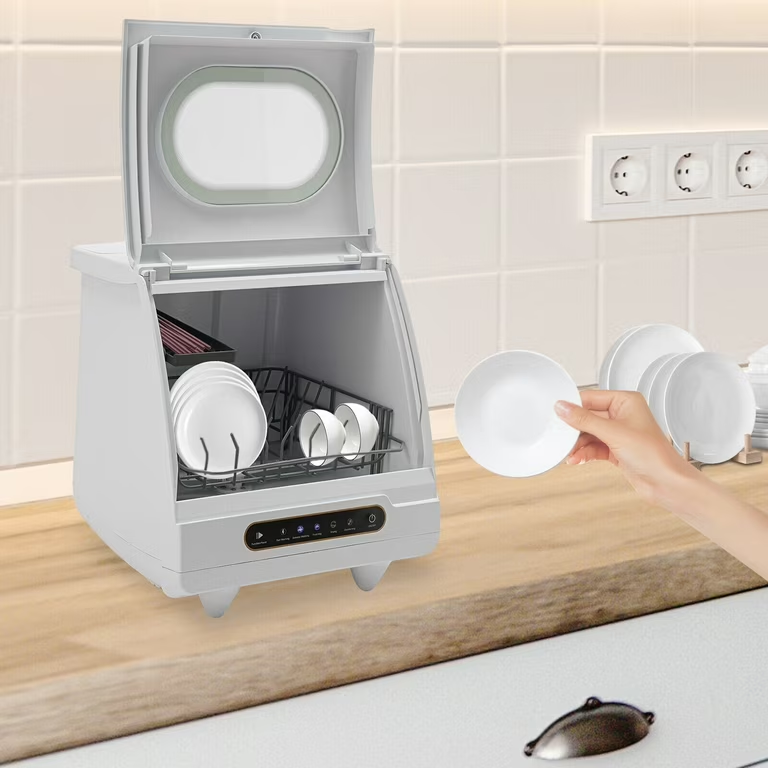
The spray arm mechanisms, including the central hub and the housing into which the spray arms lock, accumulate residue in their recessed areas that the wash cycle does not fully clean and that provides a consistent nutrient source for mold between uses.
Water from the wash cycle is forced through the spray arm holes under pressure, but the external surfaces of the spray arm mechanism housing and the recesses around the arm attachment points are not cleaned as thoroughly as the spray arm faces. Food particles and detergent residue accumulate in these recesses over multiple cycles without being effectively washed away.
Removing the spray arms during the monthly deep clean and cleaning the arm mechanism housing and the attachment point recesses with a small brush removes this accumulated residue. Rinsing thoroughly and allowing the components to dry briefly before reassembly reduces the moisture returned to the machine interior.
Inspecting the spray arm housing area when doing the monthly clean for any visible discolouration that might indicate early mold growth allows treatment before the colony becomes established. A wipe with a white vinegar-dampened cloth addresses early-stage discolouration effectively.
9. Clean the Interior Walls and Ceiling Periodically
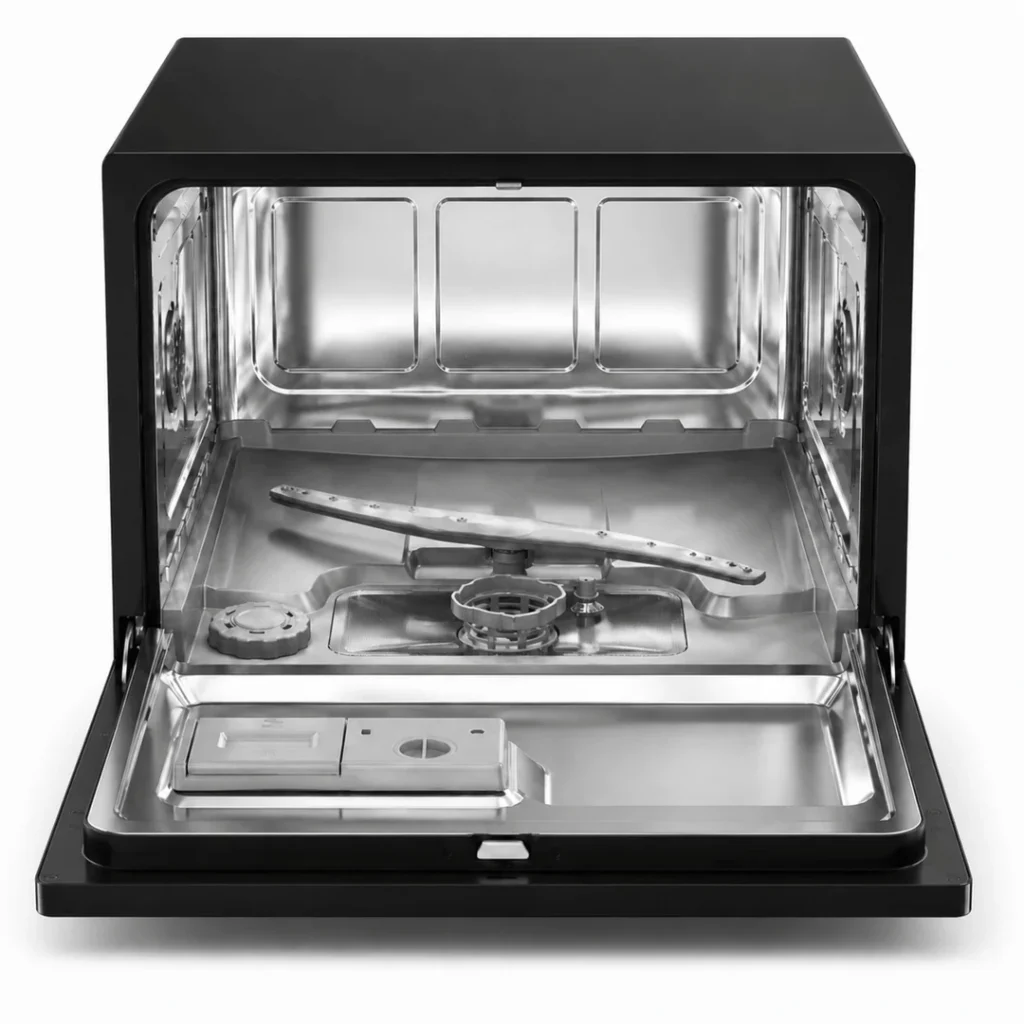
The interior walls and ceiling of the countertop dishwasher accumulate a thin grease and detergent film over multiple wash cycles that, while invisible after individual sessions, builds into a residue layer over weeks that provides nutrient material for mold growth in conjunction with the moisture present after each cycle.
This film is primarily composed of vaporised cooking fats that condense on the cooler interior surfaces during the wash cycle, combined with detergent residue from the wash water. It is not immediately visible against the stainless steel or white plastic interior surfaces of most machines, which is why it is overlooked until it becomes a mold-contributing accumulation.
Wiping the interior walls and ceiling with a damp cloth containing a small amount of dish soap every two to three weeks removes this film before it accumulates to a level that supports mold growth. Follow the cleaning wipe with a rinse wipe using clean warm water to remove any soap residue. Allow the interior to air dry fully with the door open after cleaning.
Particular attention should be paid to the ceiling area directly behind the door seal, where the transition between the door interior and the machine ceiling creates a recessed area that traps both moisture and residue and is less effectively cleaned by the wash cycle than the open ceiling area.
10. Store the Machine Correctly When Not in Use for Extended Periods
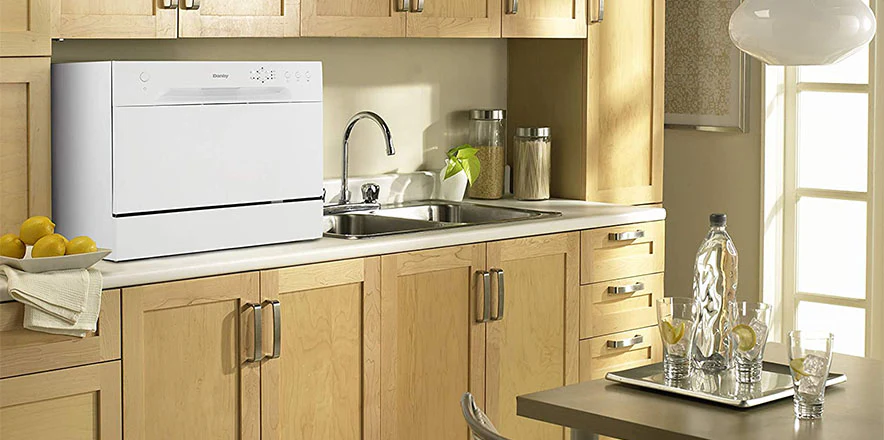
A countertop dishwasher stored without use for a week or more requires specific preparation to prevent mold from establishing itself during the period of inactivity, when there is no regular hot cycle to kill any mold that begins growing.
Before storage, run a hot cycle with a cleaning tablet or white vinegar to kill any early-stage mold growth and clean the interior surfaces. After the cycle, open the door and allow the interior to dry completely for at least two to three hours before any covering or boxing.
Remove the filter and allow it to dry separately before returning it to the machine. Leaving the door slightly ajar during storage, if the machine can be secured in this position safely, allows air circulation that prevents moisture from building up inside the closed machine during the storage period.
When returning the machine to use after an extended storage period, run an empty hot cycle before using it for dishes. This kills any mold that established itself despite the pre-storage preparation and rinses away any stale residue from the storage period before clean dishes are processed.
11. Address Hard Water and Use Rinse Aid Consistently
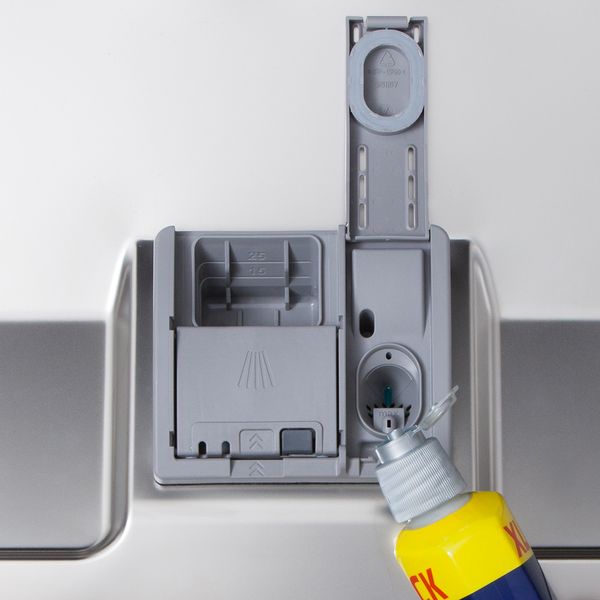
Hard water, which contains high concentrations of dissolved calcium and magnesium minerals, contributes to mold risk in a way that is less obvious than residue or moisture but that is genuinely significant in areas with very hard water supplies.
Mineral scale deposited on the interior surfaces of the machine from hard water provides a rough, porous texture that traps food particles and moisture more effectively than smooth clean surfaces. Mold establishes itself more readily on scaled surfaces than on clean smooth ones because the porous scale structure provides both physical anchor points and small pockets where moisture is retained after the machine has dried elsewhere.
Using rinse aid consistently reduces the surface tension of the rinse water, causing it to sheet off interior surfaces more completely rather than forming droplets that dry into mineral deposits. This reduces the rate of scale accumulation on interior surfaces and maintains the smoother surface that is less hospitable to mold establishment.
Regular descaling of the machine using a dishwasher descaling product removes accumulated scale and restores the smooth interior surface that both cleans more easily and provides fewer physical anchor points for mold growth. Monthly descaling in hard water areas maintains interior surface quality in a way that makes a measurable difference to mold prevention.
12. Keep the Area Around the Machine Ventilated
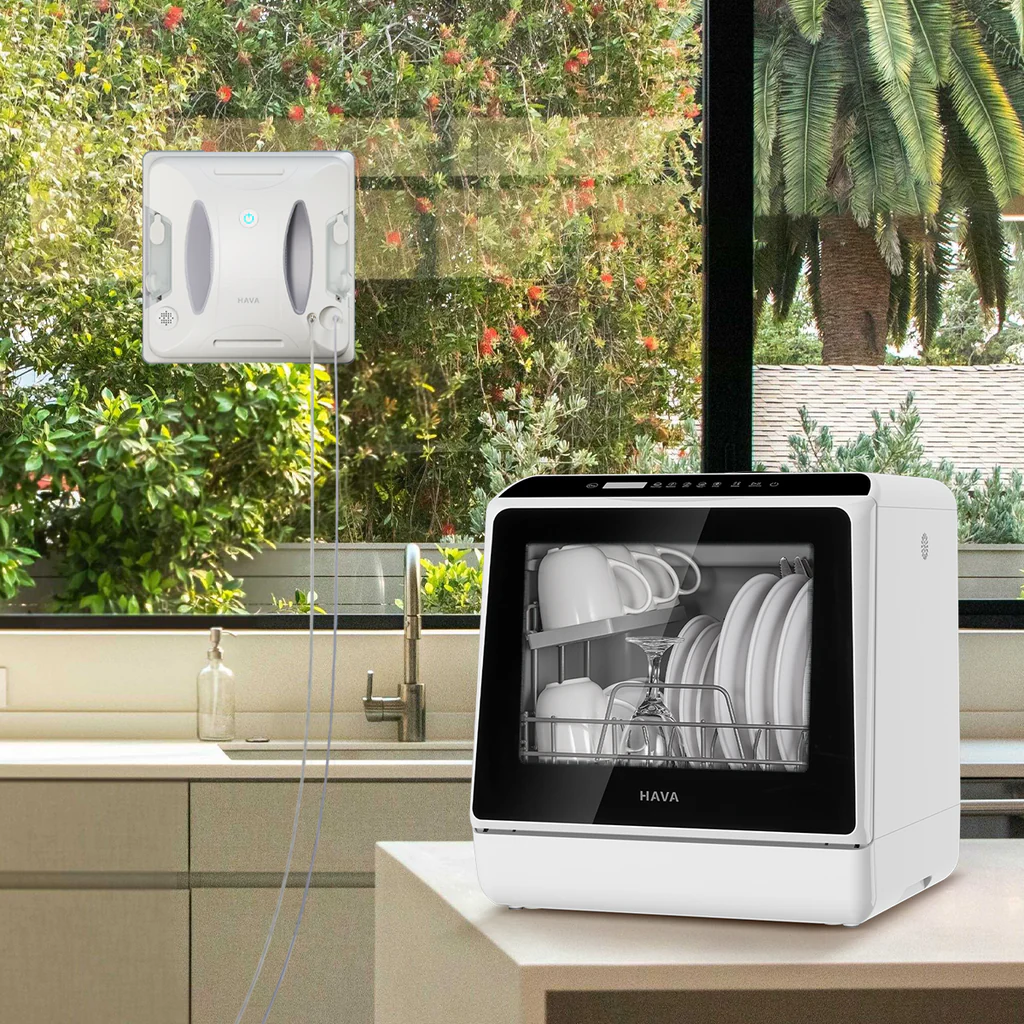
The external environment immediately around the countertop dishwasher affects the humidity conditions inside the machine in ways that most owners do not consider because the machine appears self-contained.
A countertop dishwasher stored in a cabinet or alcove with poor ventilation around it creates an enclosed microenvironment where the humidity generated by completed cycles has nowhere to go. The humid air remains concentrated around the machine and re-enters the interior when the door is opened, raising the baseline moisture level inside the machine above what it would be in a more ventilated location.
Positioning the machine in a location with adequate air circulation around it, where the heat and humidity generated during and after cycles can dissipate into the wider kitchen air, reduces the moisture concentration around the machine and creates slightly drier conditions inside it between uses.
If the machine must be stored in a cabinet between uses, leaving the cabinet door open for at least one hour after opening the machine door following a cycle allows the humidity generated to disperse into the kitchen air rather than recirculating back into the machine’s environment.
If mold keeps returning despite regular maintenance, your appliance may no longer be performing efficiently. Explore our guide to the best countertop dishwashers for easy maintenance and compare models designed for cleaner, fresher operation.
13. Use White Vinegar as a Regular Maintenance Rinse
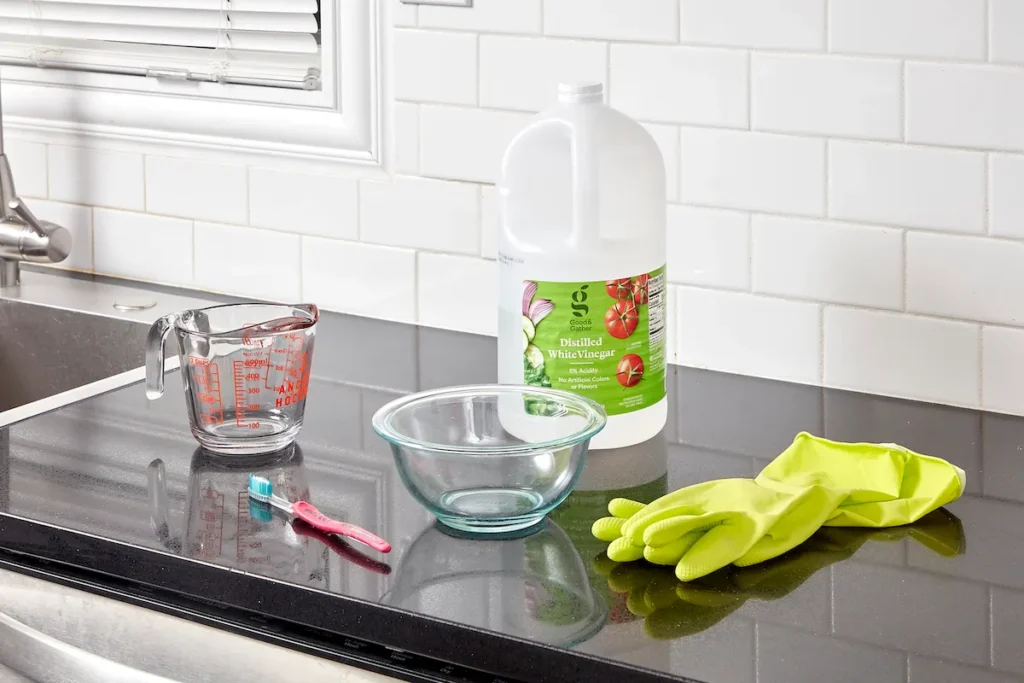
White vinegar is one of the most effective and safe preventive treatments for mold in dishwashers because its acetic acid content creates conditions that are hostile to mold while being completely safe for all dishwasher interior materials including rubber seals, stainless steel, and plastic.
Running a maintenance cycle with one cup of white vinegar placed in a dishwasher-safe container on the lower rack with no dishes monthly creates an acetic acid environment throughout the interior during the cycle. The wash water distributes the vinegar to all interior surfaces, including the filter housing, the spray arm mechanisms, the walls, and the door seal area.
This acetic acid treatment kills early-stage mold growth, dissolves the grease and detergent film that provides mold with a nutrient surface, and removes the mineral scale that provides physical anchor points for mold establishment. The three mechanisms together make the monthly vinegar cycle a highly cost-effective preventive treatment.
Allow the cycle to complete fully and then open the door to air dry. The vinegar smell dissipates completely within an hour of the door being opened and does not transfer to dishes in subsequent cycles. The treatment can be used monthly as a standalone maintenance step or in combination with the baking soda treatment described below.
14. Follow with a Baking Soda Cycle for Complete Interior Freshness
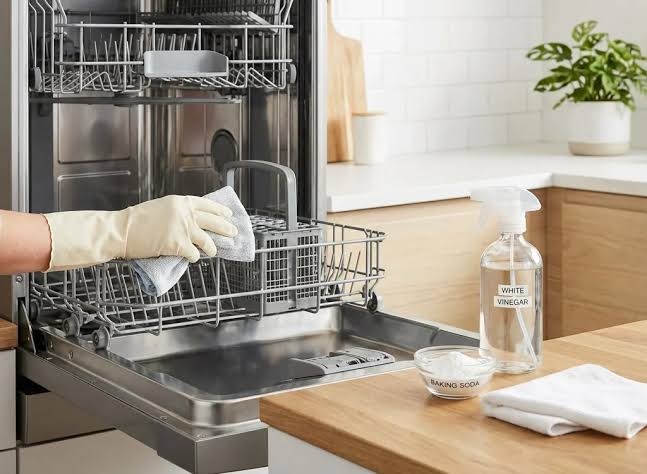
A baking soda maintenance cycle used after the vinegar cycle, or as a standalone treatment once a month, addresses the odour-producing compounds and residue that vinegar does not fully neutralise and completes the interior cleaning treatment.
After running the vinegar cycle, or as a separate monthly step if the vinegar cycle was not run in the same session, sprinkle one cup of baking soda across the base of the empty machine interior and run a short hot cycle. The baking soda dissolves in the wash water and distributes throughout the interior as an alkaline cleaning solution.
The alkalinity of baking soda neutralises the acidic odour compounds produced by mold and decomposing food residue that persist even after the mold growth causing them has been killed. It also provides a mild abrasive action on the interior surfaces that helps dislodge residue that the water jets alone do not remove.
The combination of a monthly vinegar cycle followed by a baking soda cycle treats both the biological mold risk and the chemical residue and odour accumulation that contributes to and results from it. Together they constitute a complete interior maintenance protocol that keeps countertop dishwasher interiors in consistently good condition between deep cleaning sessions.
Prevention Is Always Easier Than Treatment
Looking across every preventive practice in this article, the common thread is that mold grows inside countertop dishwashers when three conditions are simultaneously present: moisture, food residue, and inadequate airflow. Every preventive measure in this guide addresses one or more of these three conditions directly.
Opening the door addresses the moisture and airflow conditions. Cleaning the filter addresses the food residue condition. Running hot maintenance cycles addresses all three by killing mold, removing residue, and drying the interior. Wiping the seal addresses the specific combination of moisture and residue that makes the seal the most vulnerable location.
None of these practices require significant time or effort individually. The difference between a mold-free dishwasher and a moldy one is built from thirty-second habits applied consistently, not from intensive cleaning sessions applied reactively after mold has already established itself.
FAQs About Mold in Countertop Dishwashers
Persistent musty smell after regular cleaning usually indicates mold or residue in an area the cleaning routine is not reaching, most commonly the door seal folds, the filter housing, or the spray arm mechanism housing. Targeted cleaning of these specific areas with a small brush and a vinegar solution typically resolves the smell within one to two cleaning sessions.
Mold inside a dishwasher that has been killed by the wash cycle’s hot water before reaching the dishes presents minimal risk. However, active mold colonies producing spores in the machine interior can contaminate dishes with mold spores during and after the cycle, making prompt treatment and consistent prevention the appropriate approach.
Under optimal conditions of warmth, moisture, and food residue, mold can establish visible growth within two to three days. In a closed machine that is not used or dried between uses and has accumulated filter residue, visible mold can appear within a week.
Black mold in dishwashers is most commonly a species called Exophiala, which thrives in the warm, humid conditions of dishwasher interiors specifically. It is typically a black or dark grey colour and is more resistant to standard dishwasher temperatures than common mold varieties, requiring targeted treatment with vinegar or a dedicated dishwasher cleaner to eliminate.
A paste of baking soda applied to the spots and left for twenty minutes before scrubbing gently with an old toothbrush addresses deeper discolouration that a simple wipe does not resolve. If spots persist after multiple treatments, the seal has likely been colonised deeply enough that replacement is the most reliable solution.
Detergent residue left on interior surfaces after inadequate rinsing provides an organic nutrient source that contributes to mold growth. Using the correct amount of detergent for your water hardness level ensures the rinse cycle removes it effectively and reduces the residue that contributes to mold conditions.
Leaving the door fully open between uses provides maximum air circulation and is the most effective approach for preventing mold if it is practical in your kitchen. If a fully open door is inconvenient due to space constraints, leaving it ajar by several inches provides most of the ventilation benefit while keeping the door out of the main kitchen walkway.